

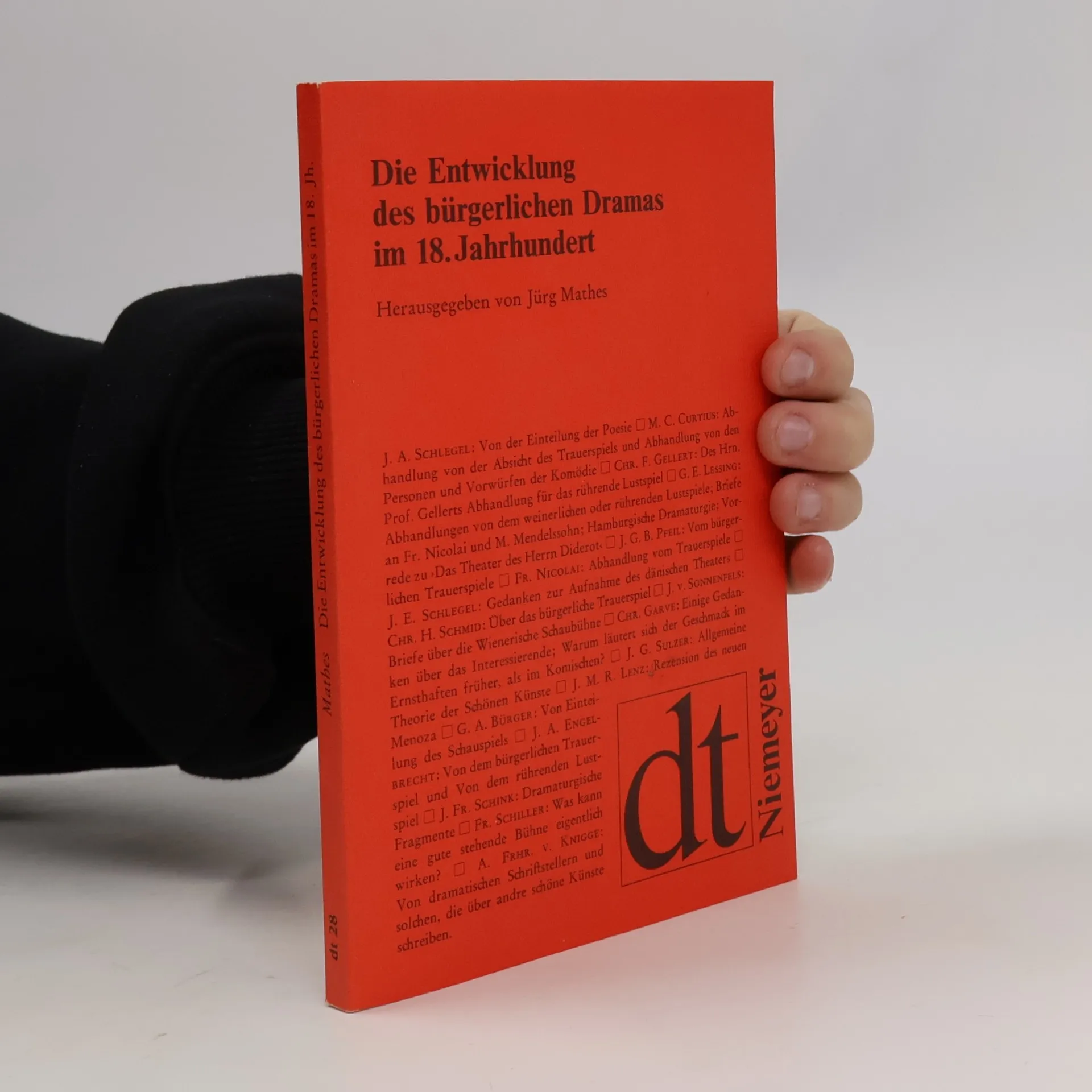
Deutsche Texte - 28: Die Entwicklung des bürgerlichen Dramas im 18. Jahrhundert
Ausgewählte Texte
Mehr zum Buch
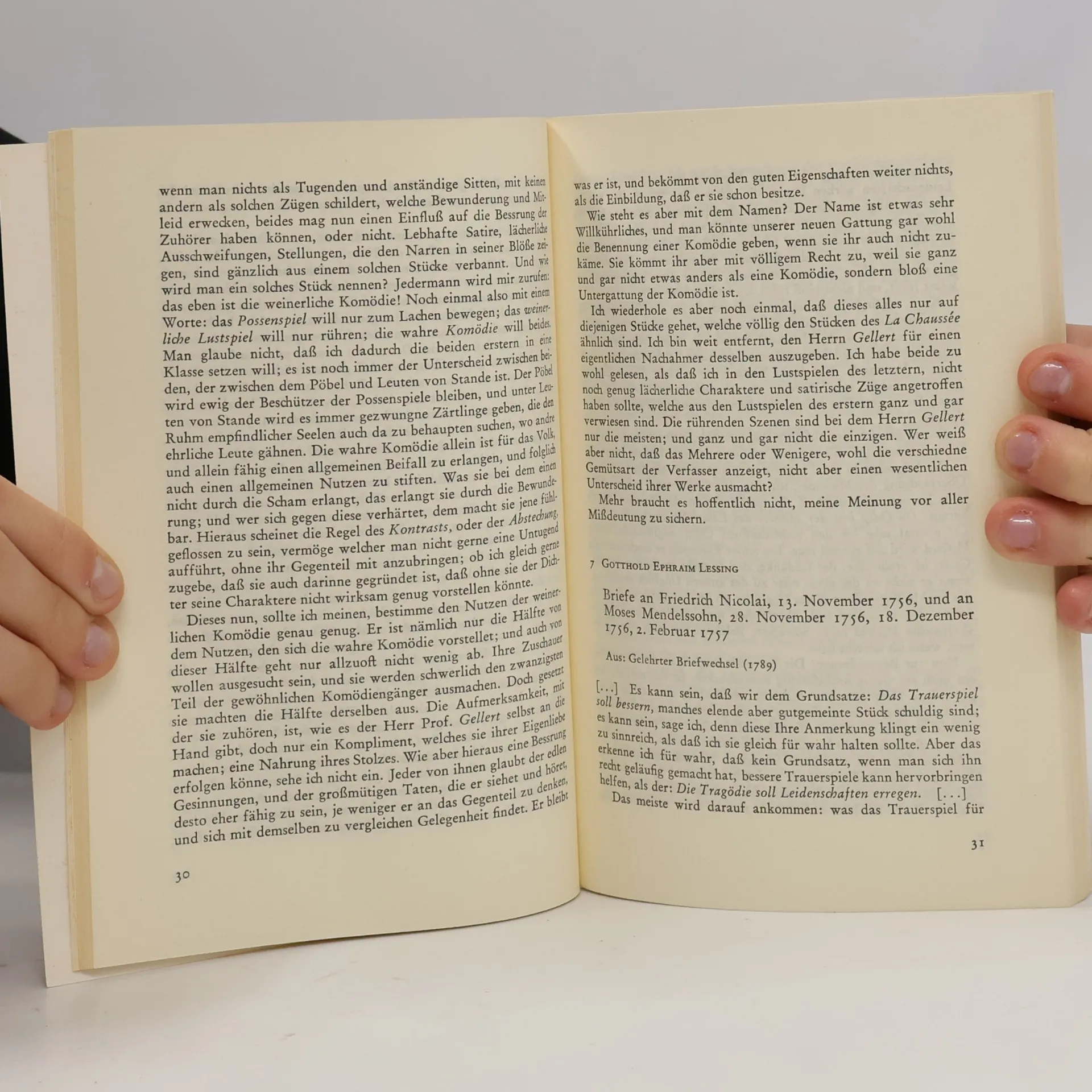
The text covers a range of topics related to poetry and drama, including classifications of poetry and discussions on the intentions behind tragic plays and the roles in comedy. It features essays on sentimental comedy and letters exchanged with notable figures such as Friedrich Nicolai and Moses Mendelssohn. The annotations include various pieces, including prefaces, thoughts on the reception of Danish theater, and reflections on the evolution of taste in serious versus comedic works. Additionally, it addresses the impact of a well-established theater and examines the contributions of dramatic writers alongside those who critique other arts. The text also provides a selection of dramatic works, a bibliography, and indexes for easy reference. Overall, it serves as a comprehensive exploration of dramatic literature and its classifications, offering insights into the nature of theater and its emotional resonance.
Buchkauf
Deutsche Texte - 28: Die Entwicklung des bürgerlichen Dramas im 18. Jahrhundert, Johann Georg Sulzer, J. M. R. Lenz, Fr. Schiller, Jürg Mathes, G. E. Lessing, J. E. Schlegel, J. G. B. Pfeil, Chr. H. Schmid, Chr. Garve, J. V. Sonnenfels, A. Frhr. v. Knigge, J. Fr. Schink, J. A. Schlegel, Fr. Nicolai, J. A. Engelbrecht, Chr. F. Gellert, M. Mendelssohn, M. C. Curtius
- Sprache

- Erscheinungsdatum
- 1974
- Einband
- (Hardcover),
- Buchzustand
- Beschädigt
- Preis
- € 6,09
Keiner hat bisher bewertet.
- Titel
- Deutsche Texte - 28: Die Entwicklung des bürgerlichen Dramas im 18. Jahrhundert
- Untertitel
- Ausgewählte Texte
- Sprache
- Deutsch
- Autor*innen
- Johann Georg Sulzer, J. M. R. Lenz, Fr. Schiller, Jürg Mathes, G. E. Lessing, J. E. Schlegel, J. G. B. Pfeil, Chr. H. Schmid, Chr. Garve, J. V. Sonnenfels, A. Frhr. v. Knigge, J. Fr. Schink, J. A. Schlegel, Fr. Nicolai, J. A. Engelbrecht, Chr. F. Gellert, M. Mendelssohn, M. C. Curtius
- Verlag
- Niemeyer
- Erscheinungsdatum
- 1974
- Einband
- Hardcover
- Seitenzahl
- 151
- ISBN10
- 3484190272
- ISBN13
- 9783484190276
- Reihe
- Kategorien
- Schlagwörter
- Weltliteratur, Deutsche Literatur, Deutschland, Literarische Kritik, 18. Jahrhundert
- Beschreibung
- The text covers a range of topics related to poetry and drama, including classifications of poetry and discussions on the intentions behind tragic plays and the roles in comedy. It features essays on sentimental comedy and letters exchanged with notable figures such as Friedrich Nicolai and Moses Mendelssohn. The annotations include various pieces, including prefaces, thoughts on the reception of Danish theater, and reflections on the evolution of taste in serious versus comedic works. Additionally, it addresses the impact of a well-established theater and examines the contributions of dramatic writers alongside those who critique other arts. The text also provides a selection of dramatic works, a bibliography, and indexes for easy reference. Overall, it serves as a comprehensive exploration of dramatic literature and its classifications, offering insights into the nature of theater and its emotional resonance.