

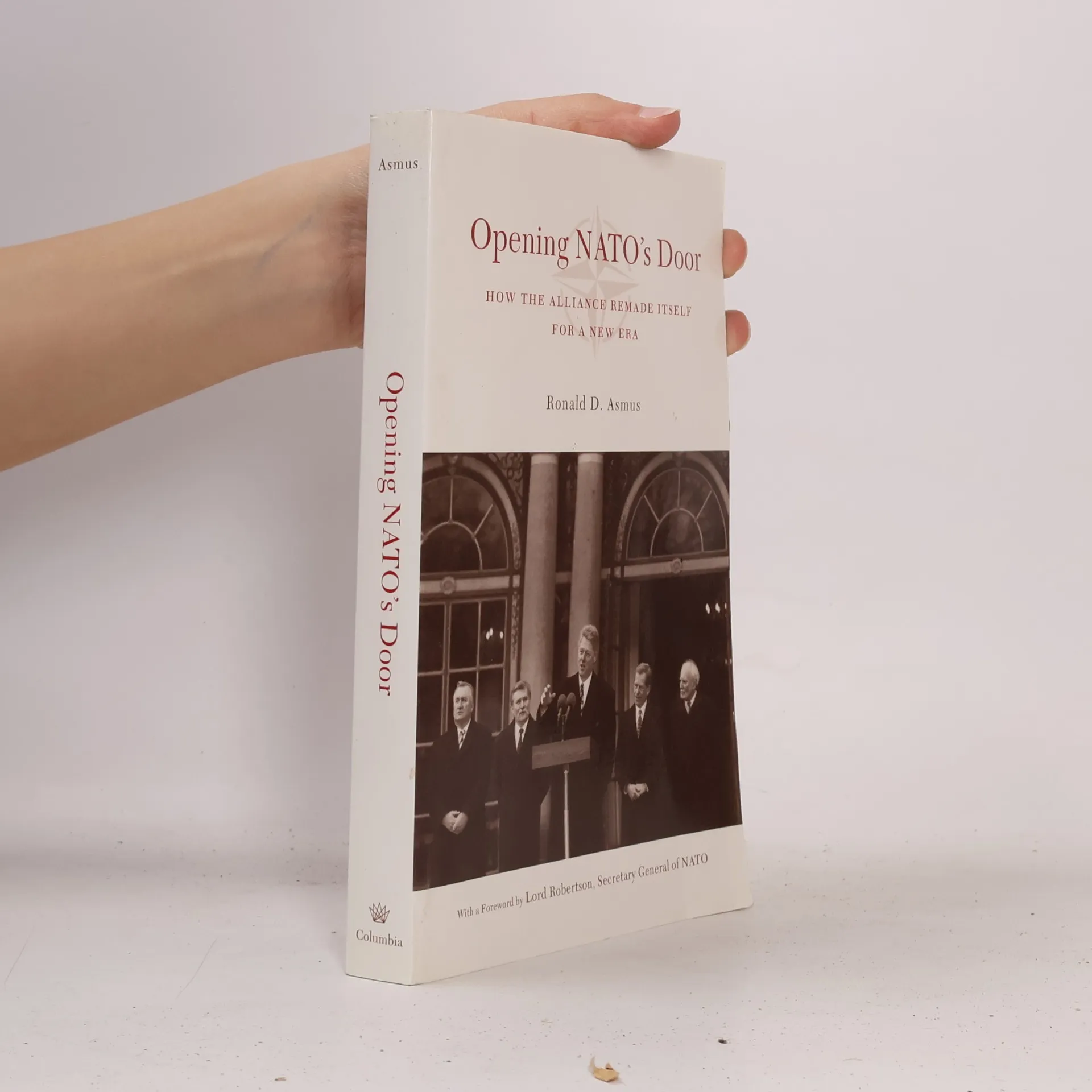
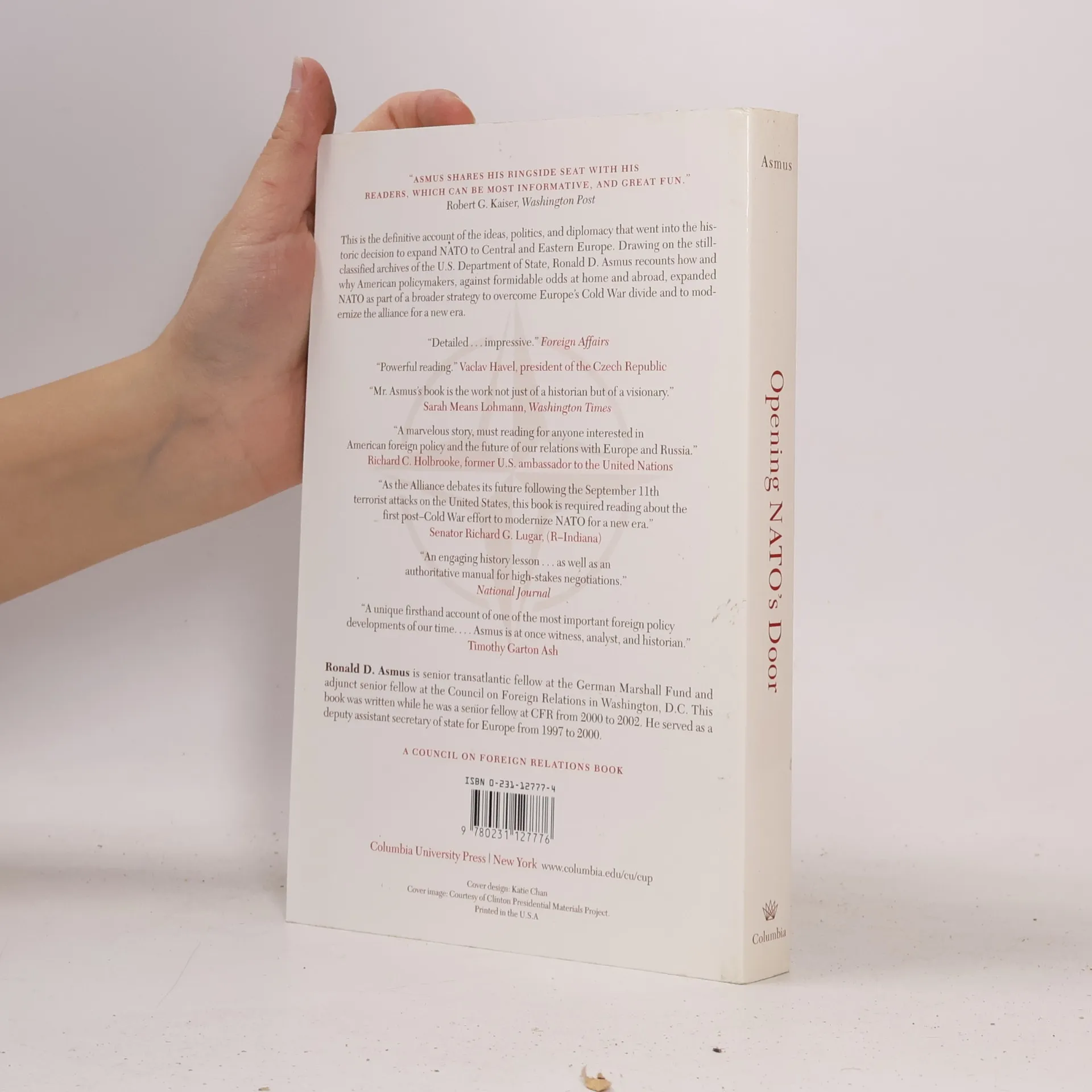



Council on Foreign Relations: Opening NATO's Door
How the Alliance Remade Itself for a New Era
Autor*innen
Parameter
- 415 Seiten
- 15 Lesestunden
Mehr zum Buch
How and why did NATO, a Cold War military alliance created in 1949 to counter Stalin's USSR, become the cornerstone of new security order for post-Cold War Europe? Why, instead of retreating from Europe after communism's collapse, did the U.S. launch the greatest expansion of the American commitment to the old continent in decades? Written by a high-level insider, <i>Opening NATO's Door</i> provides a definitive account of the ideas, politics, and diplomacy that went into the historic decision to expand NATO to Central and Eastern Europe. Drawing on the still-classified archives of the U.S. Department of State, Ronald D. Asmus recounts how and why American policy makers, against formidable odds at home and abroad, expanded NATO as part of a broader strategy to overcome Europe's Cold War divide and to modernize the Alliance for a new era. Asmus was one of the earliest advocates and intellectual architects of NATO enlargement to Central and Eastern Europe after the collapse of communism in the early 1990s and subsequently served as a top aide to Secretary of State Madeleine Albright and Deputy Secretary Strobe Talbott, responsible for European security issues. He was involved in the key negotiations that led to NATO's decision to extend invitations to Poland, Hungary, and the Czech Republic, the signing of the NATO-Russia Founding Act, and finally, the U.S. Senate's ratification of enlargement. Asmus documents how the Clinton Administration sought to develop a rationale for a new NATO that would bind the U.S. and Europe together as closely in the post-Cold War era as they had been during the fight against communism. For the Clinton Administration, NATO enlargement became the centerpiece of a broader agenda to modernize the U.S.-European strategic partnership for the future. That strategy reflected an American commitment to the spread of democracy and Western values, the importance attached to modernizing Washington's key alliances for an increasingly globalized world, and the fact that the Clinton Administration looked to Europe as America's natural partner in addressing the challenges of the twenty-first century. As the Alliance weighs its the future following the September 11 terrorist attacks on the U.S. and prepares for a second round of enlargement, this book is required reading about the first post-Cold War effort to modernize NATO for a new era.
Buchkauf
Council on Foreign Relations: Opening NATO's Door, Ronald D. Asmus, Lord Robertson
- Sprache

- Erscheinungsdatum
- 2002
- Einband
- (Paperback),
- Buchzustand
- Beschädigt
- Preis
- € 6,89
Keiner hat bisher bewertet.
- Titel
- Council on Foreign Relations: Opening NATO's Door
- Untertitel
- How the Alliance Remade Itself for a New Era
- Sprache
- Englisch
- Autor*innen
- Ronald D. Asmus, Lord Robertson
- Erscheinungsdatum
- 2002
- Einband
- Paperback
- Seitenzahl
- 415
- ISBN10
- 0231127774
- ISBN13
- 9780231127776
- Reihe
- Kategorien
- Schlagwörter
- Historisches Thema, Rechtsthematik, Politik, USA, Russland, Politische Theorien, Internationale Beziehungen
- Beschreibung
- How and why did NATO, a Cold War military alliance created in 1949 to counter Stalin's USSR, become the cornerstone of new security order for post-Cold War Europe? Why, instead of retreating from Europe after communism's collapse, did the U.S. launch the greatest expansion of the American commitment to the old continent in decades? Written by a high-level insider, <i>Opening NATO's Door</i> provides a definitive account of the ideas, politics, and diplomacy that went into the historic decision to expand NATO to Central and Eastern Europe. Drawing on the still-classified archives of the U.S. Department of State, Ronald D. Asmus recounts how and why American policy makers, against formidable odds at home and abroad, expanded NATO as part of a broader strategy to overcome Europe's Cold War divide and to modernize the Alliance for a new era. Asmus was one of the earliest advocates and intellectual architects of NATO enlargement to Central and Eastern Europe after the collapse of communism in the early 1990s and subsequently served as a top aide to Secretary of State Madeleine Albright and Deputy Secretary Strobe Talbott, responsible for European security issues. He was involved in the key negotiations that led to NATO's decision to extend invitations to Poland, Hungary, and the Czech Republic, the signing of the NATO-Russia Founding Act, and finally, the U.S. Senate's ratification of enlargement. Asmus documents how the Clinton Administration sought to develop a rationale for a new NATO that would bind the U.S. and Europe together as closely in the post-Cold War era as they had been during the fight against communism. For the Clinton Administration, NATO enlargement became the centerpiece of a broader agenda to modernize the U.S.-European strategic partnership for the future. That strategy reflected an American commitment to the spread of democracy and Western values, the importance attached to modernizing Washington's key alliances for an increasingly globalized world, and the fact that the Clinton Administration looked to Europe as America's natural partner in addressing the challenges of the twenty-first century. As the Alliance weighs its the future following the September 11 terrorist attacks on the U.S. and prepares for a second round of enlargement, this book is required reading about the first post-Cold War effort to modernize NATO for a new era.