

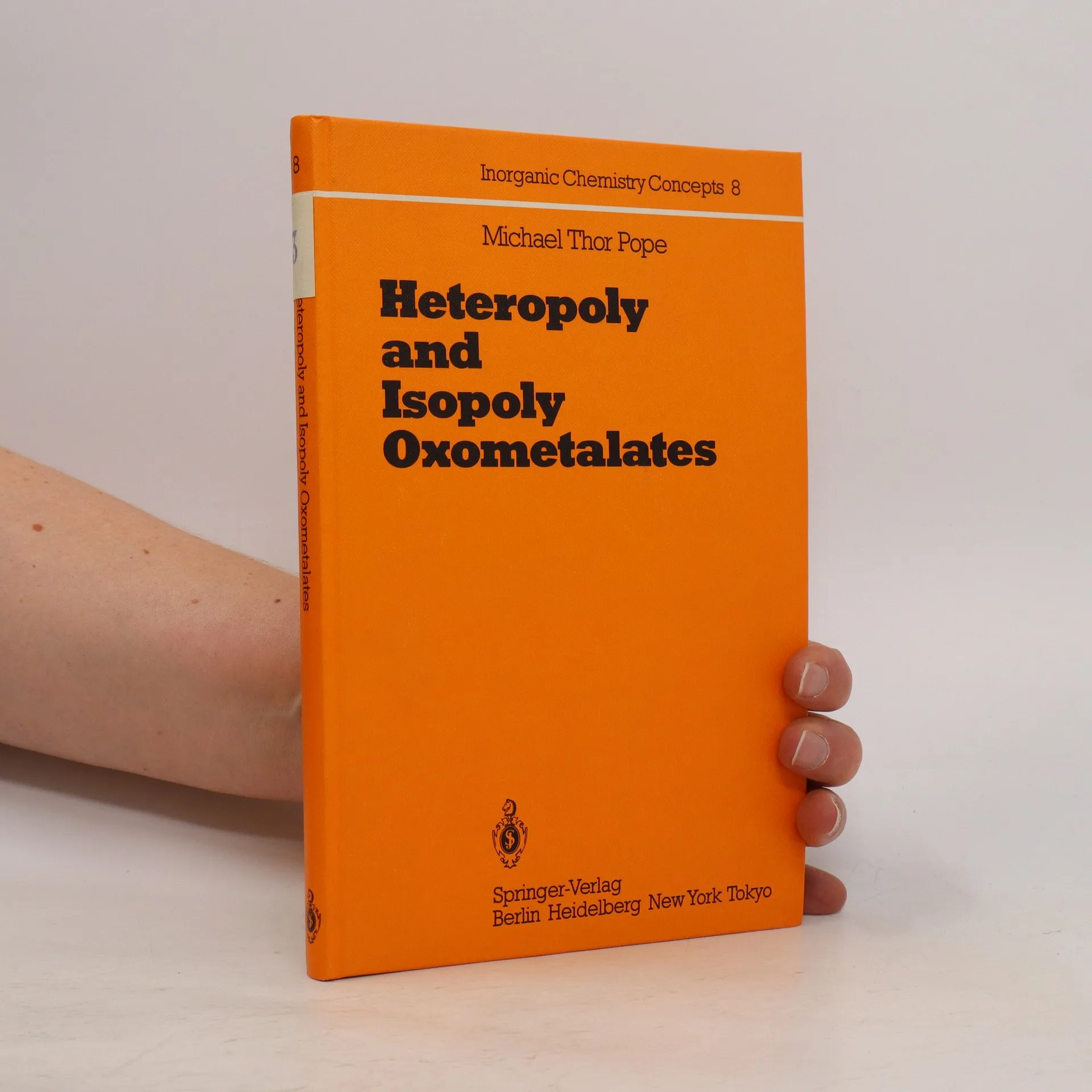
Heteropoly and Isopoly Oxometalates
Autor*innen
Parameter
Mehr zum Buch
Combined oxygen, in the form of water, metal oxides, silicates and other oxyions, accounts for about 50% by weight of the earth's crust. The chemistry of this most abundant element has two major aspects: that of water and aqueous solutions of electrolytes, and that of the solid state. The methodology and techniques appropriate for the study of these fields are sufficiently different that there have been very few points of contact between solution- and solid state chemists. One such contact, of great potential value, is provided by the extensive class of polyoxoanions formed by the transition metals of groups 5 and 6. As 'heteropoly and isopoly acids' these polyanions have been known and investigated for more than a century. The pre sent book is an attempt to survey the chemistry, structures, and applications of these species. Although the book forms part of a series in inorganic chemistry, the field of polyoxometalates deserves wider attention, for example, from organic chemists, especially those concerned with homogeneous and heterogeneous catalysis, and from biochemists, solid state- and materials scientists.
Buchkauf
Heteropoly and Isopoly Oxometalates, Michael Thor Pope
- Sprache

- Erscheinungsdatum
- 1983
- Einband
- (Hardcover)
Keiner hat bisher bewertet.
- Titel
- Heteropoly and Isopoly Oxometalates
- Sprache
- Englisch
- Autor*innen
- Michael Thor Pope
- Verlag
- Springer
- Erscheinungsdatum
- 1983
- Einband
- Hardcover
- ISBN10
- 3540118896
- ISBN13
- 9783540118893
- Reihe
- Schlagwörter
- Naturwissenschaften
- Beschreibung
- Combined oxygen, in the form of water, metal oxides, silicates and other oxyions, accounts for about 50% by weight of the earth's crust. The chemistry of this most abundant element has two major aspects: that of water and aqueous solutions of electrolytes, and that of the solid state. The methodology and techniques appropriate for the study of these fields are sufficiently different that there have been very few points of contact between solution- and solid state chemists. One such contact, of great potential value, is provided by the extensive class of polyoxoanions formed by the transition metals of groups 5 and 6. As 'heteropoly and isopoly acids' these polyanions have been known and investigated for more than a century. The pre sent book is an attempt to survey the chemistry, structures, and applications of these species. Although the book forms part of a series in inorganic chemistry, the field of polyoxometalates deserves wider attention, for example, from organic chemists, especially those concerned with homogeneous and heterogeneous catalysis, and from biochemists, solid state- and materials scientists.