

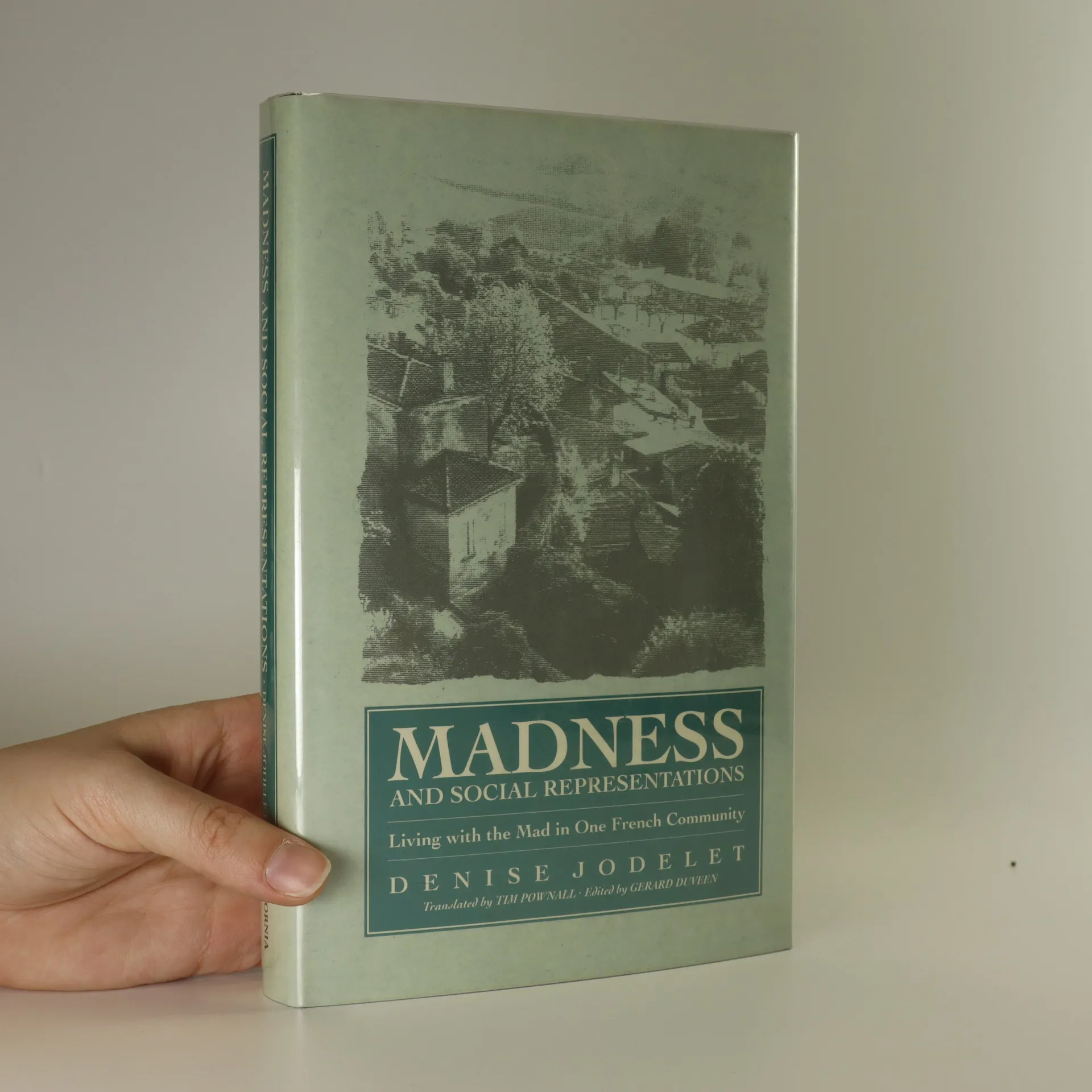
Madness and Social Representations
Autor*innen
Parameter
Mehr zum Buch
This account of a colony for the mentally ill challenges societal perceptions of madness. It explores the implications of integrating the mentally ill into the community rather than isolating them. Does familiarity foster understanding and sympathy, or does it reinforce existing barriers between the sane and the mad? The U.S. has seen a shift towards de-institutionalization, but Denise Jodelet presents an extraordinary community in France where the mentally ill have been integrated for over seventy years. In Ainay-le-Château, a "family colony" established in 1900 allows patients, referred to as "lodgers," to live with "foster parents," hold jobs, and enjoy freedom in the countryside. Jodelet's ethnographic exploration of daily life in this colony reveals a complex web of relationships. While some barriers between the "other" and society have been diminished, new challenges have emerged. This unique social experiment offers profound insights into the dynamics of community, shedding light on critical issues in psychology, psychiatry, and sociology. It invites readers to reconsider the nature of madness and the potential for empathy within society.
Buchkauf
Madness and Social Representations, Denise Jodelet
- Sprache

- Erscheinungsdatum
- 1991
- Einband
- (Hardcover)
Keiner hat bisher bewertet.
- Titel
- Madness and Social Representations
- Sprache
- Englisch
- Autor*innen
- Denise Jodelet
- Verlag
- Univ of California Press
- Erscheinungsdatum
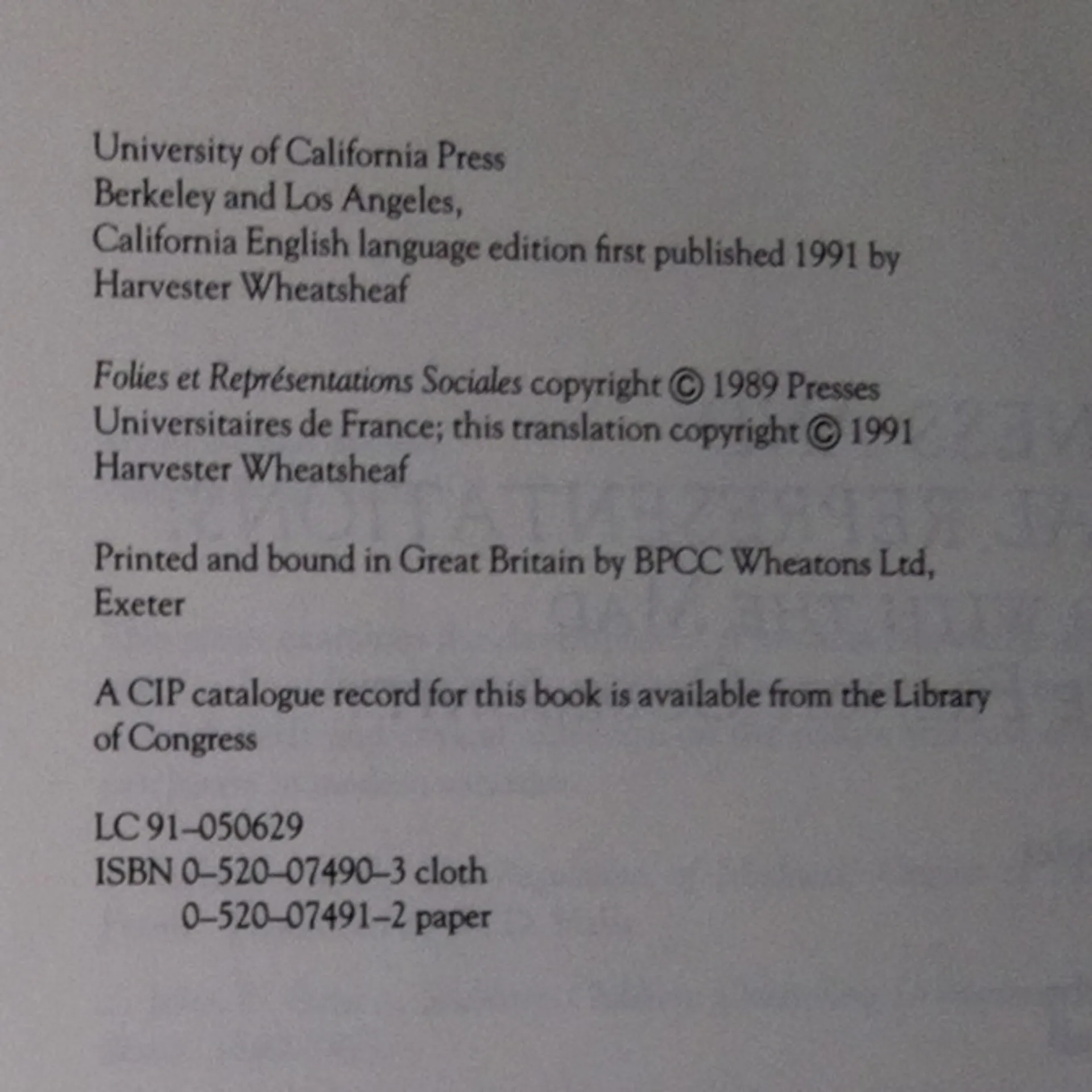
- 1991
- Einband
- Hardcover
- ISBN10
- 0520078659
- ISBN13
- 9780520078659
- Reihe
- Schlagwörter
- Beschreibung
- This account of a colony for the mentally ill challenges societal perceptions of madness. It explores the implications of integrating the mentally ill into the community rather than isolating them. Does familiarity foster understanding and sympathy, or does it reinforce existing barriers between the sane and the mad? The U.S. has seen a shift towards de-institutionalization, but Denise Jodelet presents an extraordinary community in France where the mentally ill have been integrated for over seventy years. In Ainay-le-Château, a "family colony" established in 1900 allows patients, referred to as "lodgers," to live with "foster parents," hold jobs, and enjoy freedom in the countryside. Jodelet's ethnographic exploration of daily life in this colony reveals a complex web of relationships. While some barriers between the "other" and society have been diminished, new challenges have emerged. This unique social experiment offers profound insights into the dynamics of community, shedding light on critical issues in psychology, psychiatry, and sociology. It invites readers to reconsider the nature of madness and the potential for empathy within society.