



Parameter
Mehr zum Buch
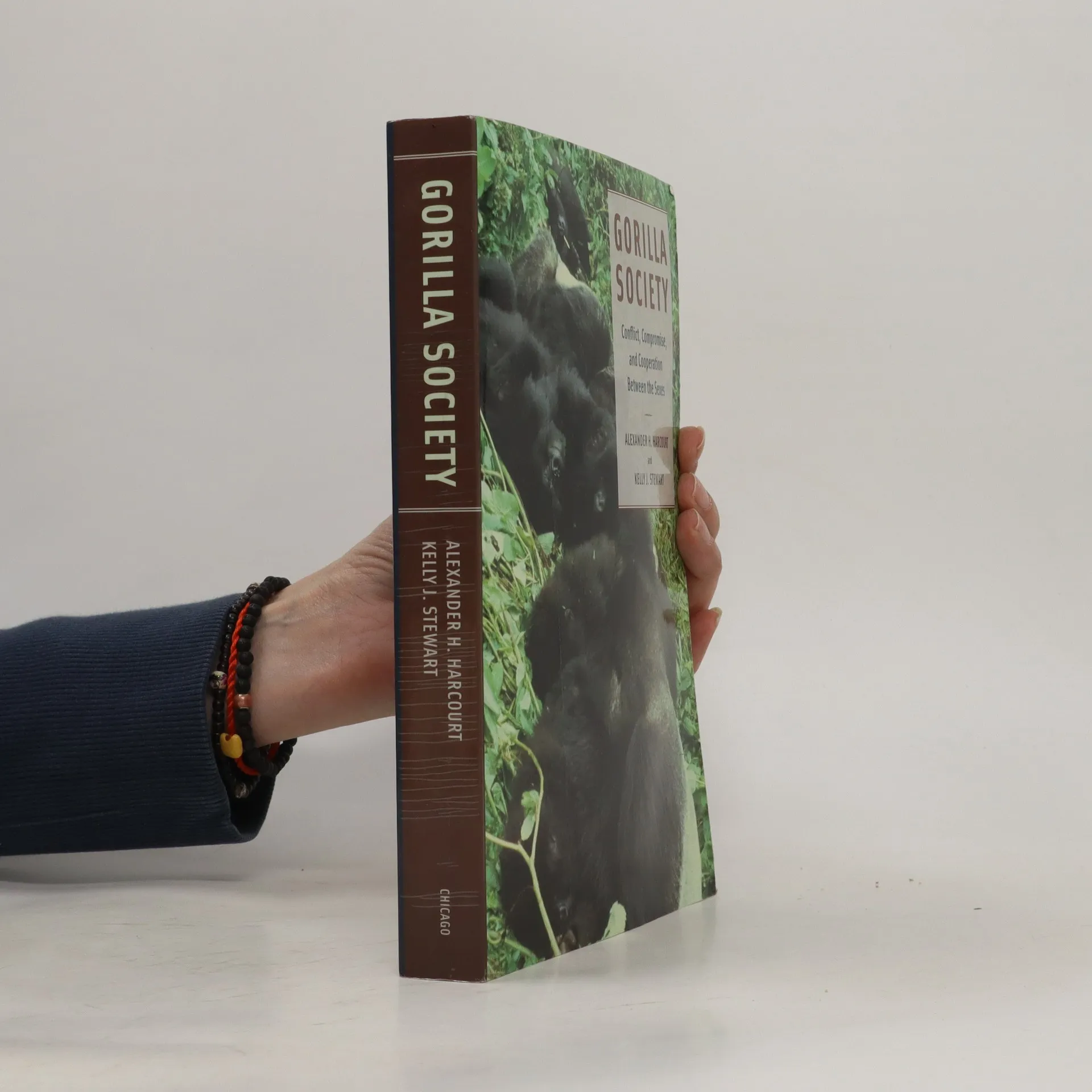
Societies develop as a result of the interactions of individuals as they compete and cooperate with one another in the evolutionary struggle to survive and reproduce successfully. Gorilla society is arranged according to these different and sometimes conflicting evolutionary goals of the sexes. In seeking to understand why gorilla society exists as it does, Alexander H. Harcourt and Kelly J. Stewart bring together extensive data on wild gorillas, collected over decades by numerous researchers working in diverse habitats across Africa, to illustrate how the social system of gorillas has evolved and endured. Gorilla Society introduces recent theories explaining primate societies, describes gorilla life history, ecology, and social systems, and explores both sexes’ evolutionary strategies of survival and reproduction. With a focus on the future, Harcourt and Stewart conclude with suggestions for future research and conservation. An exemplary work of socioecology from two of the world’s best known gorilla biologists, Gorilla Society will be a landmark study on a par with the work of George Schaller—a synthesis of existing research on these remarkable animals and the societies in which they live.
Buchkauf
Gorilla Society : conflict, compromise, and cooperation between the sexes, Alexander H Harcourt, Kelly J Stewart
- Sprache

- Erscheinungsdatum
- 2007
- Einband
- (Paperback)
Hier könnte deine Bewertung stehen.
- Titel
- Gorilla Society : conflict, compromise, and cooperation between the sexes
- Sprache
- Englisch
- Autor*innen
- Alexander H Harcourt, Kelly J Stewart
- Erscheinungsdatum
- 2007
- Einband
- Paperback
- ISBN10
- 0226316033
- ISBN13
- 9780226316031
- Reihe
- Kategorien
- Schlagwörter
- Bewertung
- 4,3 von 5 Sternen
- Beschreibung
- Societies develop as a result of the interactions of individuals as they compete and cooperate with one another in the evolutionary struggle to survive and reproduce successfully. Gorilla society is arranged according to these different and sometimes conflicting evolutionary goals of the sexes. In seeking to understand why gorilla society exists as it does, Alexander H. Harcourt and Kelly J. Stewart bring together extensive data on wild gorillas, collected over decades by numerous researchers working in diverse habitats across Africa, to illustrate how the social system of gorillas has evolved and endured. Gorilla Society introduces recent theories explaining primate societies, describes gorilla life history, ecology, and social systems, and explores both sexes’ evolutionary strategies of survival and reproduction. With a focus on the future, Harcourt and Stewart conclude with suggestions for future research and conservation. An exemplary work of socioecology from two of the world’s best known gorilla biologists, Gorilla Society will be a landmark study on a par with the work of George Schaller—a synthesis of existing research on these remarkable animals and the societies in which they live.