

Parameter
- 375 Seiten
- 14 Lesestunden
Mehr zum Buch
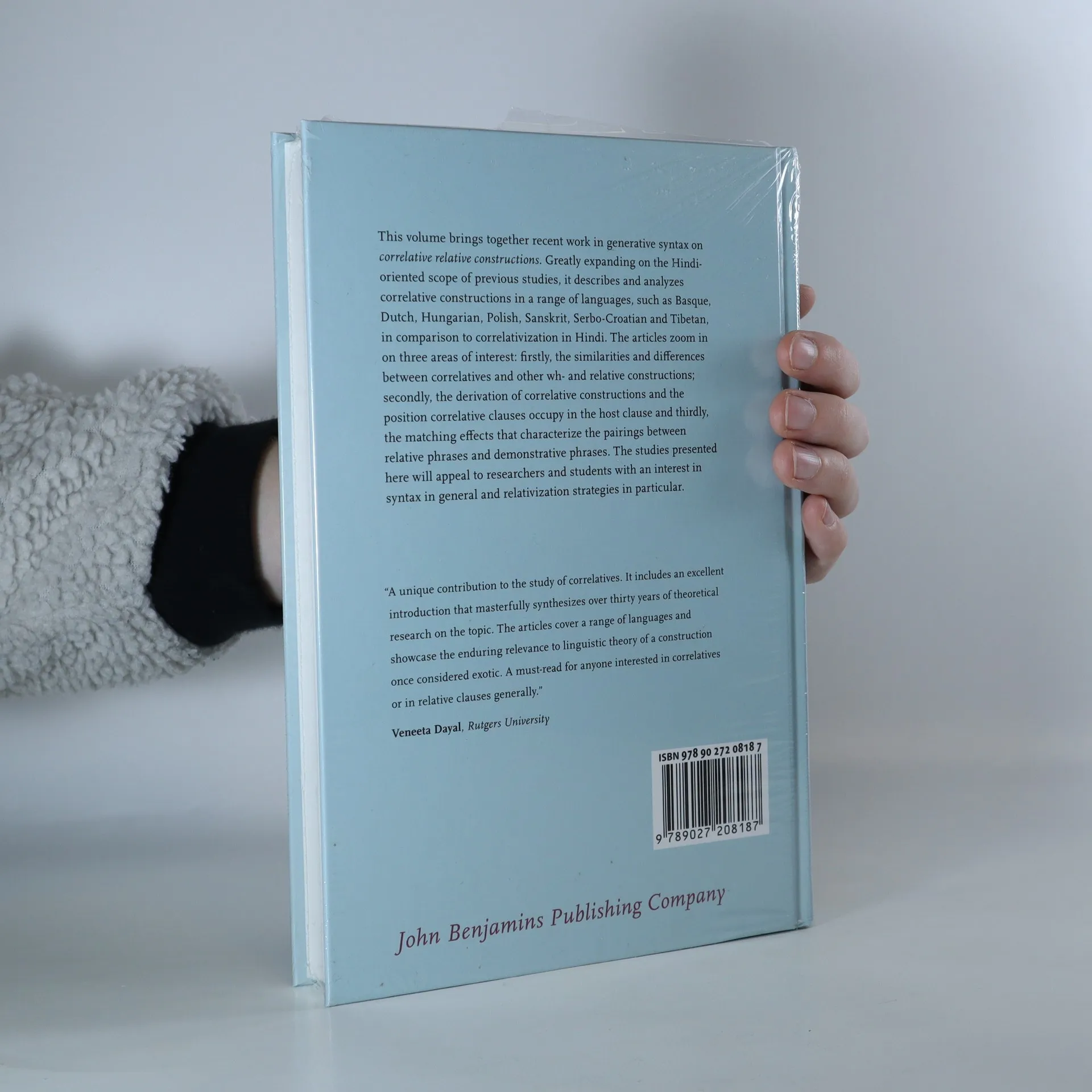
This volume brings together recent work in generative syntax on "correlative relative constructions." Greatly expanding on the Hindi-oriented scope of previous studies, it describes and analyzes correlative constructions in a range of languages, such as Basque, Dutch, Hungarian, Polish, Sanskrit, Serbo-Croatian and Tibetan, in comparison to correlativization in Hindi. The articles zoom in on three areas of interest: firstly, the similarities and differences between correlatives and other wh- and relative constructions; secondly, the derivation of correlative constructions and the position correlative clauses occupy in the host clause and thirdly, the matching effects that characterize the pairings between relative phrases and demonstrative phrases. The studies presented here will appeal to researchers and students with an interest in syntax in general and relativization strategies in particular.
Buchkauf
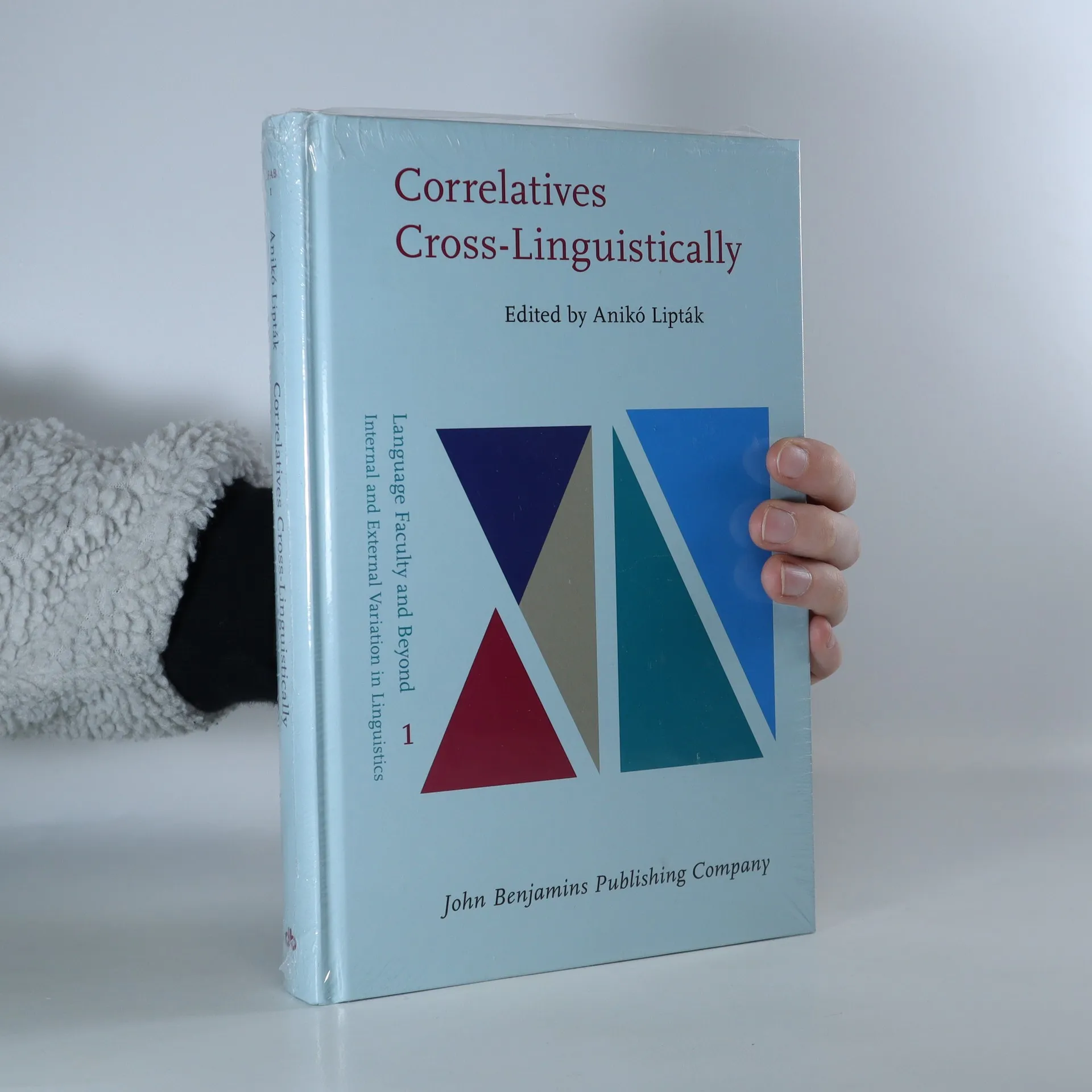
Correlatives Cross-Linguistically, Anikó Lipták
- Sprache

- Erscheinungsdatum
- 2009
- Einband
- (Hardcover)
Keiner hat bisher bewertet.
- Titel
- Correlatives Cross-Linguistically
- Sprache
- Englisch
- Autor*innen
- Anikó Lipták
- Verlag
- John Benjamins Pub. Co.
- Erscheinungsdatum
- 2009
- Einband
- Hardcover
- Seitenzahl
- 375
- ISBN10
- 9027208182
- ISBN13
- 9789027208187
- Reihe
- Kuratierte Auswahl
- Language faculty and beyond
- Kategorien
- Schlagwörter
- Sonstige Lehrbücher
- Beschreibung
- This volume brings together recent work in generative syntax on "correlative relative constructions." Greatly expanding on the Hindi-oriented scope of previous studies, it describes and analyzes correlative constructions in a range of languages, such as Basque, Dutch, Hungarian, Polish, Sanskrit, Serbo-Croatian and Tibetan, in comparison to correlativization in Hindi. The articles zoom in on three areas of interest: firstly, the similarities and differences between correlatives and other wh- and relative constructions; secondly, the derivation of correlative constructions and the position correlative clauses occupy in the host clause and thirdly, the matching effects that characterize the pairings between relative phrases and demonstrative phrases. The studies presented here will appeal to researchers and students with an interest in syntax in general and relativization strategies in particular.