

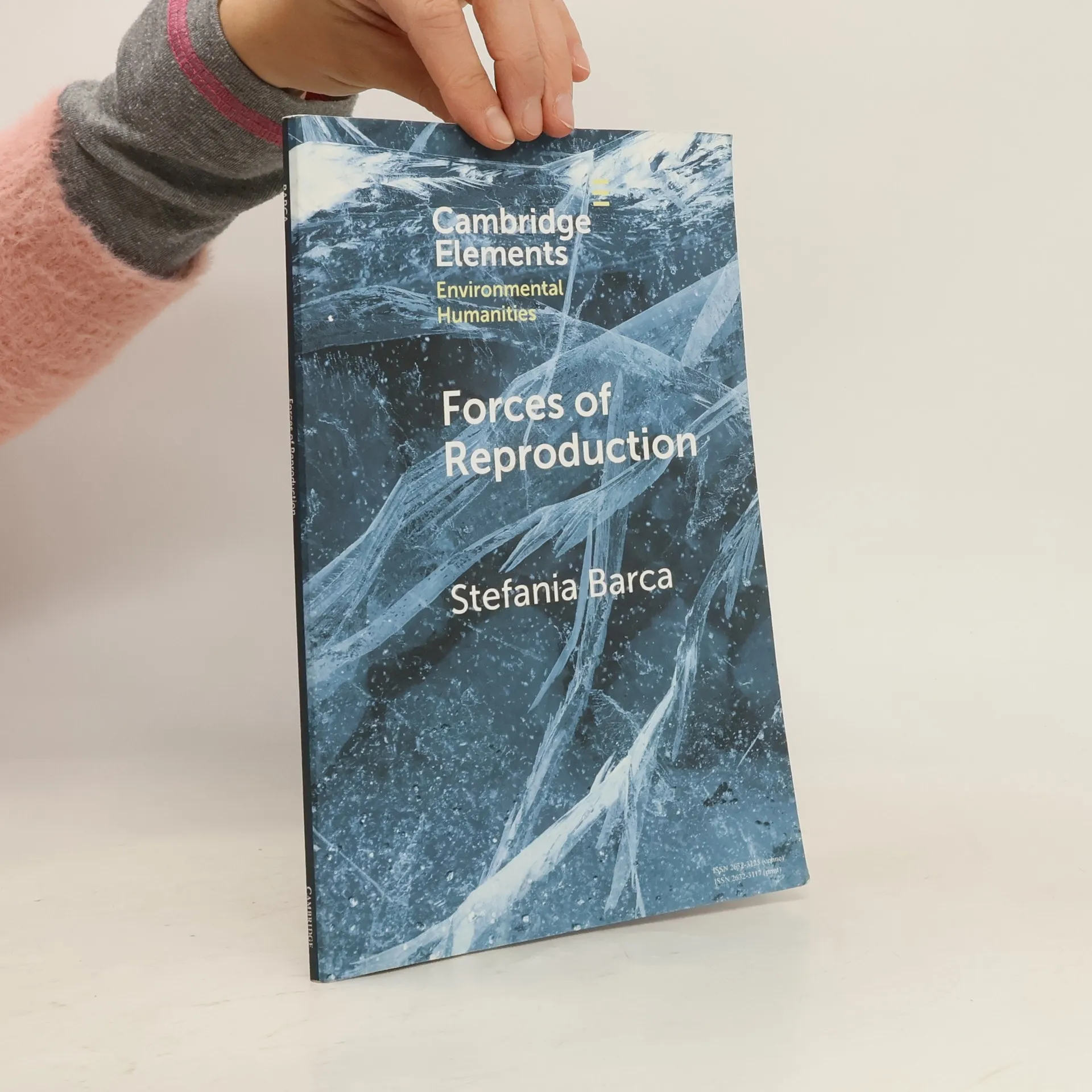
Mehr zum Buch
"The concept of Anthropocene has been incorporated within a hegemonic narrative that represents 'Man' as the dominant geological force of our epoch, emphasizing the destruction and salvation power of industrial technologies. This Element develops a counter-hegemonic narrative based on the perspective of earthcare labour - or the 'forces of reproduction'. It brings to the fore the historical agency of reproductive and subsistence workers as those subjects that, through both daily practices and organized political action, take care of the biophysical conditions for human reproduction, thus keeping the world alive. Adopting a narrative justice approach, and placing feminist political ecology right at the core of its critique of the Anthropocene storyline, this Element offers a novel and timely contribution to the environmental humanities."-- Provided by publisher
Buchkauf
Forces of Reproduction, Stefania Barca
- Sprache

- Erscheinungsdatum
- 2020
- Einband
- (Paperback)
Hier könnte deine Bewertung stehen.
- Titel
- Forces of Reproduction
- Sprache
- Englisch
- Autor*innen
- Stefania Barca
- Erscheinungsdatum
- 2020
- Einband
- Paperback
- Seitenzahl
- 88
- ISBN10
- 110881395X
- ISBN13
- 9781108813952
- Reihe
- Schlagwörter
- Politik, Feminismus, Wissenschaftliche Theorien
- Bewertung
- 4,2 von 5 Sternen
- Beschreibung
- "The concept of Anthropocene has been incorporated within a hegemonic narrative that represents 'Man' as the dominant geological force of our epoch, emphasizing the destruction and salvation power of industrial technologies. This Element develops a counter-hegemonic narrative based on the perspective of earthcare labour - or the 'forces of reproduction'. It brings to the fore the historical agency of reproductive and subsistence workers as those subjects that, through both daily practices and organized political action, take care of the biophysical conditions for human reproduction, thus keeping the world alive. Adopting a narrative justice approach, and placing feminist political ecology right at the core of its critique of the Anthropocene storyline, this Element offers a novel and timely contribution to the environmental humanities."-- Provided by publisher