

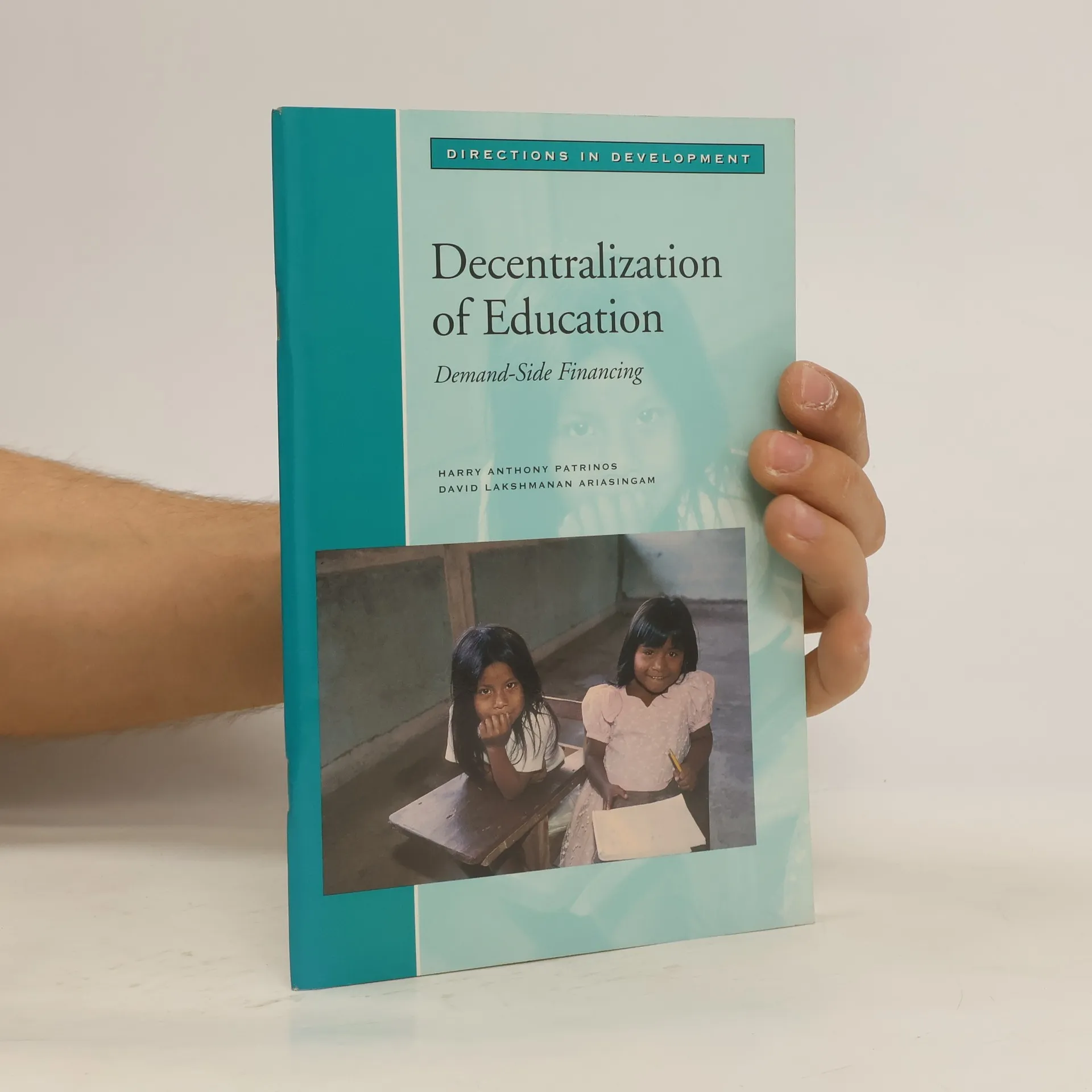


Decentralization of Education
Demand-side Financing
Mehr zum Buch
Central governments' supply-side expansions of schooling have not equally benefited all members of society, especially girls, indigenous peoples, tribal groups, disadvantaged minorities, and the poor. Public spending on education is often inefficient, higher education is subsidized at primary education's expense, and costs are becoming insupportable. To tackle such issues, some governments are exploring demand-side financing, whereby public funds are given directly to individuals or institutions on the basis of expressed demand. Use of decentralized, demand-side financing mechanisms (like vouchers and stipends) is common in member countries of the Organization for Economic Cooperation and Development. After defining several mechanisms, this booklet provides some country examples aiming to increase school enrollment: stipends in Bangladesh, community financing in Chad, targeted bursaries in China and Mexico, voucher schemes in Colombia, assistance to private schools serving poor children in the Dominican Republic and Pakistan, student loans in Jamaica, and community grants in Pakistan. Program success depends on beneficiaries' involvement and support, parents' active participation, private-sector schools' involvement, partnerships with commercial enterprises, flexibility, capacity building, cultural relevance, equity principles, and transparent fund transfer formulas. Contains 47 references. (MLH)
Buchkauf
Decentralization of Education, Harry Anthony Patrinos, David Lakshmanan Ariasingam
- Sprache

- Erscheinungsdatum
- 1997
- Einband
- (Paperback)
Keiner hat bisher bewertet.
- Titel
- Decentralization of Education
- Untertitel
- Demand-side Financing
- Sprache
- Englisch
- Autor*innen
- Harry Anthony Patrinos, David Lakshmanan Ariasingam
- Verlag
- World Bank Publications
- Erscheinungsdatum
- 1997
- Einband
- Paperback
- Seitenzahl
- 64
- ISBN10
- 0821339303
- ISBN13
- 9780821339305
- Reihe
- Kategorien
- Schlagwörter
- Bildung, Soziale Probleme, Entwicklungsländer
- Beschreibung
- Central governments' supply-side expansions of schooling have not equally benefited all members of society, especially girls, indigenous peoples, tribal groups, disadvantaged minorities, and the poor. Public spending on education is often inefficient, higher education is subsidized at primary education's expense, and costs are becoming insupportable. To tackle such issues, some governments are exploring demand-side financing, whereby public funds are given directly to individuals or institutions on the basis of expressed demand. Use of decentralized, demand-side financing mechanisms (like vouchers and stipends) is common in member countries of the Organization for Economic Cooperation and Development. After defining several mechanisms, this booklet provides some country examples aiming to increase school enrollment: stipends in Bangladesh, community financing in Chad, targeted bursaries in China and Mexico, voucher schemes in Colombia, assistance to private schools serving poor children in the Dominican Republic and Pakistan, student loans in Jamaica, and community grants in Pakistan. Program success depends on beneficiaries' involvement and support, parents' active participation, private-sector schools' involvement, partnerships with commercial enterprises, flexibility, capacity building, cultural relevance, equity principles, and transparent fund transfer formulas. Contains 47 references. (MLH)