

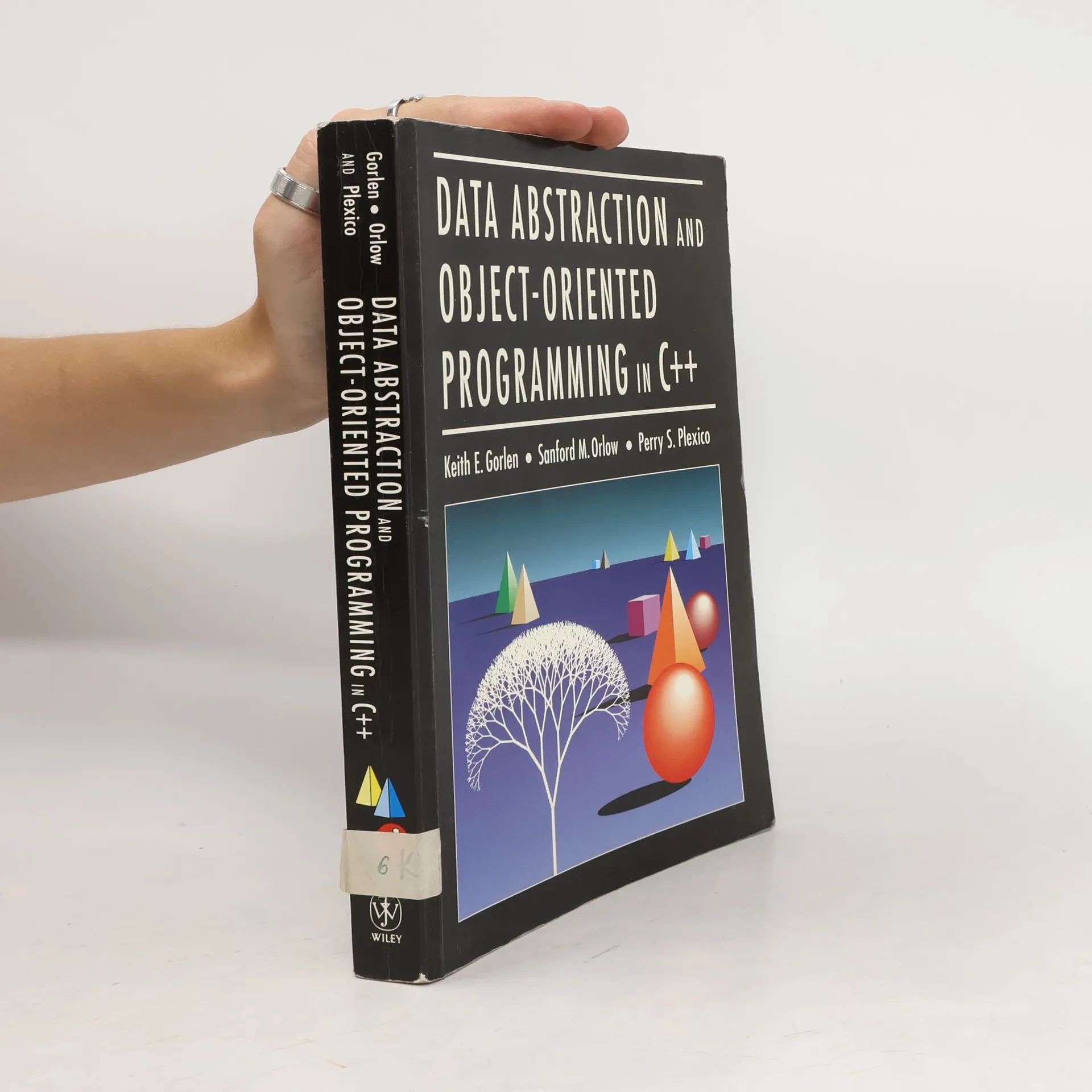

Data Abstraction and Object-Oriented Programming in C++
Mehr zum Buch
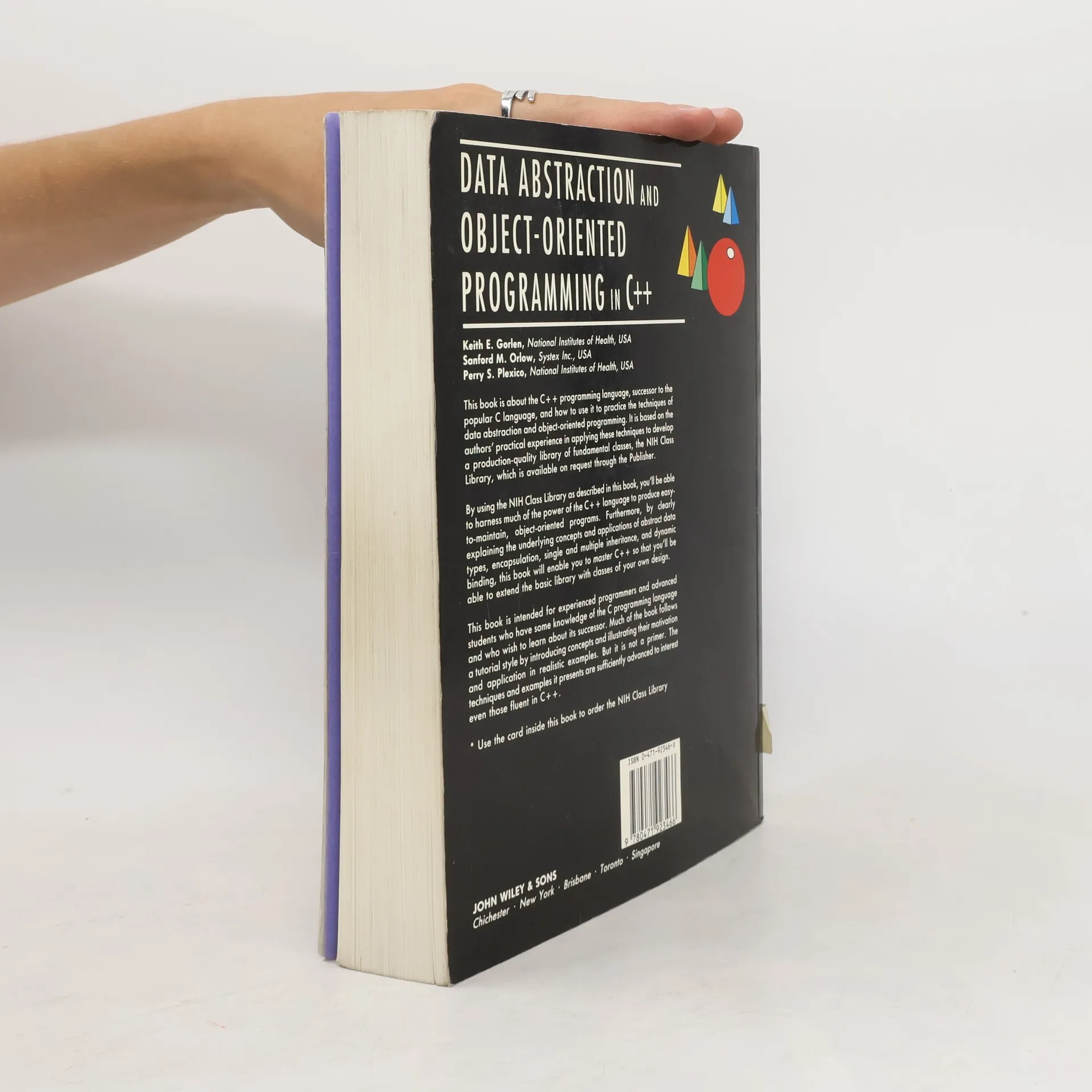
Explains the C++ programming language and how to use it to write abstract data types and object-oriented programs (OOPs). Through practical illustrations, techniques and examples, it shows how to write good C++ programs. The first part explores the various abstract data types, focusing on their use in conventional procedural programs. Part Two covers OOP concepts, explaining their advantages over other programs, and develops a complete OOP example. The NIH (National Institutes of Health) Class Library is introduced and developed by the authors, and specific NIH library classes that support multiprogramming using coroutines are described. Additionally, a case study of the object-oriented design and implementation of a large software system based on the NIH Class Library are presented, along with potential areas of further development for both C++ and the NIH Class Library.
Buchkauf
Data Abstraction and Object-Oriented Programming in C++, Keith E. Gorlen, Sanford M. Orlow, Perry S. Plexico
- Sprache

- Erscheinungsdatum
- 1990
- Einband
- (Paperback)
Keiner hat bisher bewertet.
- Titel
- Data Abstraction and Object-Oriented Programming in C++
- Sprache
- Englisch
- Autor*innen
- Keith E. Gorlen, Sanford M. Orlow, Perry S. Plexico
- Verlag
- John Wiley & Sons Inc
- Erscheinungsdatum
- 1990
- Einband
- Paperback
- ISBN10
- 047192346X
- ISBN13
- 9780471923466
- Reihe
- Schlagwörter
- Programmiersprachen C, C++, C#, Datenkodierung
- Beschreibung
- Explains the C++ programming language and how to use it to write abstract data types and object-oriented programs (OOPs). Through practical illustrations, techniques and examples, it shows how to write good C++ programs. The first part explores the various abstract data types, focusing on their use in conventional procedural programs. Part Two covers OOP concepts, explaining their advantages over other programs, and develops a complete OOP example. The NIH (National Institutes of Health) Class Library is introduced and developed by the authors, and specific NIH library classes that support multiprogramming using coroutines are described. Additionally, a case study of the object-oriented design and implementation of a large software system based on the NIH Class Library are presented, along with potential areas of further development for both C++ and the NIH Class Library.