


Mehr zum Buch
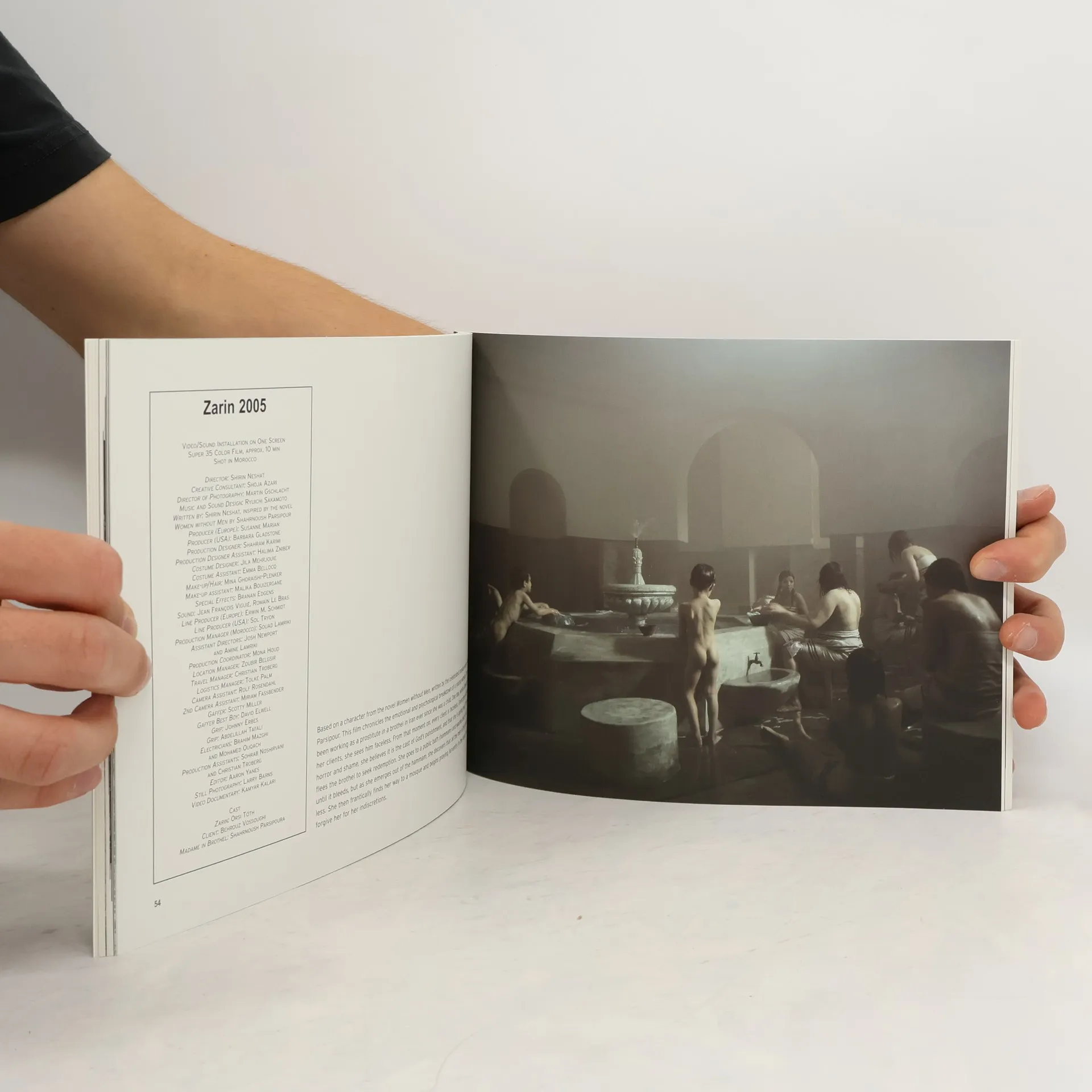
In Shirin Neshat's photographs, Arabic calligraphic script is transcribed over black-and-white depictions of the exposed faces, hands, and feet of Iranian women. In her video works, swarms of women in black hijabs ululate; a man in a white dress shirt and black pants sings to an all-male audience; and a lone, nearly invisible woman chants to herself in a darkened house. Though focused on the particulars of the oppression of women in contemporary Iran, Neshat underscores the relevance of her poetic, disturbing, moving ensembles to a broader culture. Presented here are stills from five of Neshat's recent Tooba (2002), in which a female protagonist wanders through the artist's interpretation of the Garden of Eden; The Last Word (2003), a surreal and disturbing look into the mind of an Iranian woman writer; Mahdokht/I> (2004), Neshat's first feature-length film, set in a magical garden and based on Shahrnoush Parsipour's novella, Women without Men and Zarin (2005).
Buchkauf
Shirin Neshat, Shirin Neshat, Shoja Youssefi Azari
- Sprache

- Erscheinungsdatum
- 2005
- Einband
- (Paperback)
Hier könnte deine Bewertung stehen.
- Titel
- Shirin Neshat
- Untertitel
- 2002-2005
- Sprache
- Englisch
- Autor*innen
- Shirin Neshat, Shoja Youssefi Azari
- Verlag
- Charta
- Erscheinungsdatum
- 2005
- Einband
- Paperback
- Seitenzahl
- 88
- ISBN10
- 8881585405
- ISBN13
- 9788881585403
- Reihe
- Kategorien
- Schlagwörter
- Ausstellungskataloge
- Bewertung
- 4,5 von 5 Sternen
- Beschreibung
- In Shirin Neshat's photographs, Arabic calligraphic script is transcribed over black-and-white depictions of the exposed faces, hands, and feet of Iranian women. In her video works, swarms of women in black hijabs ululate; a man in a white dress shirt and black pants sings to an all-male audience; and a lone, nearly invisible woman chants to herself in a darkened house. Though focused on the particulars of the oppression of women in contemporary Iran, Neshat underscores the relevance of her poetic, disturbing, moving ensembles to a broader culture. Presented here are stills from five of Neshat's recent Tooba (2002), in which a female protagonist wanders through the artist's interpretation of the Garden of Eden; The Last Word (2003), a surreal and disturbing look into the mind of an Iranian woman writer; Mahdokht/I> (2004), Neshat's first feature-length film, set in a magical garden and based on Shahrnoush Parsipour's novella, Women without Men and Zarin (2005).