


Mehr zum Buch
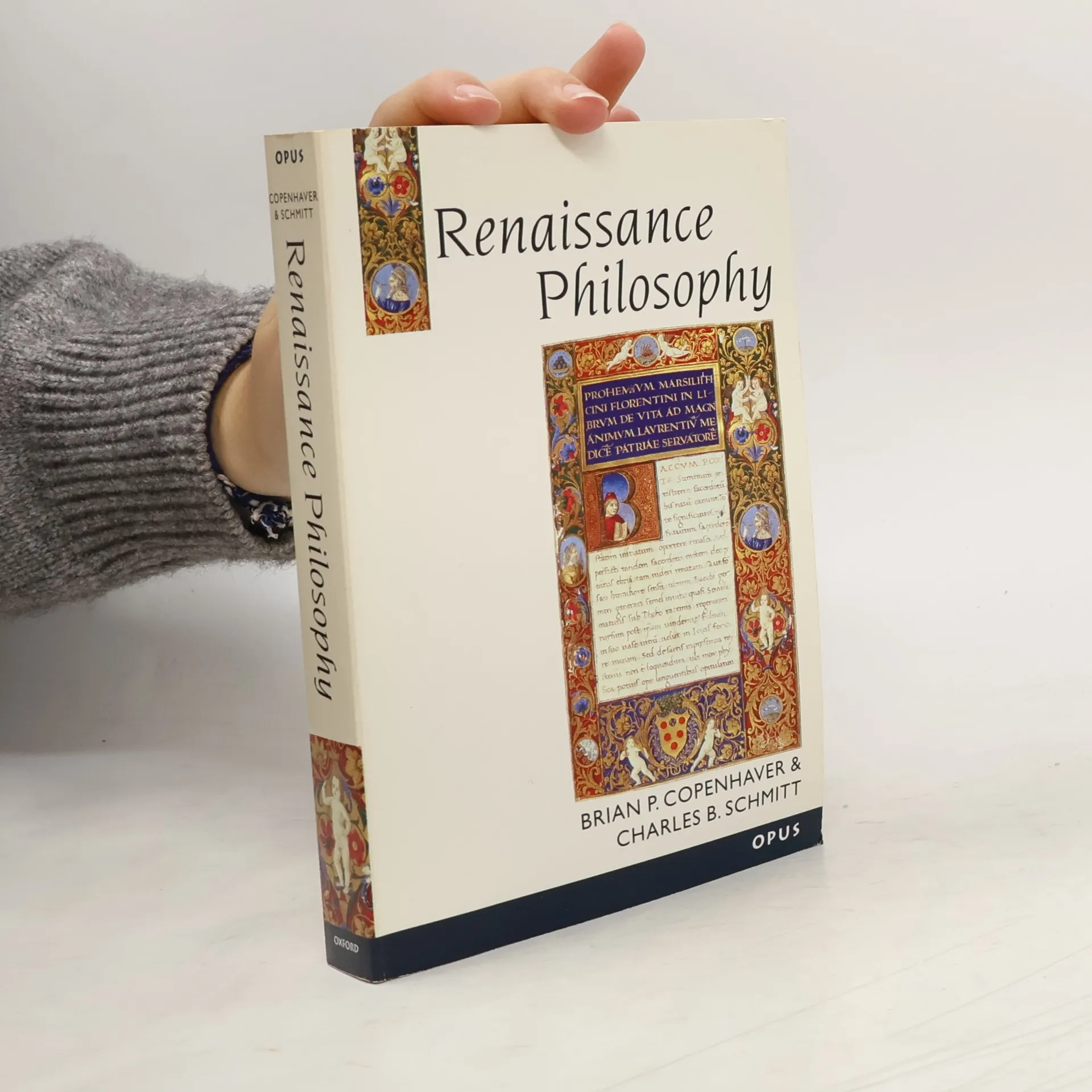
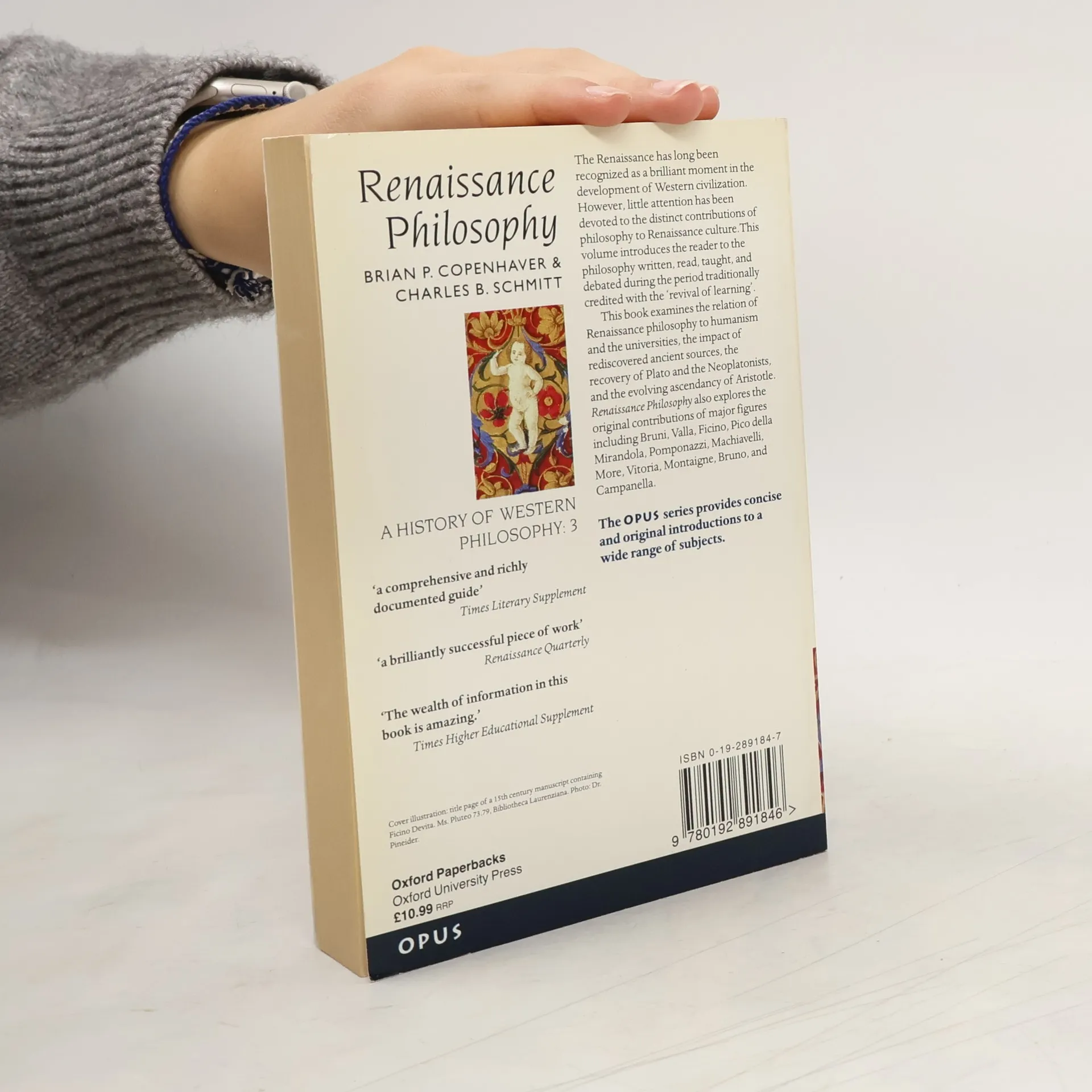
The Renaissance has long been recognized as a brilliant moment in the development of Western civilization. Little attention has been devoted, however, to the distinct contribution of philosophy to Renaissance culture. This volume introduces the reader to the philosophy written, read, taught, and debated during the period traditionally credited with the "revival of learning." Beginning with original sources still largely inaccessible to most readers, and drawing on a wide range of secondary studies, the author examines the relation of Renaissance philosophy to humanism and the universities, the impact of rediscovered ancient sources, the recovery of Plato and the Neoplatonists, and the evolving ascendancy of Aristotle. Renaissance Philosophy also explores the original contributions of major figures including Bruni, Valla, Ficino, Pico della Mirandola, Pomponazzi, Machiavelli, More, Vitoria, Montaigne, Bruno, and Camapanella.
Buchkauf
Opus: Renaissance Philosophy, Brian P. Copenhaver, Charles B. Schmitt
- Sprache

- Erscheinungsdatum
- 1992
- Einband
- (Paperback)
Hier könnte deine Bewertung stehen.
- Titel
- Opus: Renaissance Philosophy
- Sprache
- Englisch
- Autor*innen
- Brian P. Copenhaver, Charles B. Schmitt
- Verlag
- Oxford University Press
- Erscheinungsdatum
- 1992
- Einband
- Paperback
- Seitenzahl
- 450
- ISBN10
- 0192891847
- ISBN13
- 9780192891846
- Reihe
- Kategorien
- Schlagwörter
- Historisches Thema, Philosophisches Thema, Kunst
- Bewertung
- 4,1 von 5 Sternen
- Beschreibung
- The Renaissance has long been recognized as a brilliant moment in the development of Western civilization. Little attention has been devoted, however, to the distinct contribution of philosophy to Renaissance culture. This volume introduces the reader to the philosophy written, read, taught, and debated during the period traditionally credited with the "revival of learning." Beginning with original sources still largely inaccessible to most readers, and drawing on a wide range of secondary studies, the author examines the relation of Renaissance philosophy to humanism and the universities, the impact of rediscovered ancient sources, the recovery of Plato and the Neoplatonists, and the evolving ascendancy of Aristotle. Renaissance Philosophy also explores the original contributions of major figures including Bruni, Valla, Ficino, Pico della Mirandola, Pomponazzi, Machiavelli, More, Vitoria, Montaigne, Bruno, and Camapanella.