

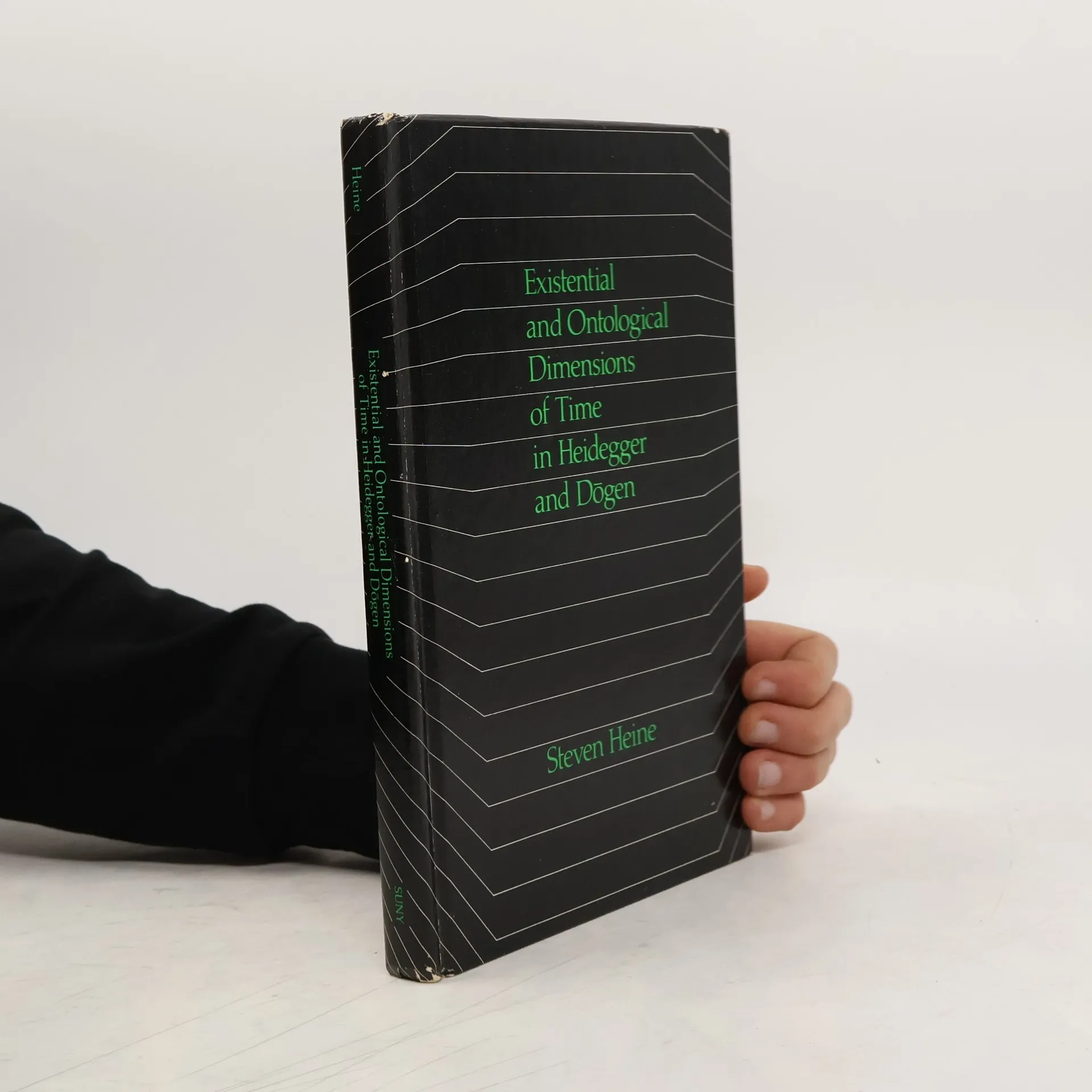


Existential and Ontological Dimensions of Time in Heidegger and Dogen
Autor*innen
Mehr zum Buch
In a landmark work, Steven Heine establishes the basis and framework for philosophical dialogue between Heidegger's approach to "Being and Time" and Dogen's doctrine of "being-time." Close examination of their analysis of the true nature, structure, and meaning of time reveals critical points of convergence in the existential and ontological dimensions of their thought. Heine asserts that Heidegger and Dogen are uniquely suited for critical comparative and cross-cultural study because both attempt to overcome their respective philosophical traditions that express unacknowledged and deficient presuppositions concerning time. And both reorient our understanding of all phases of existence and experience in terms of time and temporality, death and dying, and finitude and impermanence. Heine provides new insight into Dogen's philosophy as seen in the "Uji" chapter of Dogen's Shorogenzo. The book features a new annotated translation of the "Uji" and a glossary of Japanese terms.
Buchkauf
Existential and Ontological Dimensions of Time in Heidegger and Dogen, Steven Heine
- Sprache

- Erscheinungsdatum
- 1985
- Einband
- (Hardcover)
Keiner hat bisher bewertet.
- Titel
- Existential and Ontological Dimensions of Time in Heidegger and Dogen
- Sprache
- Englisch
- Autor*innen
- Steven Heine
- Erscheinungsdatum
- 1985
- Einband
- Hardcover
- Seitenzahl
- 212
- ISBN10
- 0887060005
- ISBN13
- 9780887060007
- Reihe
- Schlagwörter
- Religiöse Themen, Philosophisches Thema, Zen
- Beschreibung
- In a landmark work, Steven Heine establishes the basis and framework for philosophical dialogue between Heidegger's approach to "Being and Time" and Dogen's doctrine of "being-time." Close examination of their analysis of the true nature, structure, and meaning of time reveals critical points of convergence in the existential and ontological dimensions of their thought. Heine asserts that Heidegger and Dogen are uniquely suited for critical comparative and cross-cultural study because both attempt to overcome their respective philosophical traditions that express unacknowledged and deficient presuppositions concerning time. And both reorient our understanding of all phases of existence and experience in terms of time and temporality, death and dying, and finitude and impermanence. Heine provides new insight into Dogen's philosophy as seen in the "Uji" chapter of Dogen's Shorogenzo. The book features a new annotated translation of the "Uji" and a glossary of Japanese terms.