

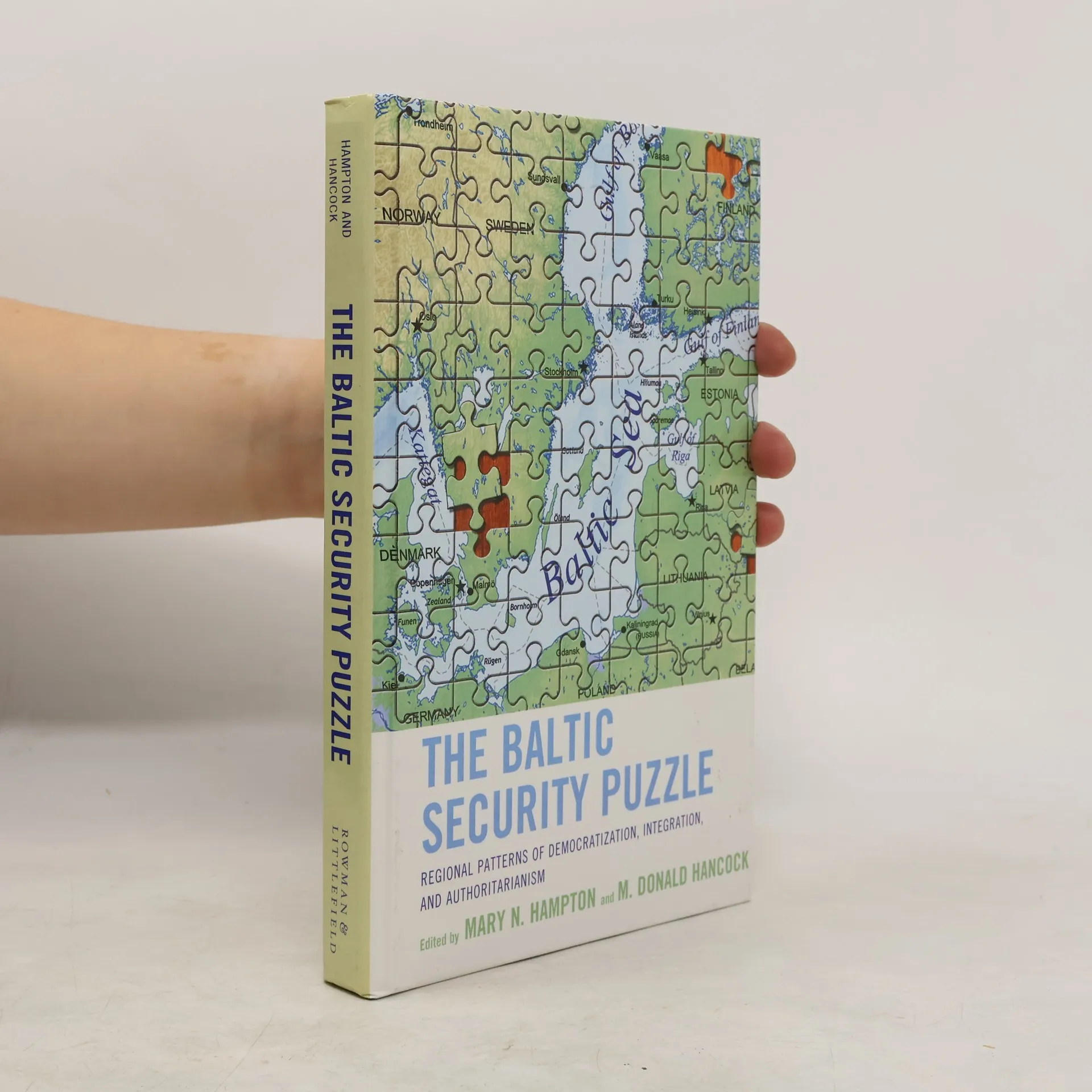


The Baltic Security Puzzle
Regional Patterns of Democratization, Integration, and Authoritarianism
Autor*innen
Buchbewertung
Parameter
- 224 Seiten
- 8 Lesestunden
Mehr zum Buch
International experts assess the components of the Baltic security puzzle by placing the security and political interests of the states of Latvia, Estonia, and Lithuania within the historical, economic, and political narratives of the greater Baltic region. They first reevaluate Baltic history as a progression of conflict, partial integration, Cold War division, up to today’s efforts to build a security community. Next, they focus on economic and social relations by contrasting patterns of democratization, domestic politics, EU membership, and the economics of crime. Lastly, they analyze military security and evolving regional perceptions of threats as well as the dynamics of alliance behavior and the recent geostrategic clashes unearthed by Russia’s behavior in Ukraine.
Buchkauf
The Baltic Security Puzzle, Donald M. Hancock, Mary N. Hampton
- Sprache

- Erscheinungsdatum
- 2015
- Einband
- (Hardcover)
Hier könnte deine Bewertung stehen.
- Titel
- The Baltic Security Puzzle
- Untertitel
- Regional Patterns of Democratization, Integration, and Authoritarianism
- Sprache
- Englisch
- Autor*innen
- Donald M. Hancock, Mary N. Hampton
- Verlag
- Rowman & Littlefield
- Erscheinungsdatum
- 2015
- Einband
- Hardcover
- Seitenzahl
- 224
- ISBN10
- 1442248521
- ISBN13
- 9781442248526
- Reihe
- Schlagwörter
- Politik, Politische Theorien, Gesammelte Werke, Internationale Beziehungen, Osteuropa, Diplomatie, Litauen, Estland, Lettland
- Bewertung
- 2 von 5 Sternen
- Beschreibung
- International experts assess the components of the Baltic security puzzle by placing the security and political interests of the states of Latvia, Estonia, and Lithuania within the historical, economic, and political narratives of the greater Baltic region. They first reevaluate Baltic history as a progression of conflict, partial integration, Cold War division, up to today’s efforts to build a security community. Next, they focus on economic and social relations by contrasting patterns of democratization, domestic politics, EU membership, and the economics of crime. Lastly, they analyze military security and evolving regional perceptions of threats as well as the dynamics of alliance behavior and the recent geostrategic clashes unearthed by Russia’s behavior in Ukraine.