

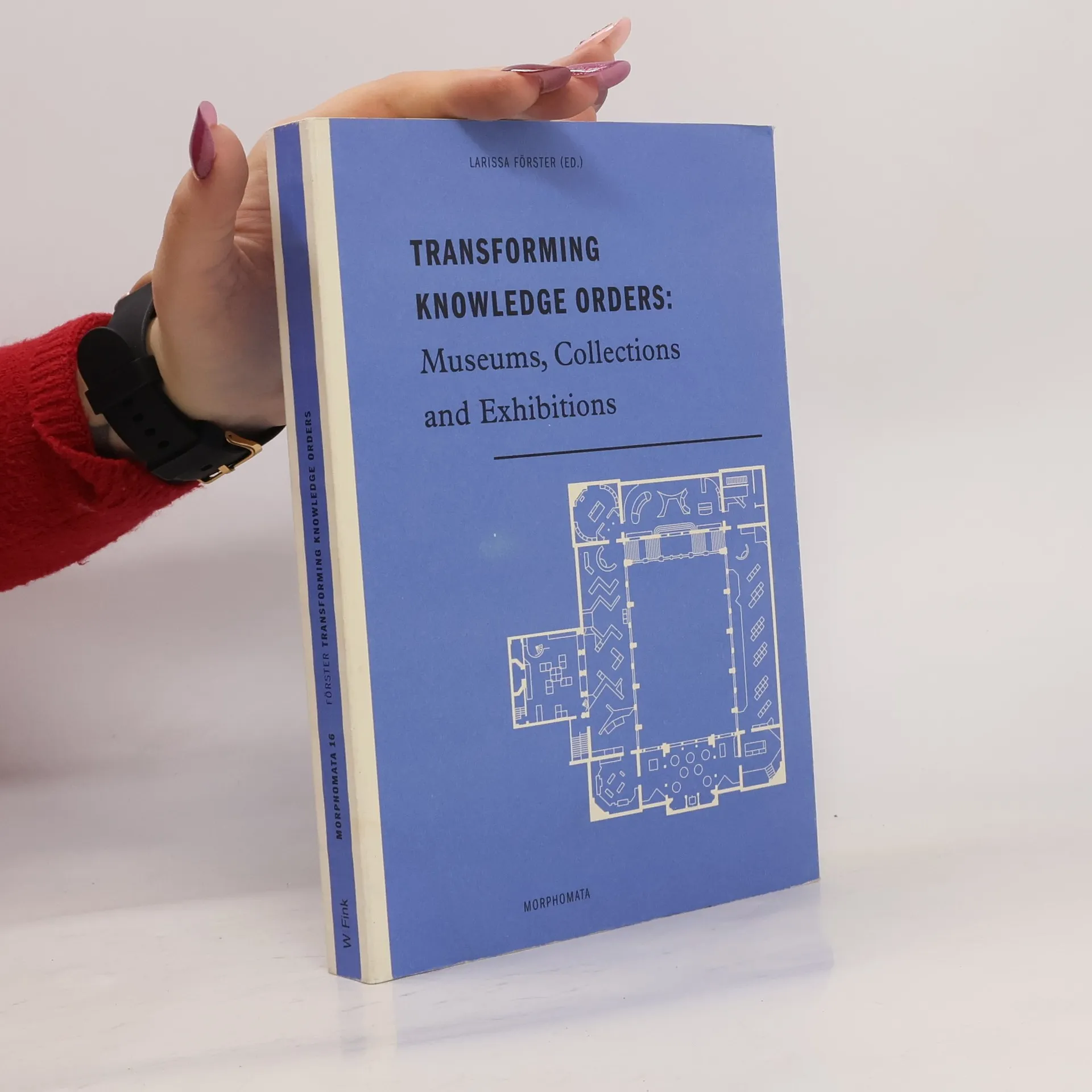
Morphomata - 16: Transforming Knowledge Orders
Museums, Collections and Exhibitions
Autor*innen
Parameter
- 288 Seiten
- 11 Lesestunden
Mehr zum Buch
Museums transmit and disseminate, yet also produce knowledge. Collections and exhibitions reflect scientific theory and scholarly practice, and in turn shape them. This volume brings together case studies from various historical and cultural contexts that illuminate such dynamics. On the one hand, museums visualize and stabilize orders of knowledge through assembling, classifying and exhibiting objects; on the other hand, new academic paradigms and political changes and upheavals lead to a rearrangement of facts and artifacts in museum storerooms and displays. The volume focuses on transcultural collections and exhibitions such as curiosity cabinets, ethnographic and archeological collections, but also explores transformative moments in the history of art museums as well as science as technology museums.
Buchkauf
Morphomata - 16: Transforming Knowledge Orders, Larissa Förster
- Sprache

- Erscheinungsdatum
- 2014
- Einband
- (Paperback)
Keiner hat bisher bewertet.
- Titel
- Morphomata - 16: Transforming Knowledge Orders
- Untertitel
- Museums, Collections and Exhibitions
- Sprache
- Englisch
- Autor*innen
- Larissa Förster
- Verlag
- Fink
- Erscheinungsdatum
- 2014
- Einband
- Paperback
- Seitenzahl
- 288
- ISBN10
- 3770556135
- ISBN13
- 9783770556137
- Reihe
- Kategorien
- Schlagwörter
- Handel, Kunst, Universitätslehrbücher, Ausstellungskataloge, Serie, Kunstgeschichte, Geschichtsschulbücher, Museen, Soziale Geschichte, Wissen
- Beschreibung
- Museums transmit and disseminate, yet also produce knowledge. Collections and exhibitions reflect scientific theory and scholarly practice, and in turn shape them. This volume brings together case studies from various historical and cultural contexts that illuminate such dynamics. On the one hand, museums visualize and stabilize orders of knowledge through assembling, classifying and exhibiting objects; on the other hand, new academic paradigms and political changes and upheavals lead to a rearrangement of facts and artifacts in museum storerooms and displays. The volume focuses on transcultural collections and exhibitions such as curiosity cabinets, ethnographic and archeological collections, but also explores transformative moments in the history of art museums as well as science as technology museums.