

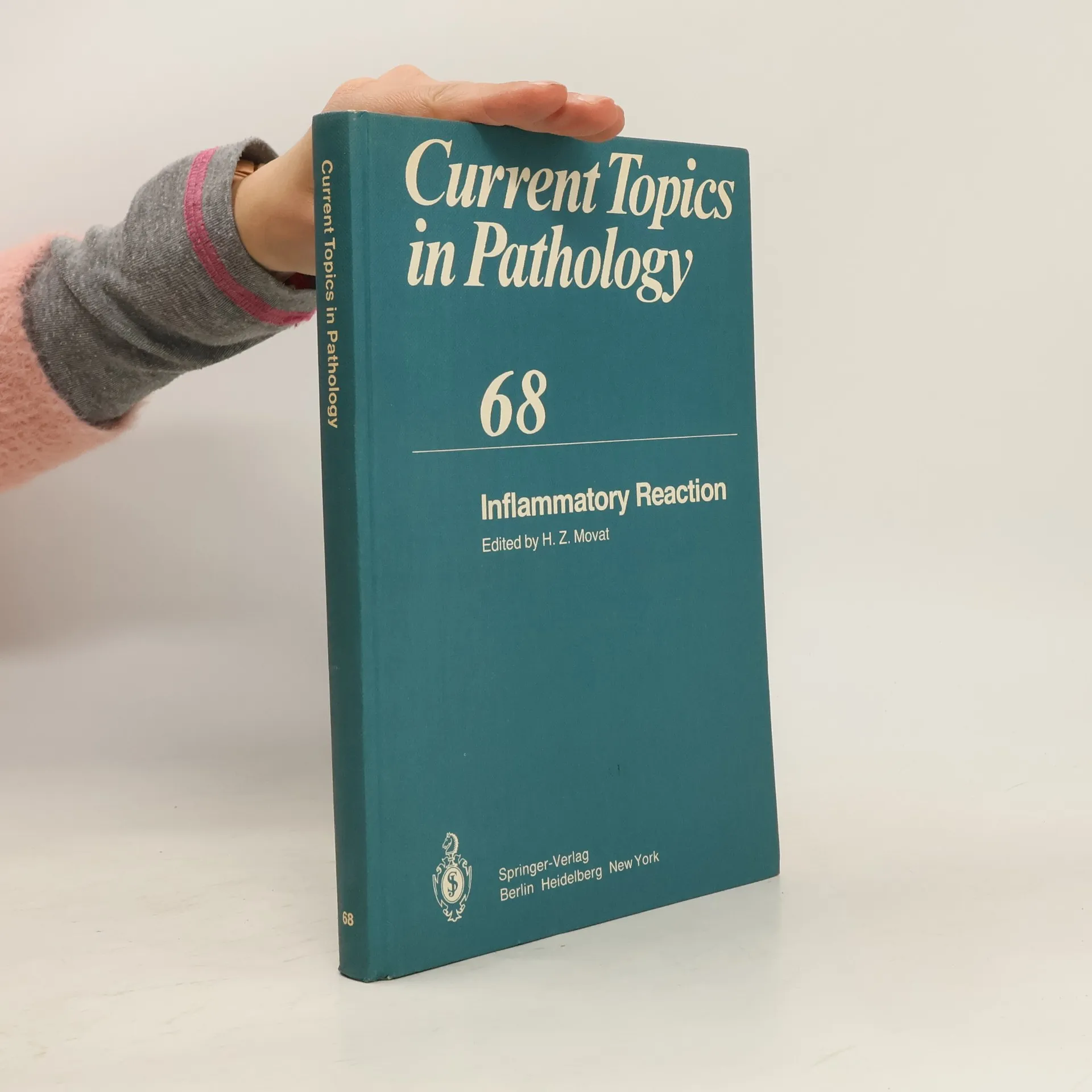

Current Topics in Pathology - 68: Inflammatory Reaction
Autor*innen
Mehr zum Buch
The morphological behaviour of leucocytes. leaving the blood has been studied for more than a hundred years and can be described in some detail, but the mechanisms involved are for the most part still unclear. Following an inflammatory stimulus, dy namic changes occur in small blood vessels near the inflamed site and are followed by margination of leucocytes and by their adherence to the endovascular surface of endo out of the vessel in the gaps between endothelial thelial cells. The leucocytes migrate cells and move towards the noxious stimulus, directed presumably by chemotactic gra dients. Having reached the gradient source, they may engage in phagocytosis, killing and digestion of micro-organisms or of damaged tissue. In this review, we deal with the adhesive properties of leucocytes, which have US1, l;ll ly been measured in vitro, and with their possible relevance to the leucocyte-endo We also deal with the locomotion of leucocytes, its machinery thelial cell interaction."
Buchkauf
Current Topics in Pathology - 68: Inflammatory Reaction, H. Z. Movat
- Sprache

- Erscheinungsdatum
- 1979
- Einband
- (Hardcover)
Keiner hat bisher bewertet.
- Titel
- Current Topics in Pathology - 68: Inflammatory Reaction
- Sprache
- Englisch
- Autor*innen
- H. Z. Movat
- Verlag
- Springer
- Erscheinungsdatum
- 1979
- Einband
- Hardcover
- Seitenzahl
- 298
- ISBN10
- 354009394X
- ISBN13
- 9783540093947
- Reihe
- Kategorien
- Schlagwörter
- Medizin & Gesundheit, Medizin, Blut, Verhaltung, Ethologie, Pathologie, Dermatologie, Zellen, Entzündliche Erkrankungen
- Beschreibung
- The morphological behaviour of leucocytes. leaving the blood has been studied for more than a hundred years and can be described in some detail, but the mechanisms involved are for the most part still unclear. Following an inflammatory stimulus, dy namic changes occur in small blood vessels near the inflamed site and are followed by margination of leucocytes and by their adherence to the endovascular surface of endo out of the vessel in the gaps between endothelial thelial cells. The leucocytes migrate cells and move towards the noxious stimulus, directed presumably by chemotactic gra dients. Having reached the gradient source, they may engage in phagocytosis, killing and digestion of micro-organisms or of damaged tissue. In this review, we deal with the adhesive properties of leucocytes, which have US1, l;ll ly been measured in vitro, and with their possible relevance to the leucocyte-endo We also deal with the locomotion of leucocytes, its machinery thelial cell interaction."