

Parameter
- 258 Seiten
- 10 Lesestunden
Mehr zum Buch
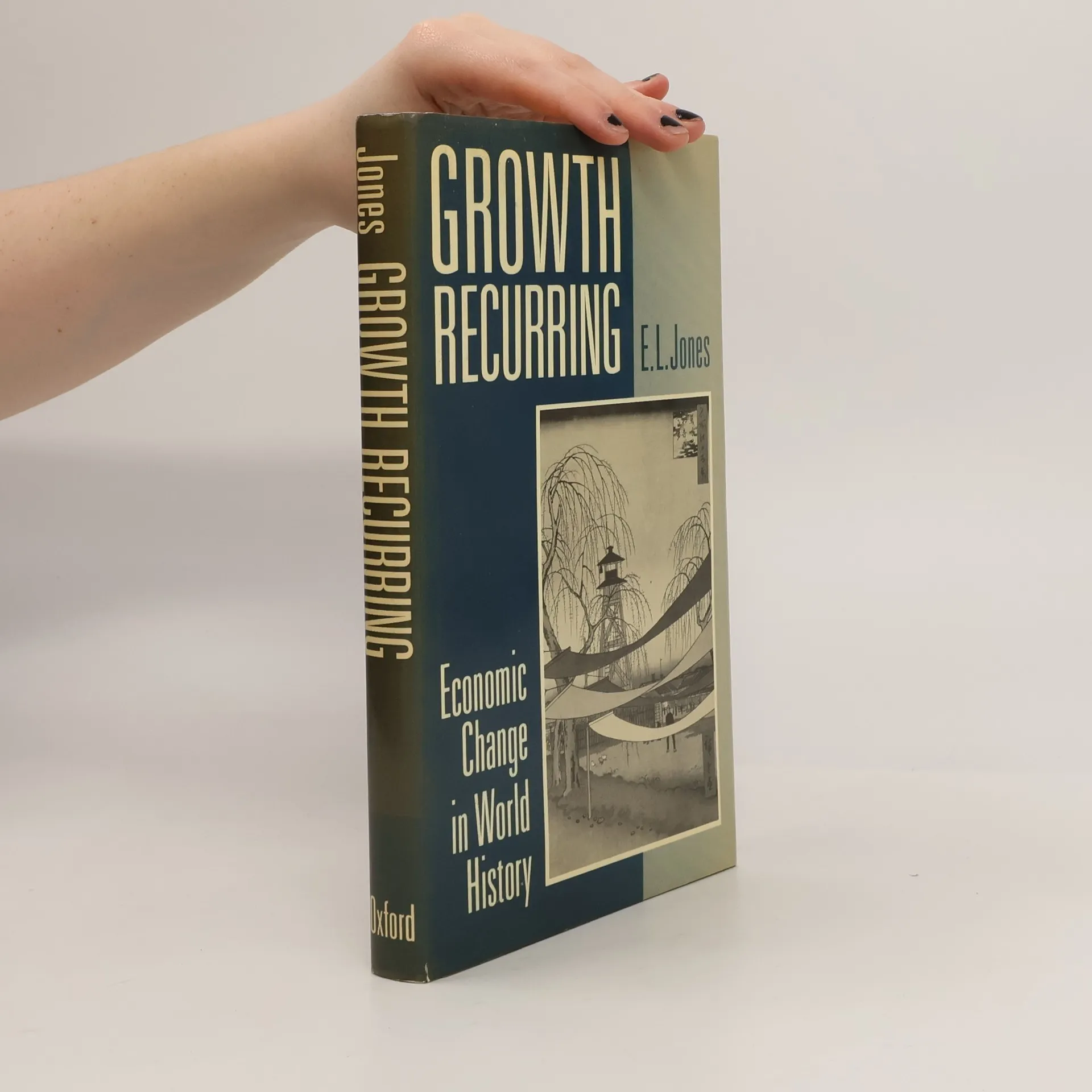
This study concerns the conflict in world history between economic growth and political greed. E.L. Jones, author of the groundbreaking The European Miracle, proposes two fundamentally new frameworks. One replaces industrial revolution or great discontinuity as the source of change and challenges the reader to accept early periods and non-Western societies as vital to understanding the growth process. It shows that growth occurred independently in Sung China and Japan as well as in Europe. The second framework offers a new explanation in which tendencies for growth were omnipresent but were usually suppressed. The "obstacles to growth" and their subsequent erosion is reviewed, providing an explanation of the modern world economy in which growth has recurred and East Asia has taken a prominent place.
Buchkauf
Growth Recurring, Eric L. Jones
- Sprache

- Erscheinungsdatum
- 1988
- Einband
- (Hardcover)
Keiner hat bisher bewertet.
- Titel
- Growth Recurring
- Untertitel
- Economic Change in World History
- Sprache
- Englisch
- Autor*innen
- Eric L. Jones
- Verlag
- Oxford University Press
- Erscheinungsdatum
- 1988
- Einband
- Hardcover
- Seitenzahl
- 258
- ISBN10
- 0198283008
- ISBN13
- 9780198283003
- Reihe
- Kategorien
- Schlagwörter
- Handel, Politik, USA, Amerikanische Literatur, 19. Jahrhundert, Politische Theorien, Wirtschaftsgeschichte, Wirtschaftspolitik
- Beschreibung
- This study concerns the conflict in world history between economic growth and political greed. E.L. Jones, author of the groundbreaking The European Miracle, proposes two fundamentally new frameworks. One replaces industrial revolution or great discontinuity as the source of change and challenges the reader to accept early periods and non-Western societies as vital to understanding the growth process. It shows that growth occurred independently in Sung China and Japan as well as in Europe. The second framework offers a new explanation in which tendencies for growth were omnipresent but were usually suppressed. The "obstacles to growth" and their subsequent erosion is reviewed, providing an explanation of the modern world economy in which growth has recurred and East Asia has taken a prominent place.