


Hierarchien in ländlichen Siedlungen
Autor*innen
Mehr zum Buch
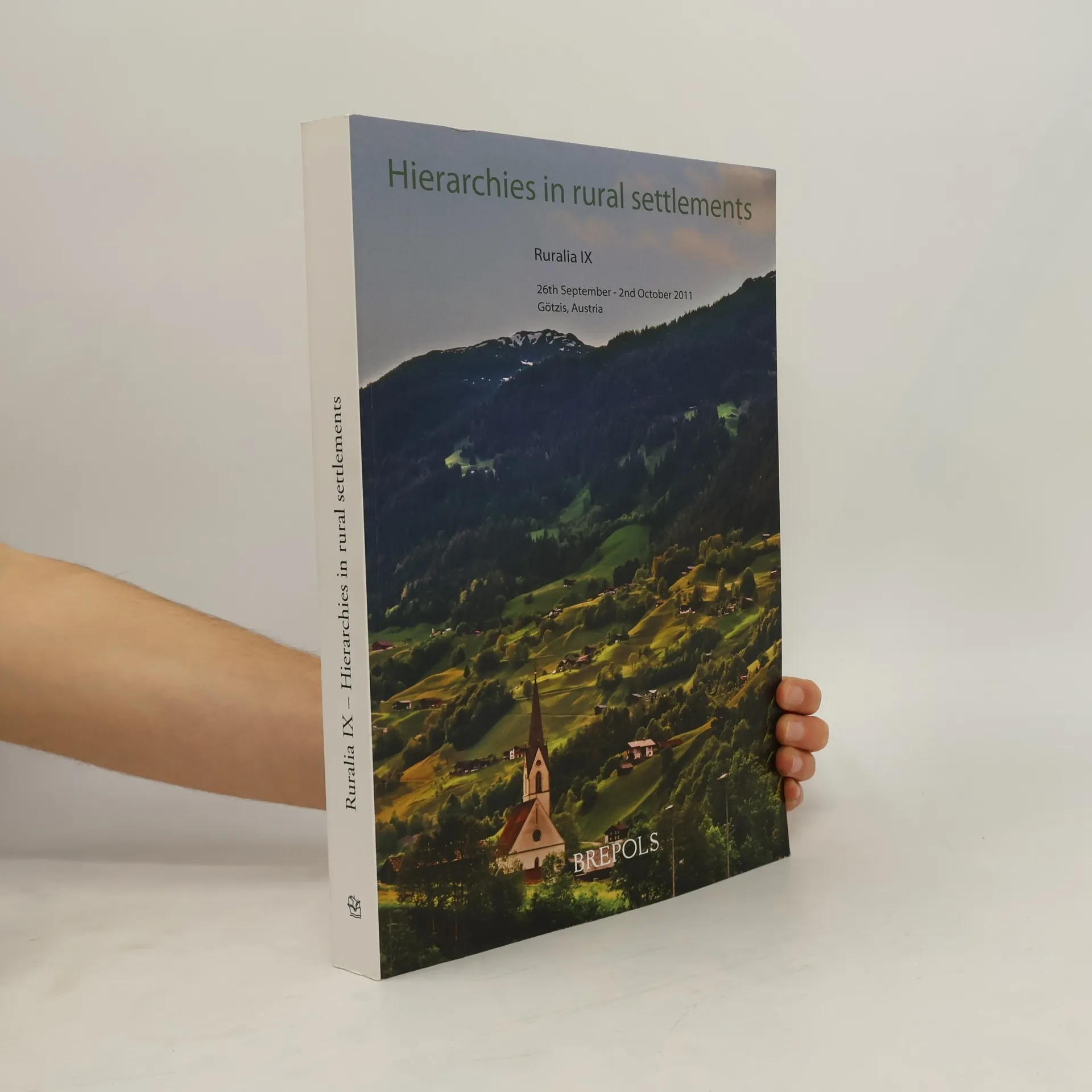
The Ruralia, Volume 9, includes thirty papers dealing with the various aspects of social and economic hierarchy in the rural settlement in medieval Europe mainly from archaeological point of view. The authors from 15 countries provide a broad overview of the current issues, complemented for the most part by extensive bibliographies. Very important are also the high quality figures. The main topics include the differentiation of rural social and economic structure, reflected, for example, in the building culture and various aspects of everyday life. The topic of discussion is the hierarchy of power and the many ways it is presented in archaeology. The focus is on the manor houses and manorial farms, as well as the grain mills in rural areas and the impact of mining activity. The Ruralia, Volume 9 represents one of the current fields of European archaeological research and offers a solid foundation for further comparative studies.
Buchkauf
Hierarchien in ländlichen Siedlungen, Jan Klápště
- Sprache


- Erscheinungsdatum
- 2013
- Einband
- (Paperback)
Keiner hat bisher bewertet.
- Titel
- Hierarchien in ländlichen Siedlungen
- Sprache
- Englisch, Deutsch
- Autor*innen
- Jan Klápště
- Verlag
- Brepols
- Erscheinungsdatum
- 2013
- Einband
- Paperback
- Seitenzahl
- 462
- ISBN10
- 2503545173
- ISBN13
- 9782503545172
- Reihe
- Schlagwörter
- Europa, Mittelalter, Archäologie, Westeuropa
- Beschreibung
- The Ruralia, Volume 9, includes thirty papers dealing with the various aspects of social and economic hierarchy in the rural settlement in medieval Europe mainly from archaeological point of view. The authors from 15 countries provide a broad overview of the current issues, complemented for the most part by extensive bibliographies. Very important are also the high quality figures. The main topics include the differentiation of rural social and economic structure, reflected, for example, in the building culture and various aspects of everyday life. The topic of discussion is the hierarchy of power and the many ways it is presented in archaeology. The focus is on the manor houses and manorial farms, as well as the grain mills in rural areas and the impact of mining activity. The Ruralia, Volume 9 represents one of the current fields of European archaeological research and offers a solid foundation for further comparative studies.