

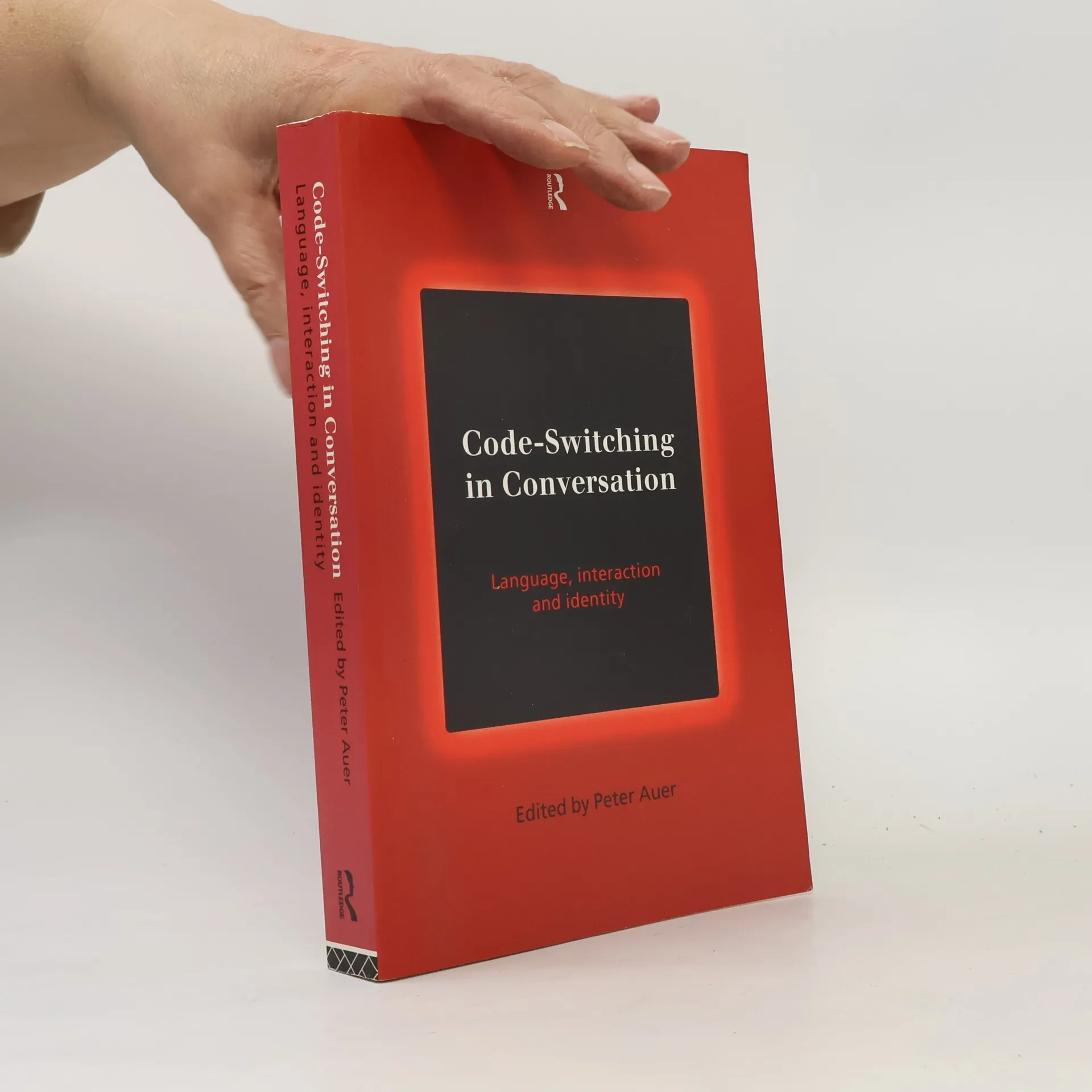
Code-Switching in Conversation
Language, Interaction and Identity
Autor*innen
Buchbewertung
Mehr zum Buch
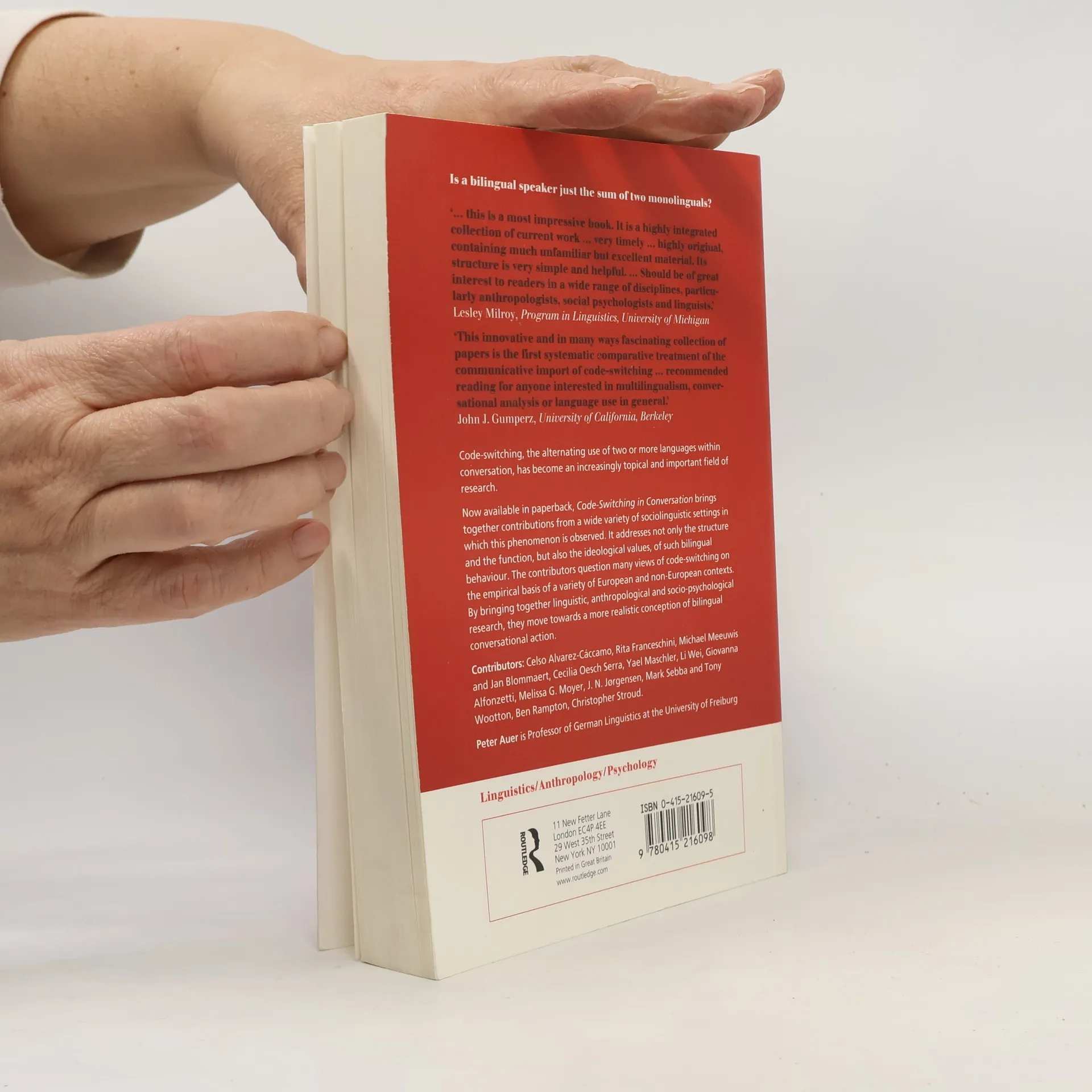
Code Switching, the alternating use of two or more languages ation, has become an increasingly topical and important field of research.Now available in paperback, Code-Switching in Conversation brings together contributions from a wide variety of sociolinguistics settings in which the phenomenon is observed. It addresses not only the structure and the function, but also the ideological values of such bilingual behaviour. The contributors question many views of code switching on the empirical basis of many European and non European contexts. By bringing together linguistics, anthropological and socio-psychological research, they move towards a more realistic conception of bilingual conversation action.
Buchkauf
Code-Switching in Conversation, Peter Auer
- Sprache

- Erscheinungsdatum
- 1999
- Einband
- (Paperback)
Hier könnte deine Bewertung stehen.
- Titel
- Code-Switching in Conversation
- Untertitel
- Language, Interaction and Identity
- Sprache
- Englisch
- Autor*innen
- Peter Auer
- Verlag
- Routledge
- Erscheinungsdatum
- 1999
- Einband
- Paperback
- Seitenzahl
- 364
- ISBN10
- 0415216095
- ISBN13
- 9780415216098
- Reihe
- Kategorien
- Schlagwörter
- Linguistik, Identität, Soziolinguistik, Reden, Sprache, Mehrsprachigkeit, Psycholinguistik, Diskurs
- Bewertung
- 3,3 von 5 Sternen
- Beschreibung
- Code Switching, the alternating use of two or more languages ation, has become an increasingly topical and important field of research.Now available in paperback, Code-Switching in Conversation brings together contributions from a wide variety of sociolinguistics settings in which the phenomenon is observed. It addresses not only the structure and the function, but also the ideological values of such bilingual behaviour. The contributors question many views of code switching on the empirical basis of many European and non European contexts. By bringing together linguistics, anthropological and socio-psychological research, they move towards a more realistic conception of bilingual conversation action.