

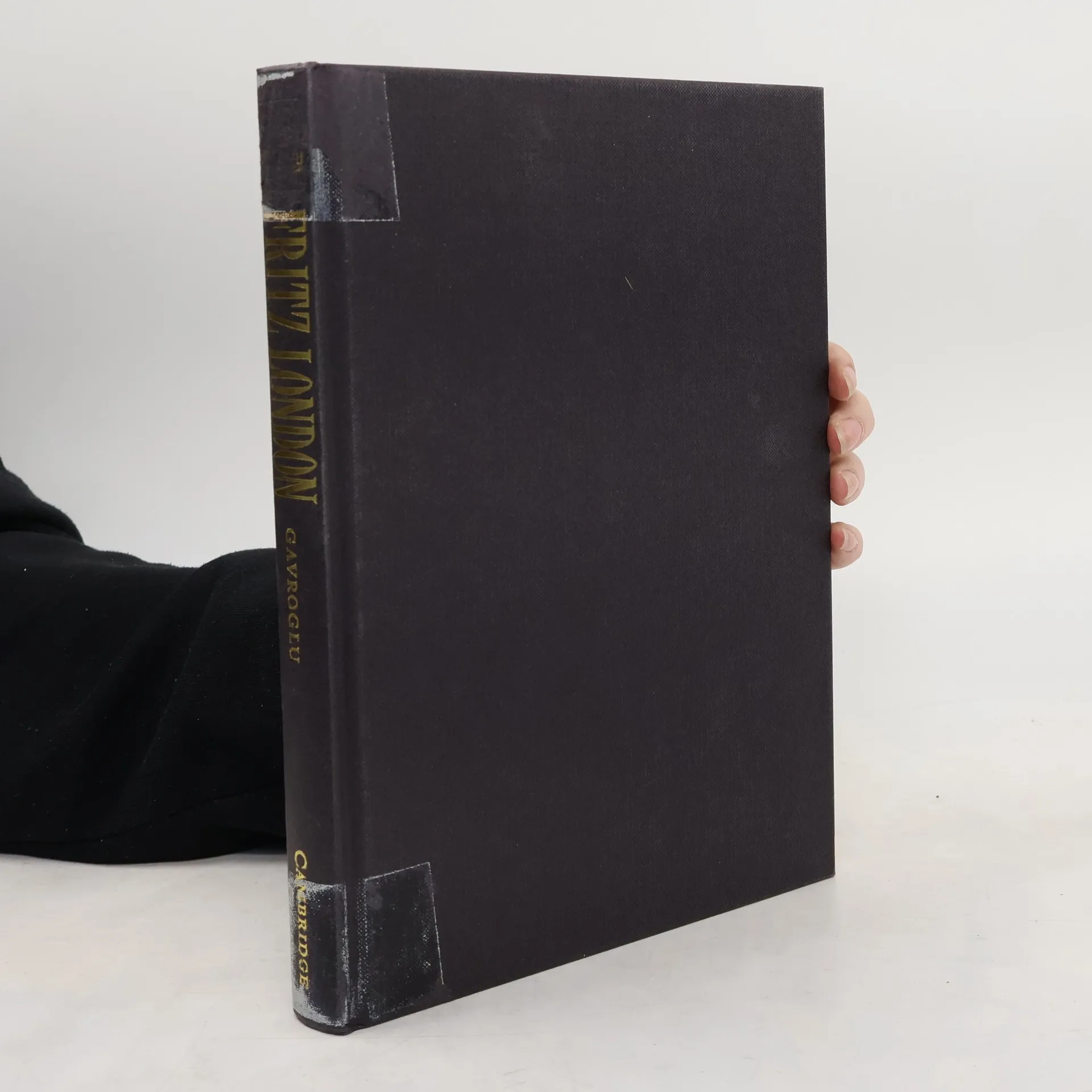
Fritz London
A Scientific Biography
Autor*innen
Mehr zum Buch
Fritz London was one of the twentieth century's key figures in the development of quantum physics. A quiet and self-effacing man, he was one of the founders of quantum chemistry, and was the first to give a phenomenological explanation of superconductivity. This thoroughly researched biography gives a detailed account of London's life and work in Munich, Berlin, Oxford, Paris, and finally in the United States. Also, by following his correspondence, collaborations, and controversies with other leading physicists and chemists including Erwin Schrödinger, Walter Heitler, Linus Pauling, Robert Mulliken, John van Vleck, Max von Laue, and Lev Landau, it examines the process by which scientific theories become legitimized. Covering a fascinating period in the development of theoretical physics, and containing an appraisal of London's work by the late John Bardeen, this book will be of great interest to physicists, chemists, and to anyone interested in the history of science.
Buchkauf
Fritz London, Kōstas Gavroglou
- Sprache

- Erscheinungsdatum
- 1995
- Einband
- (Hardcover)
Keiner hat bisher bewertet.
- Titel
- Fritz London
- Untertitel
- A Scientific Biography
- Sprache
- Englisch
- Autor*innen
- Kōstas Gavroglou
- Erscheinungsdatum
- 1995
- Einband
- Hardcover
- Seitenzahl
- 323
- ISBN10
- 0521432731
- ISBN13
- 9780521432733
- Reihe
- Kategorien
- Schlagwörter
- Naturwissenschaften, Wissenschaft, Deutschland, Westeuropa, Physiker, Chemiker
- Beschreibung
- Fritz London was one of the twentieth century's key figures in the development of quantum physics. A quiet and self-effacing man, he was one of the founders of quantum chemistry, and was the first to give a phenomenological explanation of superconductivity. This thoroughly researched biography gives a detailed account of London's life and work in Munich, Berlin, Oxford, Paris, and finally in the United States. Also, by following his correspondence, collaborations, and controversies with other leading physicists and chemists including Erwin Schrödinger, Walter Heitler, Linus Pauling, Robert Mulliken, John van Vleck, Max von Laue, and Lev Landau, it examines the process by which scientific theories become legitimized. Covering a fascinating period in the development of theoretical physics, and containing an appraisal of London's work by the late John Bardeen, this book will be of great interest to physicists, chemists, and to anyone interested in the history of science.