

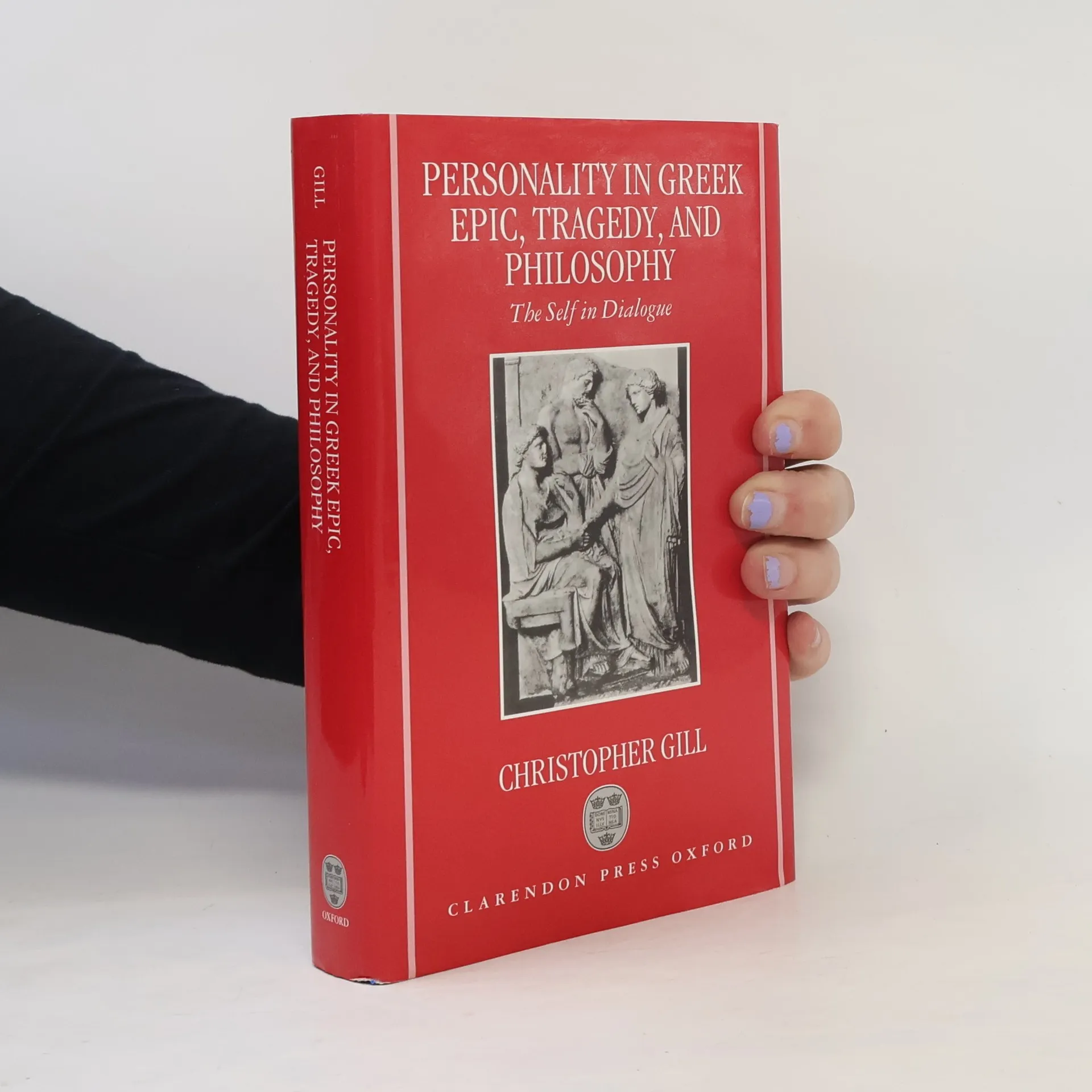


Personality in Greek Epic, Tragedy, and Philosophy
The Self in Dialogue
Autor*innen
Mehr zum Buch
This is a major study of conceptions of selfhood and personality in Homer, Greek tragedy, and philosophy. The focus is on norms of personality in Greek psychology and ethics. The key thesis is that, to understand Greek thinking of this type, we need to counteract the subjective and individualistic aspects of our own thinking about the self. The book defines an 'objective-participant' conception of personality, symbolized by the idea of the person as an interlocutor in a series of types of psychological and ethical dialogue. The book is shaped as a response to recent work in the philosophy of mind, ethics, and personhood, as well as in classical scholarship. Clear and non-technical, with all Greek translated, the book brings out the continuing importance of ancient Greek thinking for contemporary study of ideas of personality and selfhood.
Buchkauf
Personality in Greek Epic, Tragedy, and Philosophy, Christopher Gill
- Sprache

- Erscheinungsdatum
- 1996
- Einband
- (Hardcover)
Keiner hat bisher bewertet.
- Titel
- Personality in Greek Epic, Tragedy, and Philosophy
- Untertitel
- The Self in Dialogue
- Sprache
- Englisch
- Autor*innen
- Christopher Gill
- Verlag
- Oxford University Press
- Erscheinungsdatum
- 1996
- Einband
- Hardcover
- Seitenzahl
- 510
- ISBN10
- 0198146760
- ISBN13
- 9780198146766
- Reihe
- Schlagwörter
- Beschreibung
- This is a major study of conceptions of selfhood and personality in Homer, Greek tragedy, and philosophy. The focus is on norms of personality in Greek psychology and ethics. The key thesis is that, to understand Greek thinking of this type, we need to counteract the subjective and individualistic aspects of our own thinking about the self. The book defines an 'objective-participant' conception of personality, symbolized by the idea of the person as an interlocutor in a series of types of psychological and ethical dialogue. The book is shaped as a response to recent work in the philosophy of mind, ethics, and personhood, as well as in classical scholarship. Clear and non-technical, with all Greek translated, the book brings out the continuing importance of ancient Greek thinking for contemporary study of ideas of personality and selfhood.