

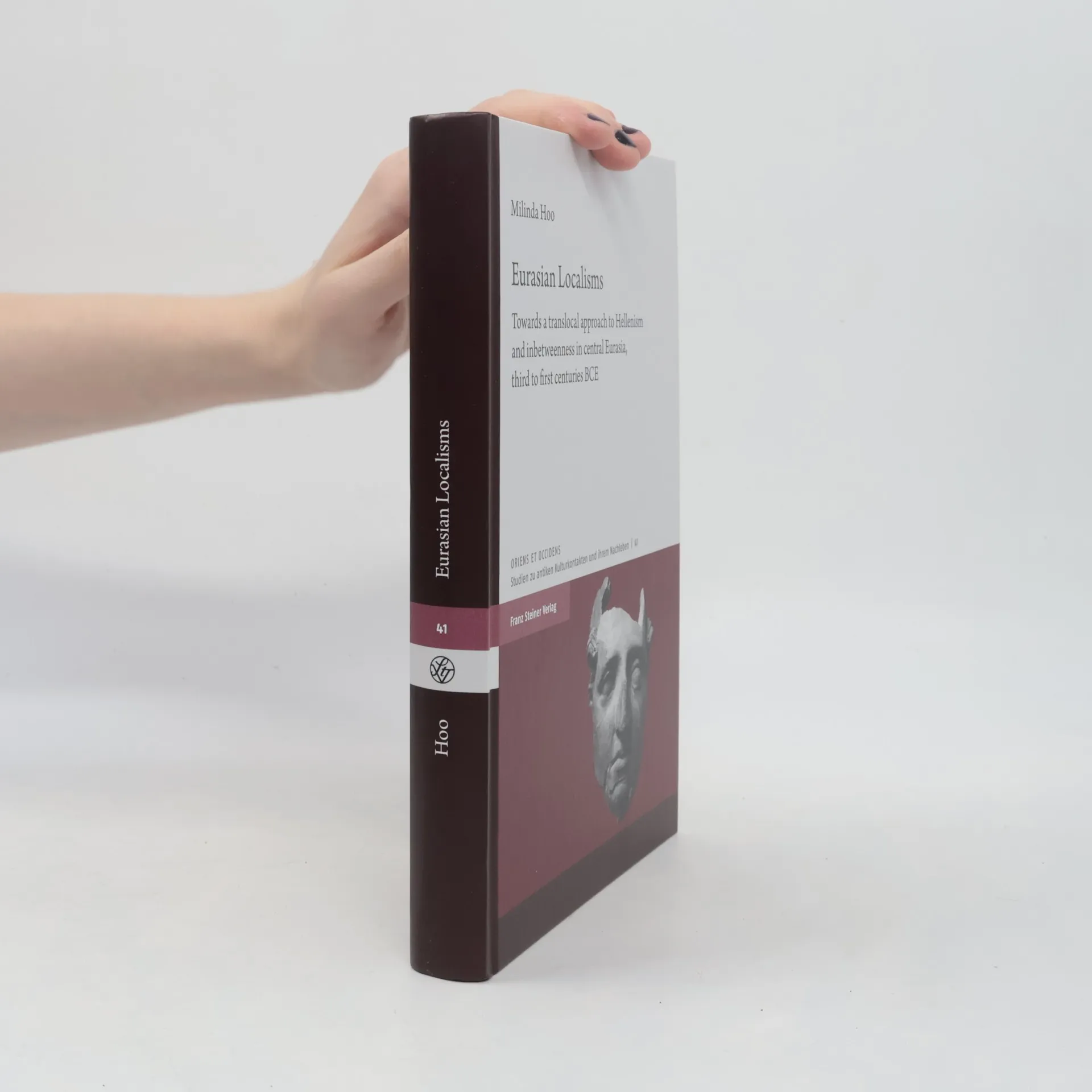


Mehr zum Buch
From Mesopotamia to Central Asia, regions in central Eurasia in the Hellenistic period are often viewed, presented, and imbued with meaning as 'places in between' - cultural melting pots, resulting from a fusion of Eastern and Western cultures after Alexander the Great. Milinda Hoo critically explores scholarly understandings of cultural inbetweenness in the regions of Baktria, Parthia, and Babylonia in the third to first centuries BCE, focusing on the diverse ways in which the model of Hellenism has been used to make historical meaning out of eclectic material culture. The sites of Ai Khanum, Takht-i Sangin, Old Nisa, Seleukeia on the Tigris, and Babylon serve as core case studies to investigate perceptions of Hellenism in places that are considered culturally 'inbetween'. These form the foundation for a new translocal approach, based on globalization concepts, to better and more critically understand what we consider as Hellenism and localism in the East.
Buchkauf
Oriens et Occidens: Studien zu antiken Kulturkontakten und ihrem Nachleben - 41: Eurasian Localisms, Milinda Hoo
- Sprache

- Erscheinungsdatum
- 2022
- Einband
- (Hardcover)
Keiner hat bisher bewertet.
- Titel
- Oriens et Occidens: Studien zu antiken Kulturkontakten und ihrem Nachleben - 41: Eurasian Localisms
- Untertitel
- Towards a Translocal Approach to Hellenism and Inbetweenness in Central Eurasia, Third to First Centuries BCE
- Sprache
- Englisch
- Autor*innen
- Milinda Hoo
- Erscheinungsdatum
- 2022
- Einband
- Hardcover
- Seitenzahl
- 338
- ISBN10
- 3515133151
- ISBN13
- 9783515133159
- Reihe
- Kategorien
- Schlagwörter
- Historisches Thema, Altertum, Archäologie, Globalisierung, Historiographie, Hellenismus
- Beschreibung
- From Mesopotamia to Central Asia, regions in central Eurasia in the Hellenistic period are often viewed, presented, and imbued with meaning as 'places in between' - cultural melting pots, resulting from a fusion of Eastern and Western cultures after Alexander the Great. Milinda Hoo critically explores scholarly understandings of cultural inbetweenness in the regions of Baktria, Parthia, and Babylonia in the third to first centuries BCE, focusing on the diverse ways in which the model of Hellenism has been used to make historical meaning out of eclectic material culture. The sites of Ai Khanum, Takht-i Sangin, Old Nisa, Seleukeia on the Tigris, and Babylon serve as core case studies to investigate perceptions of Hellenism in places that are considered culturally 'inbetween'. These form the foundation for a new translocal approach, based on globalization concepts, to better and more critically understand what we consider as Hellenism and localism in the East.