


The Devil of Great Island
Witchcraft and Conflict in Early New England
Autor*innen
Mehr zum Buch
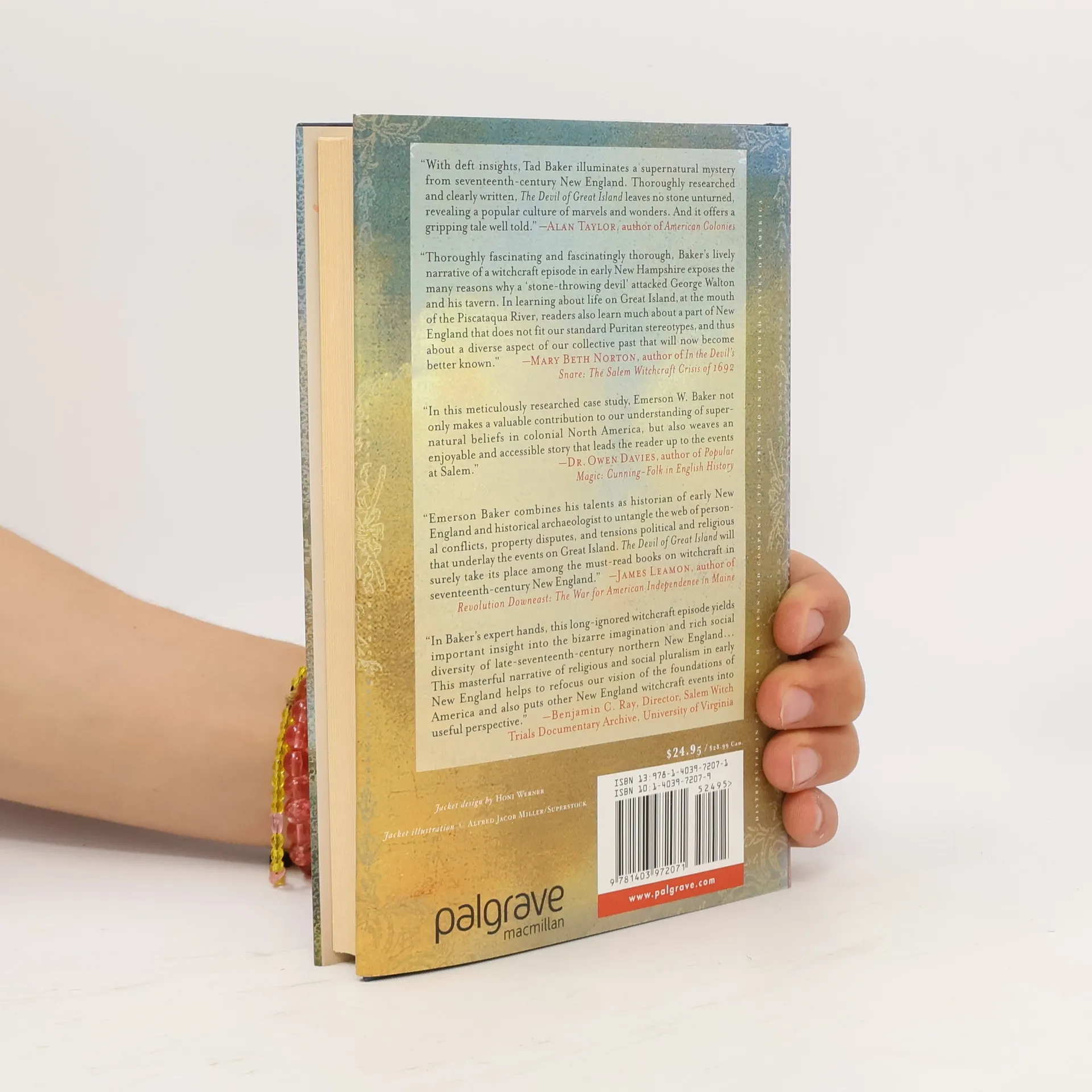
In 1682, ten years before the infamous Salem witch trials, the town of Great Island, New Hampshire, was plagued by mysterious events: strange, demonic noises; unexplainable movement of objects; and hundreds of stones that rained upon a local tavern and appeared at random inside its walls. Town residents blamed what they called "Lithobolia" or "the stone-throwing devil." In this lively account, Emerson Baker shows how witchcraft hysteria overtook one town and spawned copycat incidents elsewhere in New England, prefiguring the horrors of Salem. In the process, he illuminates a cross-section of colonial society and overturns many popular assumptions about witchcraft in the seventeenth century.
Buchkauf
The Devil of Great Island, Emerson W Baker
- Sprache

- Erscheinungsdatum
- 2007
- Einband
- (Hardcover)
Keiner hat bisher bewertet.
- Titel
- The Devil of Great Island
- Untertitel
- Witchcraft and Conflict in Early New England
- Sprache
- Englisch
- Autor*innen
- Emerson W Baker
- Verlag
- St. Martin's Press
- Erscheinungsdatum
- 2007
- Einband
- Hardcover
- Seitenzahl
- 256
- ISBN10
- 1403972079
- ISBN13
- 9781403972071
- Reihe
- Kategorien
- Schlagwörter
- Historisches Thema, Religiöse Themen, Frauen, USA, Magie, Kultur und Gesellschaft, Geschichte der USA, Hexen, 17. Jahrhundert, Wicca
- Beschreibung
- In 1682, ten years before the infamous Salem witch trials, the town of Great Island, New Hampshire, was plagued by mysterious events: strange, demonic noises; unexplainable movement of objects; and hundreds of stones that rained upon a local tavern and appeared at random inside its walls. Town residents blamed what they called "Lithobolia" or "the stone-throwing devil." In this lively account, Emerson Baker shows how witchcraft hysteria overtook one town and spawned copycat incidents elsewhere in New England, prefiguring the horrors of Salem. In the process, he illuminates a cross-section of colonial society and overturns many popular assumptions about witchcraft in the seventeenth century.