

Mehr zum Buch
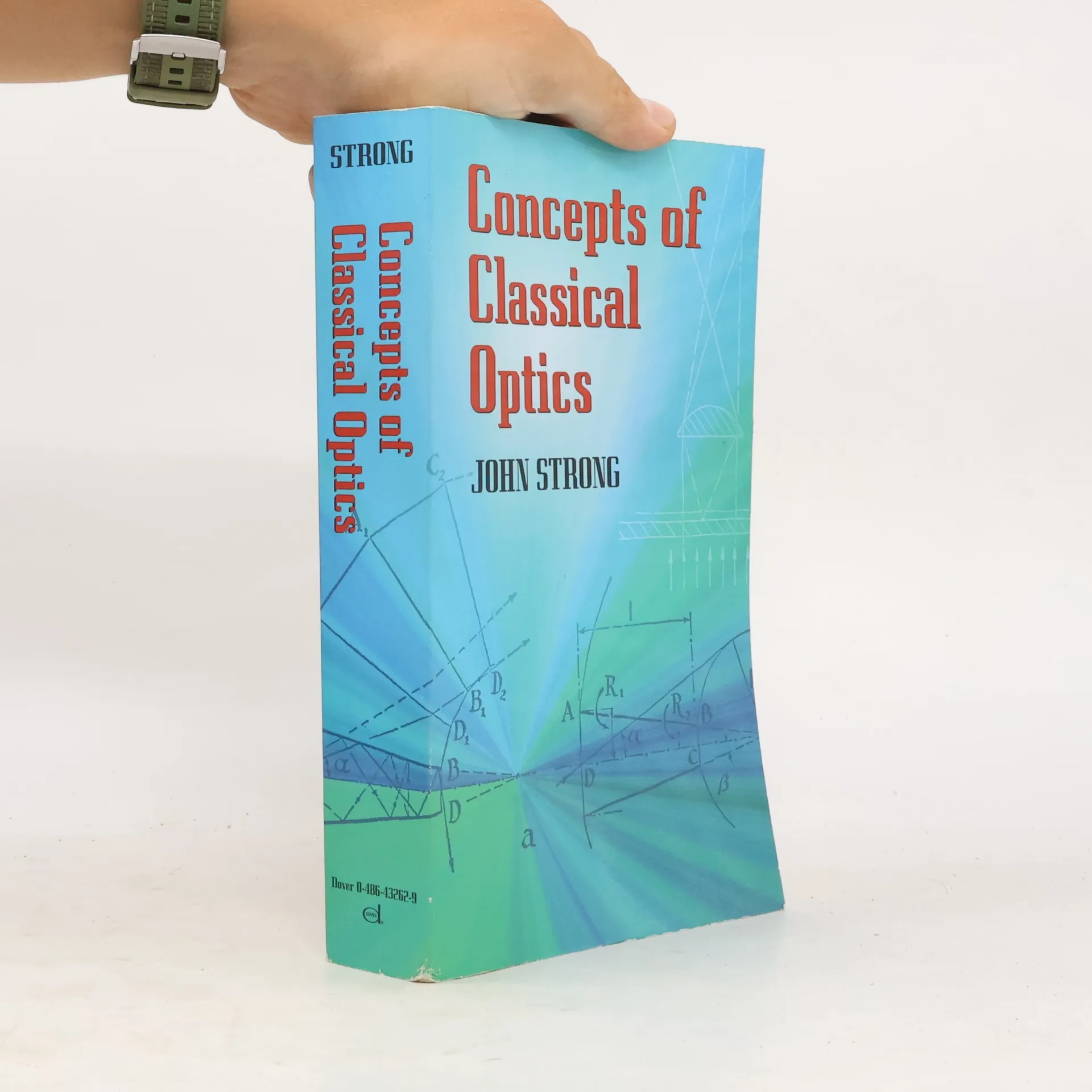
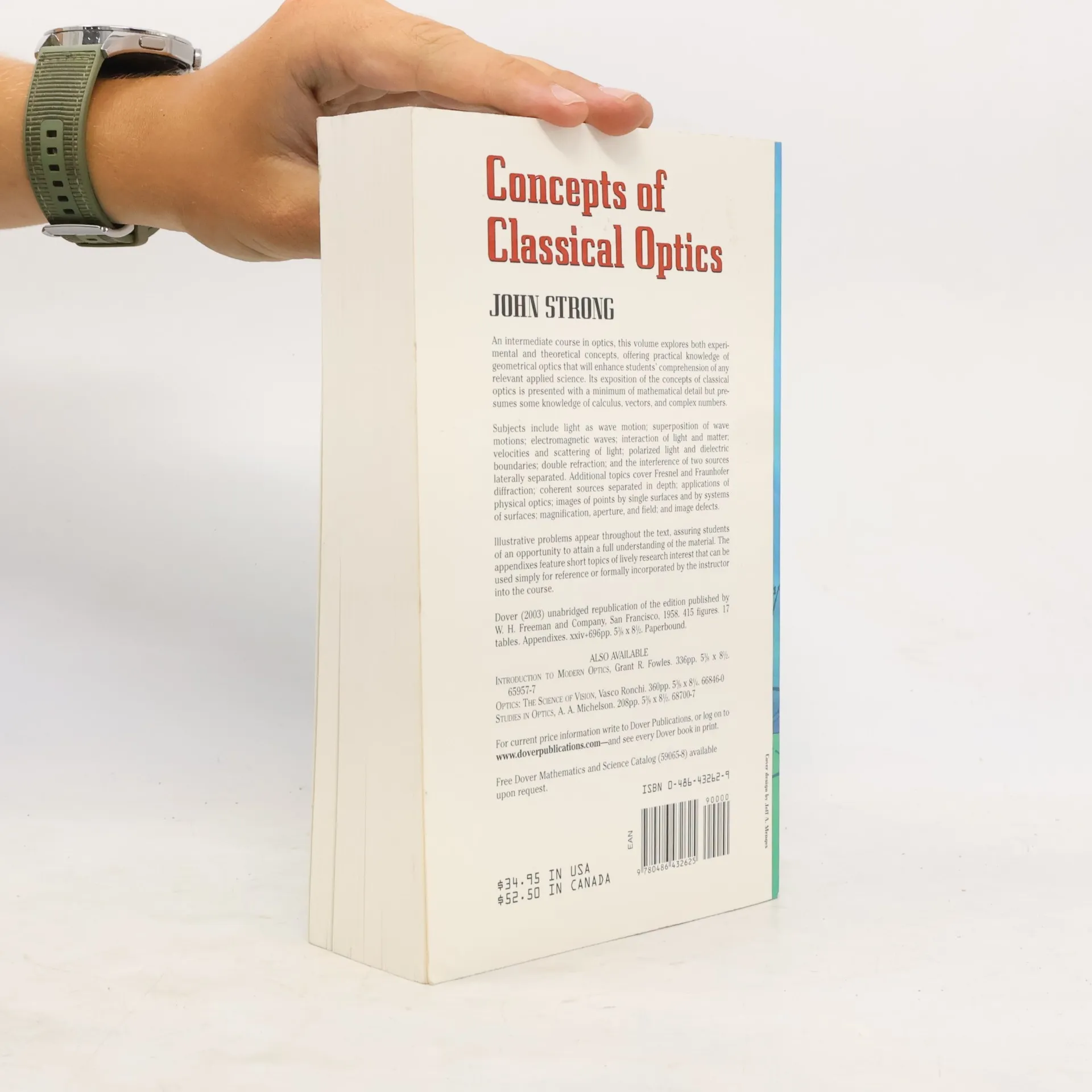
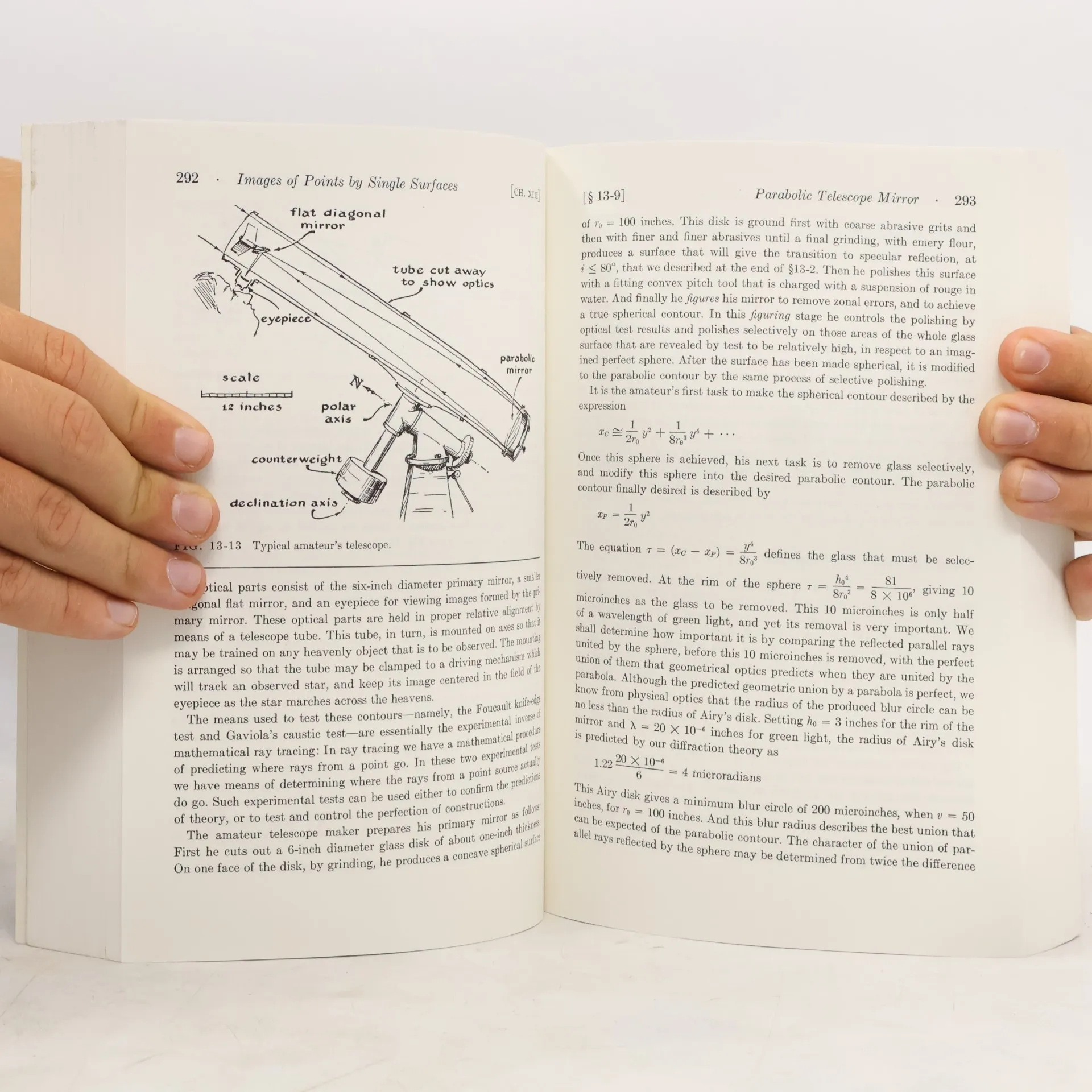
An intermediate course in optics, this volume explores both experimental and theoretical concepts, offering practical knowledge of geometrical optics that will enhance students' comprehension of any relevant applied science. Its exposition of the concepts of classical optics is presented with a minimum of mathematical detail but presumes some knowledge of calculus, vectors, and complex numbers. Subjects include light as wave motion; superposition of wave motions; electromagnetic waves; interaction of light and matter; velocities and scattering of light; polarized light and dielectric boundaries; double refraction; and the interference of two sources laterally separated. Additional topics cover Fresnel and Fraunhofer diffraction; coherent sources separated in depth; applications of physical optics; images of points by single surfaces and by systems of surfaces; magnification, aperture, and field; and image defects. Illustrative problems appear throughout the text, assuring students of an opportunity to attain a full understanding of the material. The appendixes feature short topics of lively research interest that can be used simply for reference or formally incorporated by the instructor into the course.
Buchkauf
Concepts of Classical Optics, John Donovan Strong
- Sprache

- Erscheinungsdatum
- 2004
- Einband
- (Paperback)
Keiner hat bisher bewertet.
- Titel
- Concepts of Classical Optics
- Sprache
- Englisch
- Autor*innen
- John Donovan Strong
- Verlag
- Dover Publications
- Erscheinungsdatum
- 2004
- Einband
- Paperback
- Seitenzahl
- 720
- ISBN10
- 0486432629
- ISBN13
- 9780486432625
- Reihe
- Schlagwörter
- Naturwissenschaften, Wissenschaft
- Beschreibung
- An intermediate course in optics, this volume explores both experimental and theoretical concepts, offering practical knowledge of geometrical optics that will enhance students' comprehension of any relevant applied science. Its exposition of the concepts of classical optics is presented with a minimum of mathematical detail but presumes some knowledge of calculus, vectors, and complex numbers. Subjects include light as wave motion; superposition of wave motions; electromagnetic waves; interaction of light and matter; velocities and scattering of light; polarized light and dielectric boundaries; double refraction; and the interference of two sources laterally separated. Additional topics cover Fresnel and Fraunhofer diffraction; coherent sources separated in depth; applications of physical optics; images of points by single surfaces and by systems of surfaces; magnification, aperture, and field; and image defects. Illustrative problems appear throughout the text, assuring students of an opportunity to attain a full understanding of the material. The appendixes feature short topics of lively research interest that can be used simply for reference or formally incorporated by the instructor into the course.