




Parameter
- 272 Seiten
- 10 Lesestunden
Mehr zum Buch
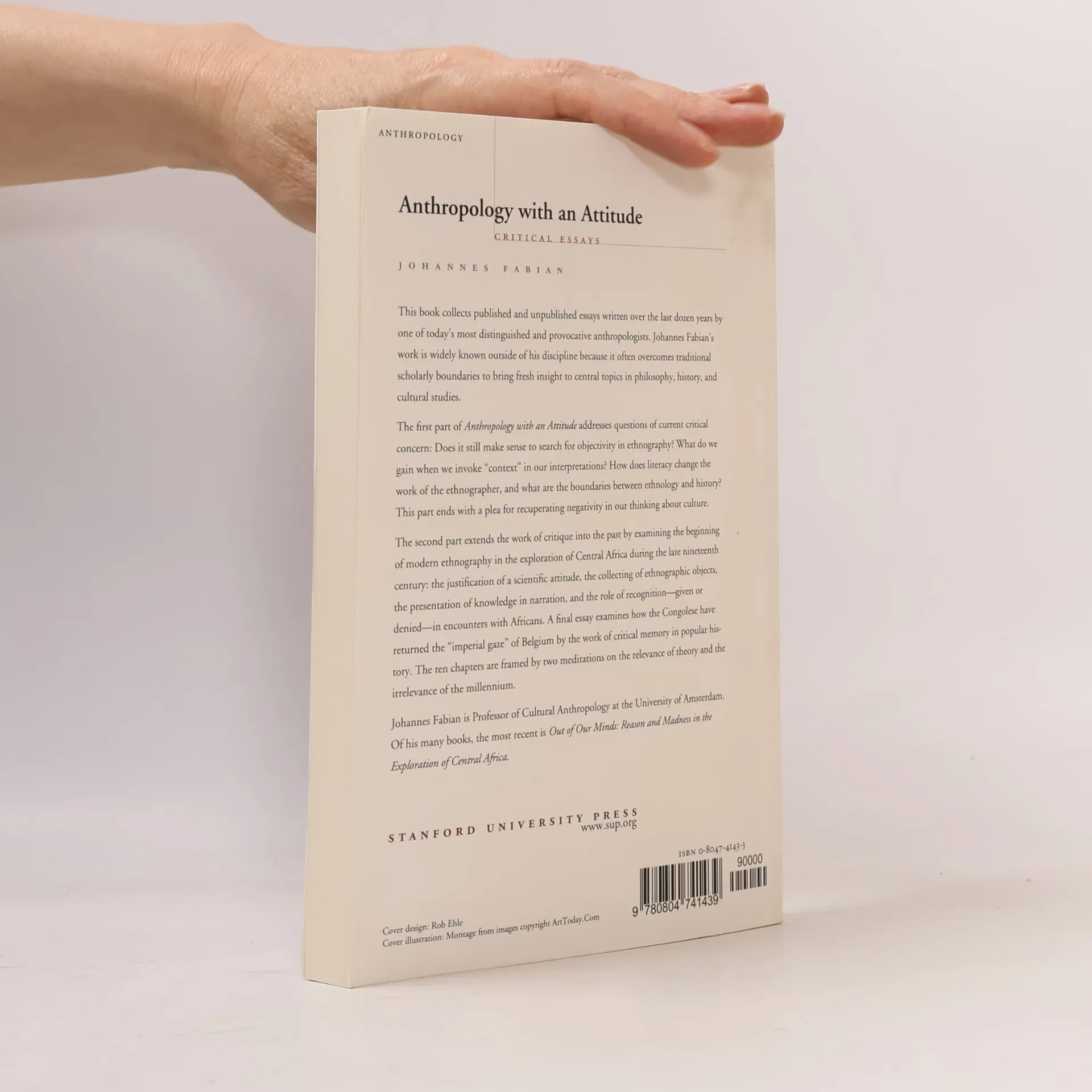
This book collects published and unpublished work over the last dozen years by one of today’s most distinguished and provocative anthropologists. Johannes Fabian is widely known outside of his discipline because his work so often overcomes traditional scholarly boundaries to bring fresh insight to central topics in philosophy, history, and cultural studies. The first part of the book addresses questions of current critical Does it still make sense to search for objectivity in ethnography? What do we gain when we invoke “context” in our interpretations? How does literacy change the work of the ethnographer, and what are the boundaries between ethnology and history? This part ends with a plea for recuperating negativity in our thinking about culture. The second part extends the work of critique into the past by examining the beginning of modern ethnography in the exploration of Central Africa during the late nineteenth the justification of a scientific attitude, the collecting of ethnographic objects, the presentation of knowledge in narration, and the role of recognition―given or denied―in encounters with Africans. A final essay examines how the Congolese have returned the “imperial gaze” of Belgium by the work of critical memory in popular history. The ten chapters are framed by two meditations on the relevance of theory and the irrelevance of the millennium.
Buchkauf
Anthropology with an Attitude, Johannes Fabian
- Sprache

- Erscheinungsdatum
- 2001
- Einband
- (Paperback)
Keiner hat bisher bewertet.
- Titel
- Anthropology with an Attitude
- Untertitel
- Critical Essays
- Sprache
- Englisch
- Autor*innen
- Johannes Fabian
- Erscheinungsdatum
- 2001
- Einband
- Paperback
- Seitenzahl
- 272
- ISBN10
- 0804741433
- ISBN13
- 9780804741439
- Reihe
- Kategorien
- Schlagwörter
- Historisches Thema, Philosophisches Thema, Gesammelte Werke, Methodologie, Urheberrecht, Zentralafrika
- Beschreibung
- This book collects published and unpublished work over the last dozen years by one of today’s most distinguished and provocative anthropologists. Johannes Fabian is widely known outside of his discipline because his work so often overcomes traditional scholarly boundaries to bring fresh insight to central topics in philosophy, history, and cultural studies. The first part of the book addresses questions of current critical Does it still make sense to search for objectivity in ethnography? What do we gain when we invoke “context” in our interpretations? How does literacy change the work of the ethnographer, and what are the boundaries between ethnology and history? This part ends with a plea for recuperating negativity in our thinking about culture. The second part extends the work of critique into the past by examining the beginning of modern ethnography in the exploration of Central Africa during the late nineteenth the justification of a scientific attitude, the collecting of ethnographic objects, the presentation of knowledge in narration, and the role of recognition―given or denied―in encounters with Africans. A final essay examines how the Congolese have returned the “imperial gaze” of Belgium by the work of critical memory in popular history. The ten chapters are framed by two meditations on the relevance of theory and the irrelevance of the millennium.