

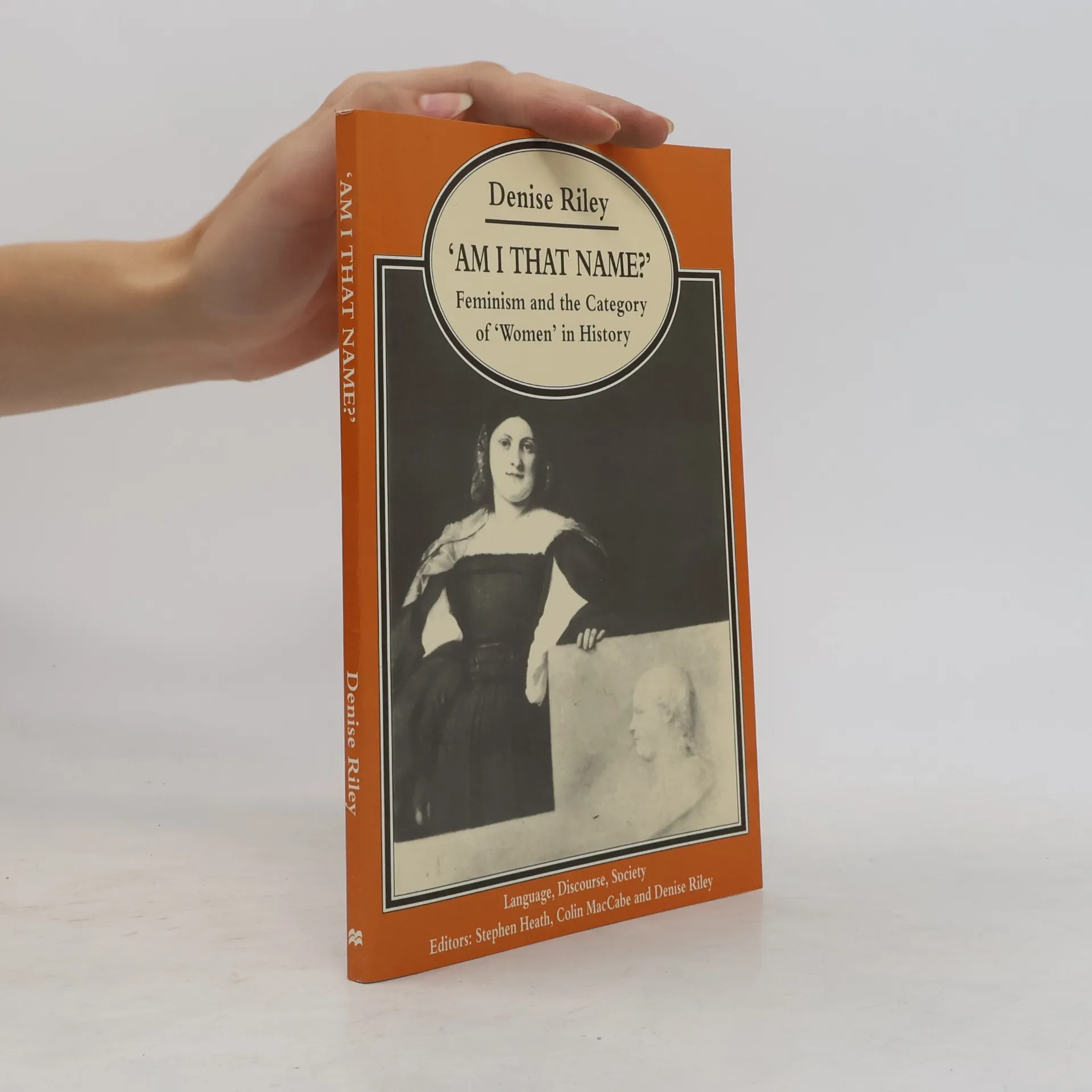
Wir senden dir das abgebildete Buch
Parameter
- 132 Seiten
- 5 Lesestunden
Mehr zum Buch
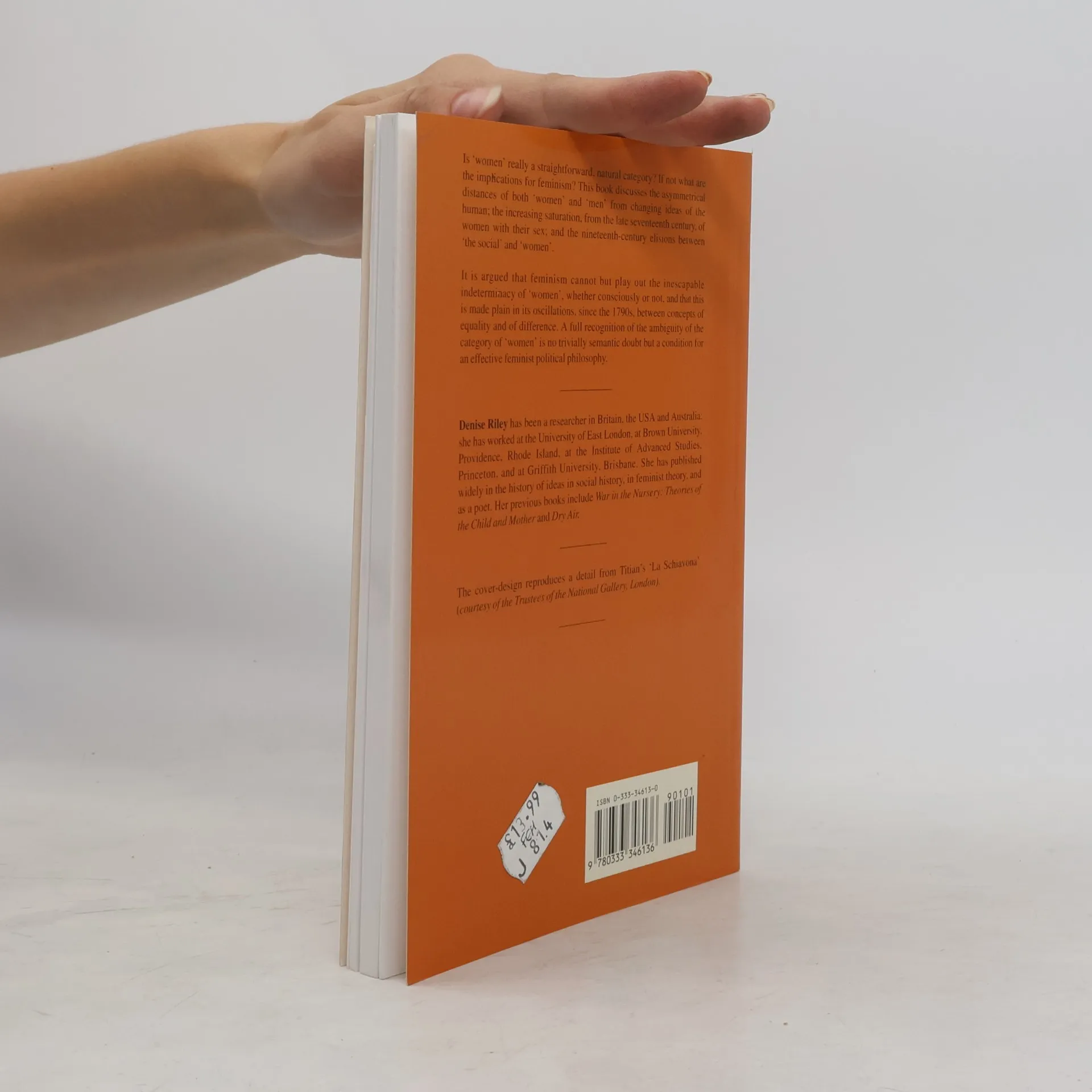
Writing about changes in the notion of womanhood, Denise Riley examines, in the manner of Foucault, shifting historical constructions of the category of "women" in relation to other categories central to concepts of personhood: the soul, the mind, the body, nature, the social. Feminist movements, Riley argues, have had no choice but to play out this indeterminacy of women. This is made plain in their oscillations, since the 1790s, between concepts of equality and of difference. To fully recognize the ambiguity of the category of "women" is, she contends, a necessary condition for an effective feminist political philosophy.
Buchkauf
Language, Discourse, Society: Am I That Name?, Denise Riley, Stephen Heath, Colin MacCabe
- Sprache

- Erscheinungsdatum
- 1988
- Einband
- (Paperback),
- Buchzustand
- Gebraucht - Gut
- Preis
- € 9,99
Keiner hat bisher bewertet.
- Titel
- Language, Discourse, Society: Am I That Name?
- Untertitel
- Feminism and the Category of 'Women' in History
- Sprache
- Englisch
- Autor*innen
- Denise Riley, Stephen Heath, Colin MacCabe
- Verlag
- Palgrave Macmillan
- Erscheinungsdatum
- 1988
- Einband
- Paperback
- Seitenzahl
- 132
- ISBN10
- 0333346130
- ISBN13
- 9780333346136
- Reihe
- Kategorien
- Schlagwörter
- Historisches Thema, Natur, Philosophisches Thema, Frauen, Politik, Wissenschaft, Kultur und Gesellschaft, Feminismus, Lokale Geschichte, Literarische Kritik, Politische Theorien, Schreiben, Kulturgeschichte, Wissenschaftliche Theorien, Gender, Pflichtlektüre, Soziale Geschichte, Zivilrecht, Literaturtheorie, Der menschliche Geist, Politische Philosophie, Sozialpolitik, Sozialstaat
- Beschreibung
- Writing about changes in the notion of womanhood, Denise Riley examines, in the manner of Foucault, shifting historical constructions of the category of "women" in relation to other categories central to concepts of personhood: the soul, the mind, the body, nature, the social. Feminist movements, Riley argues, have had no choice but to play out this indeterminacy of women. This is made plain in their oscillations, since the 1790s, between concepts of equality and of difference. To fully recognize the ambiguity of the category of "women" is, she contends, a necessary condition for an effective feminist political philosophy.