



Mehr zum Buch
The failure of orthodox economic analysis to address contemporary policy problems has led to a sense of 'methodological crisis' within the discipline. Students struggle to connect with a disintegrating textbook paradigm. This book aims to contextualize current theoretical controversies by tracing their historical roots and interpreting doctrinal divisions in modern debates, highlighting fundamental disagreements about the nature of economics and the questions economists should pursue. It examines how leading theorists have adapted their ideas in response to significant changes in policy-making challenges. While not exhaustive in its coverage of theories or theorists, the book emphasizes shifts in economists' views on the scope and methodology of economics, as well as the evolution of strategic ideas in value theory, monetary theory, and growth theory. It poses socio-historical questions regarding the coherence of economics as a distinct discipline, the characteristics of its paradigms, the revolutionary nature of theoretical changes, and the factors influencing the success or failure of alternative paradigms among professional economists. This book offers valuable insights for all economists and serves as a compact, accessible introduction to the history of economic thought for undergraduate students.
Buchkauf
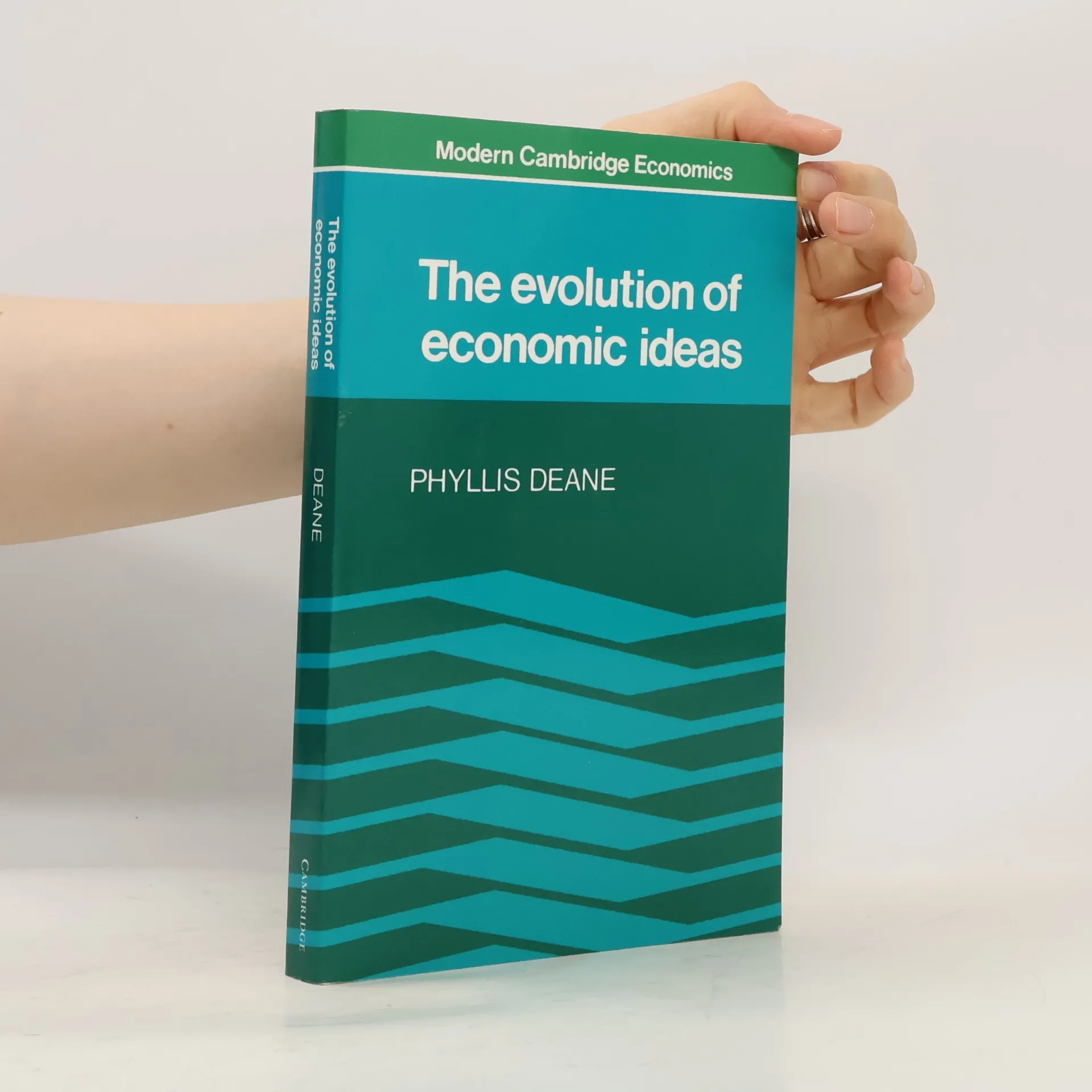
The Evolution of Economic Ideas, Phyllis Deane
- Sprache

- Erscheinungsdatum
- 1978
- Einband
- (Paperback),
- Buchzustand
- Gebraucht - Gut
- Preis
- € 7,39
Keiner hat bisher bewertet.
- Titel
- The Evolution of Economic Ideas
- Sprache
- Englisch
- Autor*innen
- Phyllis Deane
- Erscheinungsdatum
- 1978
- Einband
- Paperback
- Seitenzahl
- 254
- ISBN10
- 0521293154
- ISBN13
- 9780521293150
- Reihe
- Schlagwörter
- Historisches Thema, Handel, Wirtschaftsgeschichte
- Beschreibung
- The failure of orthodox economic analysis to address contemporary policy problems has led to a sense of 'methodological crisis' within the discipline. Students struggle to connect with a disintegrating textbook paradigm. This book aims to contextualize current theoretical controversies by tracing their historical roots and interpreting doctrinal divisions in modern debates, highlighting fundamental disagreements about the nature of economics and the questions economists should pursue. It examines how leading theorists have adapted their ideas in response to significant changes in policy-making challenges. While not exhaustive in its coverage of theories or theorists, the book emphasizes shifts in economists' views on the scope and methodology of economics, as well as the evolution of strategic ideas in value theory, monetary theory, and growth theory. It poses socio-historical questions regarding the coherence of economics as a distinct discipline, the characteristics of its paradigms, the revolutionary nature of theoretical changes, and the factors influencing the success or failure of alternative paradigms among professional economists. This book offers valuable insights for all economists and serves as a compact, accessible introduction to the history of economic thought for undergraduate students.