

Parameter
- 209 Seiten
- 8 Lesestunden
Mehr zum Buch
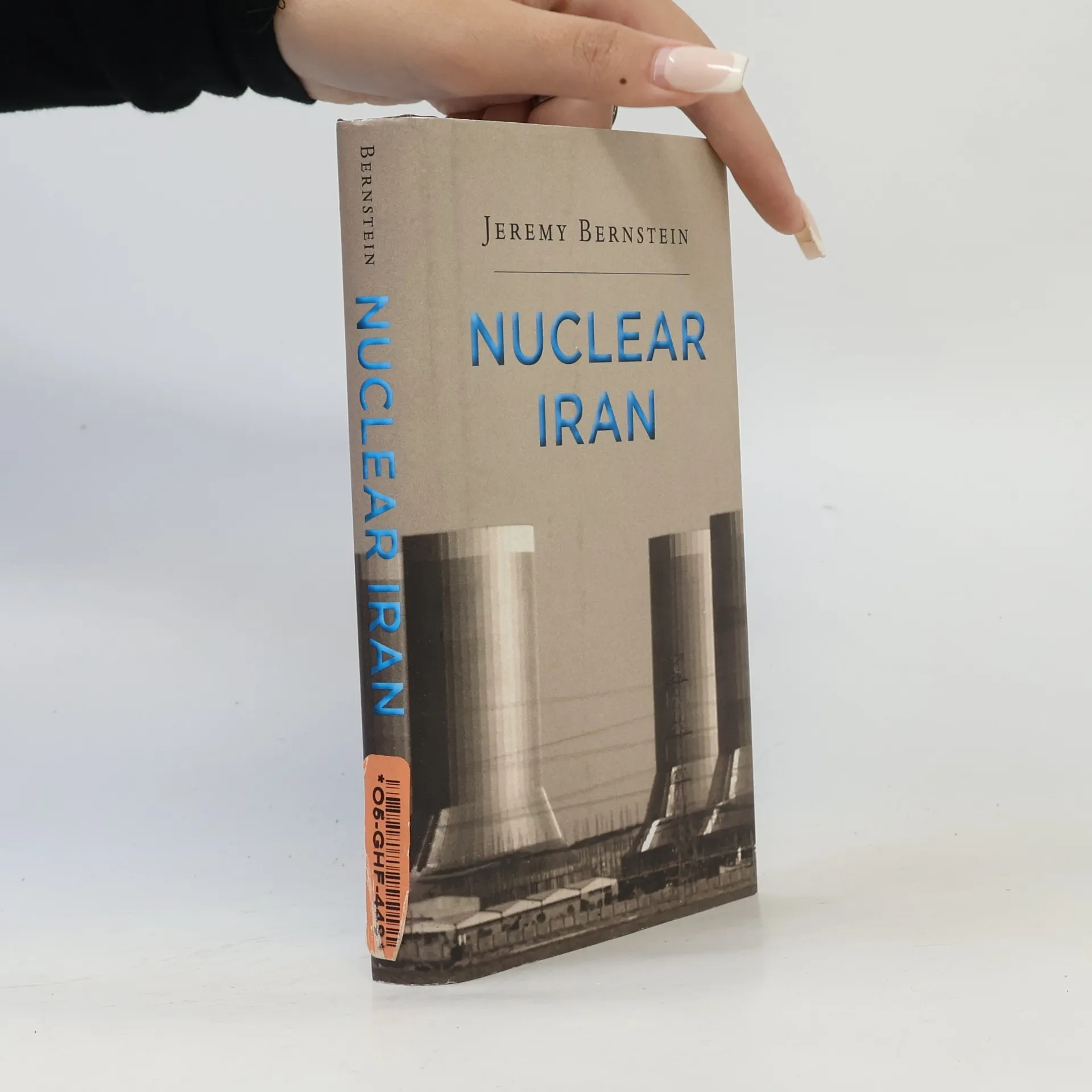
Iran's nuclear program has sparked significant controversy since the International Atomic Energy Agency reported in 2003 that Iran was secretly pursuing enrichment activities. While Iranian officials claim the program is peaceful, many in the international community remain skeptical, with some asserting that the threat of nuclear proliferation from Iran is unprecedented. This book guides readers through the complex science and secrecy surrounding Iran's nuclear ambitions. Jeremy Bernstein, a physicist, clarifies the scientific principles and technical challenges involved in developing nuclear reactors and weapons. He covers topics such as fission physics, isotope separation methods, and the technologies needed to weaponize fissile uranium and plutonium. The media has focused on Iran's construction of centrifuges for producing weapons-grade uranium, and Bernstein explains their operation. He also weaves in human stories, like the invention of centrifuges by German war prisoners in the Soviet Union. The book highlights the controversial underground uranium-enrichment facility in Natanz and the heavy water reactor in Arak, as well as key figures in the international trade of weapons technology, including Pakistani physicist A. Q. Khan. This concise work is essential for anyone seeking to grasp the scientific underpinnings of the international crisis surrounding Iran's nuclear program.
Buchkauf
Nuclear Iran, Jeremy Bernstein
- Sprache

- Erscheinungsdatum
- 2014
- Einband
- (Hardcover)
Keiner hat bisher bewertet.
- Titel
- Nuclear Iran
- Sprache
- Englisch
- Autor*innen
- Jeremy Bernstein
- Verlag
- Harvard University Press
- Erscheinungsdatum
- 2014
- Einband
- Hardcover
- Seitenzahl
- 209
- ISBN10
- 0674417089
- ISBN13
- 9780674417083
- Reihe
- Kategorien
- Schlagwörter
- Historisches Thema, Naturwissenschaften, Wissenschaft, USA, Technologie, Politische Theorien, Internationale Beziehungen, Iran, Atomwaffen, Kernphysik
- Beschreibung
- Iran's nuclear program has sparked significant controversy since the International Atomic Energy Agency reported in 2003 that Iran was secretly pursuing enrichment activities. While Iranian officials claim the program is peaceful, many in the international community remain skeptical, with some asserting that the threat of nuclear proliferation from Iran is unprecedented. This book guides readers through the complex science and secrecy surrounding Iran's nuclear ambitions. Jeremy Bernstein, a physicist, clarifies the scientific principles and technical challenges involved in developing nuclear reactors and weapons. He covers topics such as fission physics, isotope separation methods, and the technologies needed to weaponize fissile uranium and plutonium. The media has focused on Iran's construction of centrifuges for producing weapons-grade uranium, and Bernstein explains their operation. He also weaves in human stories, like the invention of centrifuges by German war prisoners in the Soviet Union. The book highlights the controversial underground uranium-enrichment facility in Natanz and the heavy water reactor in Arak, as well as key figures in the international trade of weapons technology, including Pakistani physicist A. Q. Khan. This concise work is essential for anyone seeking to grasp the scientific underpinnings of the international crisis surrounding Iran's nuclear program.