



Mehr zum Buch
A leading economist explores how our economic arrangements could improve by applying basic principles without ideological blinders. Dean Baker argues that while economics itself is sound, economists often neglect their own principles in policy discussions. He questions what policy would look like if mainstream economic principles were applied consistently. For instance, in the regulation debate, Baker—who predicted the 2008 financial meltdown—highlights that the concept of a “free market” is a myth, as modern markets are heavily regulated. Intrusive regulations, such as copyright and patents, are often overlooked as regulatory devices. Recognizing the extent of regulation opens up more options for policy design and determining beneficiaries. In health care reform, Baker points out that economists frequently disregard the principle of marginal cost pricing. Medical services are priced significantly higher than production costs, a discrepancy rarely addressed in reform discussions. He suggests that applying marginal cost pricing could lead to competitive wages for doctors and lower prices for prescription drugs and medical tests. This exploration offers an alternative perspective on economic principles, encouraging a return to basics to address the most pressing issues in our economy.
Buchkauf
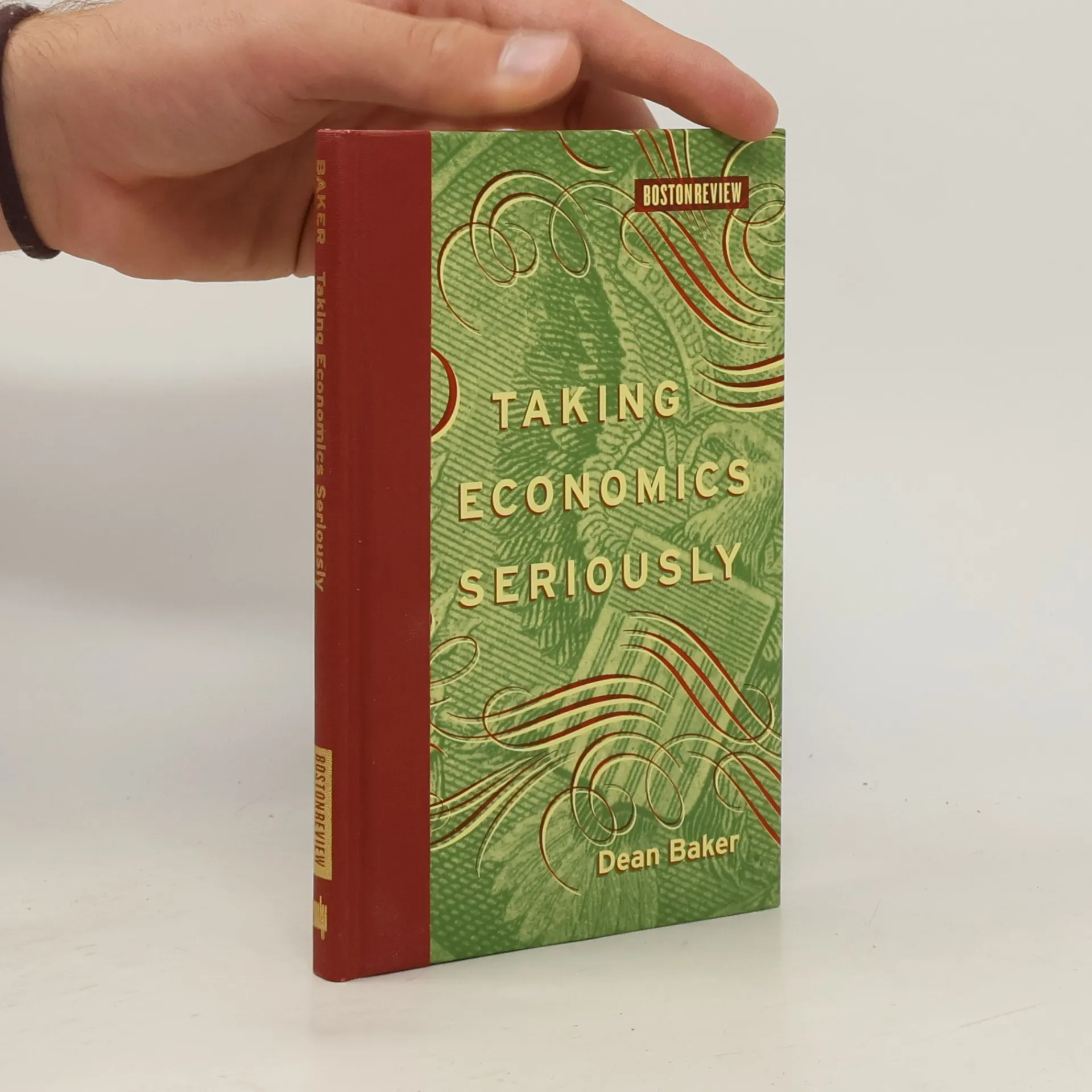
Taking Economics Seriously, Dean Baker
- Sprache

- Erscheinungsdatum
- 2010
- Einband
- (Hardcover),
- Buchzustand
- Gebraucht - Sehr gut
- Preis
- € 5,29
Keiner hat bisher bewertet.
- Titel
- Taking Economics Seriously
- Sprache
- Englisch
- Autor*innen
- Dean Baker
- Verlag
- MIT PR
- Erscheinungsdatum
- 2010
- Einband
- Hardcover
- Seitenzahl
- 87
- ISBN10
- 0262014181
- ISBN13
- 9780262014182
- Reihe
- Kategorien
- Schlagwörter
- Handel, USA, Politische Theorien, Wirtschaftspolitik
- Beschreibung
- A leading economist explores how our economic arrangements could improve by applying basic principles without ideological blinders. Dean Baker argues that while economics itself is sound, economists often neglect their own principles in policy discussions. He questions what policy would look like if mainstream economic principles were applied consistently. For instance, in the regulation debate, Baker—who predicted the 2008 financial meltdown—highlights that the concept of a “free market” is a myth, as modern markets are heavily regulated. Intrusive regulations, such as copyright and patents, are often overlooked as regulatory devices. Recognizing the extent of regulation opens up more options for policy design and determining beneficiaries. In health care reform, Baker points out that economists frequently disregard the principle of marginal cost pricing. Medical services are priced significantly higher than production costs, a discrepancy rarely addressed in reform discussions. He suggests that applying marginal cost pricing could lead to competitive wages for doctors and lower prices for prescription drugs and medical tests. This exploration offers an alternative perspective on economic principles, encouraging a return to basics to address the most pressing issues in our economy.