




Mehr zum Buch
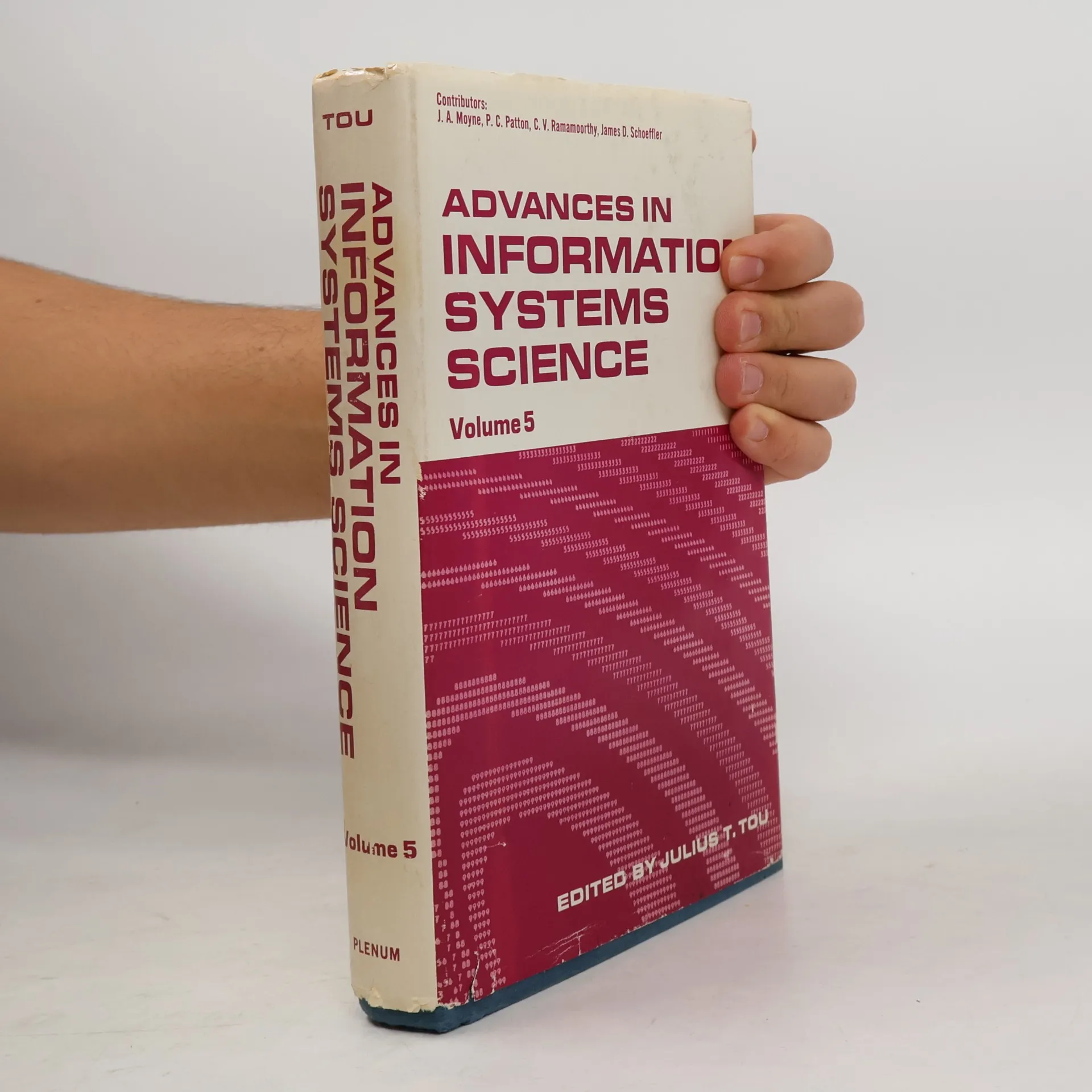
This volume, the fifth in a series on information systems science, addresses four key topics relevant to the field. Each chapter provides essential background information on the advances discussed, allowing it to be used independently or alongside previous volumes. The focus is on data organization and access methods, software for online minicomputer applications, advancements in microprogramming, and grammars and recognizers for both formal and natural languages. Chapter 1 features a tutorial survey by P. C. Patton on data organization and access methods, crucial for information system design. The shift in research from numerical data processing to non-numerical information handling is highlighted, emphasizing that information is conveyed not only by data but also by its structure and organization. The chapter reviews various data structures, including linear lists, array structures, tree structures, and multilinked structures, while also addressing the challenges of database design and management. It concludes with examples of information handling systems, such as a matrix interpretive system, a generalized information management system, and a criminal justice information system. The increasing affordability and enhanced capabilities of minicomputers have made them appealing for information systems.
Buchkauf
Advances in Information Systems Science 5, Julius T. Tou, J. A. Moyne, P. C. Patton, C. V. Ramamoorthy, James D. Schoeffler
- Sprache

- Erscheinungsdatum
- 1974
- Einband
- (Hardcover),
- Buchzustand
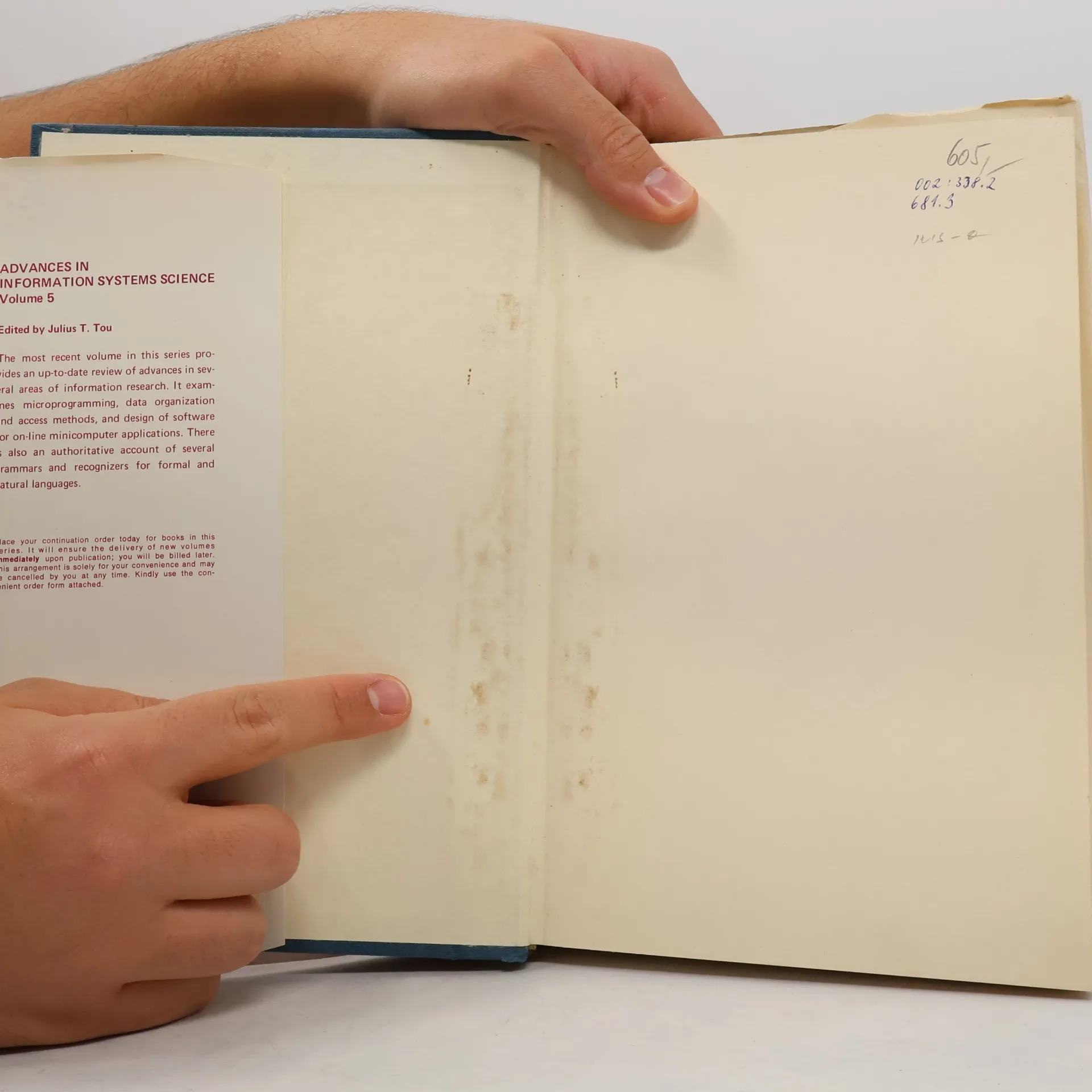
- Beschädigt
- Preis
- € 16,12
Keiner hat bisher bewertet.
- Titel
- Advances in Information Systems Science 5
- Sprache
- Englisch
- Autor*innen
- Julius T. Tou, J. A. Moyne, P. C. Patton, C. V. Ramamoorthy, James D. Schoeffler
- Verlag
- 1974
- Erscheinungsdatum
- 1974
- Einband
- Hardcover
- Seitenzahl
- 343
- ISBN10
- 0306394057
- ISBN13
- 9780306394058
- Reihe
- Schlagwörter
- Wissenschaft, Software, Optimierung
- Beschreibung
- This volume, the fifth in a series on information systems science, addresses four key topics relevant to the field. Each chapter provides essential background information on the advances discussed, allowing it to be used independently or alongside previous volumes. The focus is on data organization and access methods, software for online minicomputer applications, advancements in microprogramming, and grammars and recognizers for both formal and natural languages. Chapter 1 features a tutorial survey by P. C. Patton on data organization and access methods, crucial for information system design. The shift in research from numerical data processing to non-numerical information handling is highlighted, emphasizing that information is conveyed not only by data but also by its structure and organization. The chapter reviews various data structures, including linear lists, array structures, tree structures, and multilinked structures, while also addressing the challenges of database design and management. It concludes with examples of information handling systems, such as a matrix interpretive system, a generalized information management system, and a criminal justice information system. The increasing affordability and enhanced capabilities of minicomputers have made them appealing for information systems.