




Parameter
- 300 Seiten
- 11 Lesestunden
Mehr zum Buch
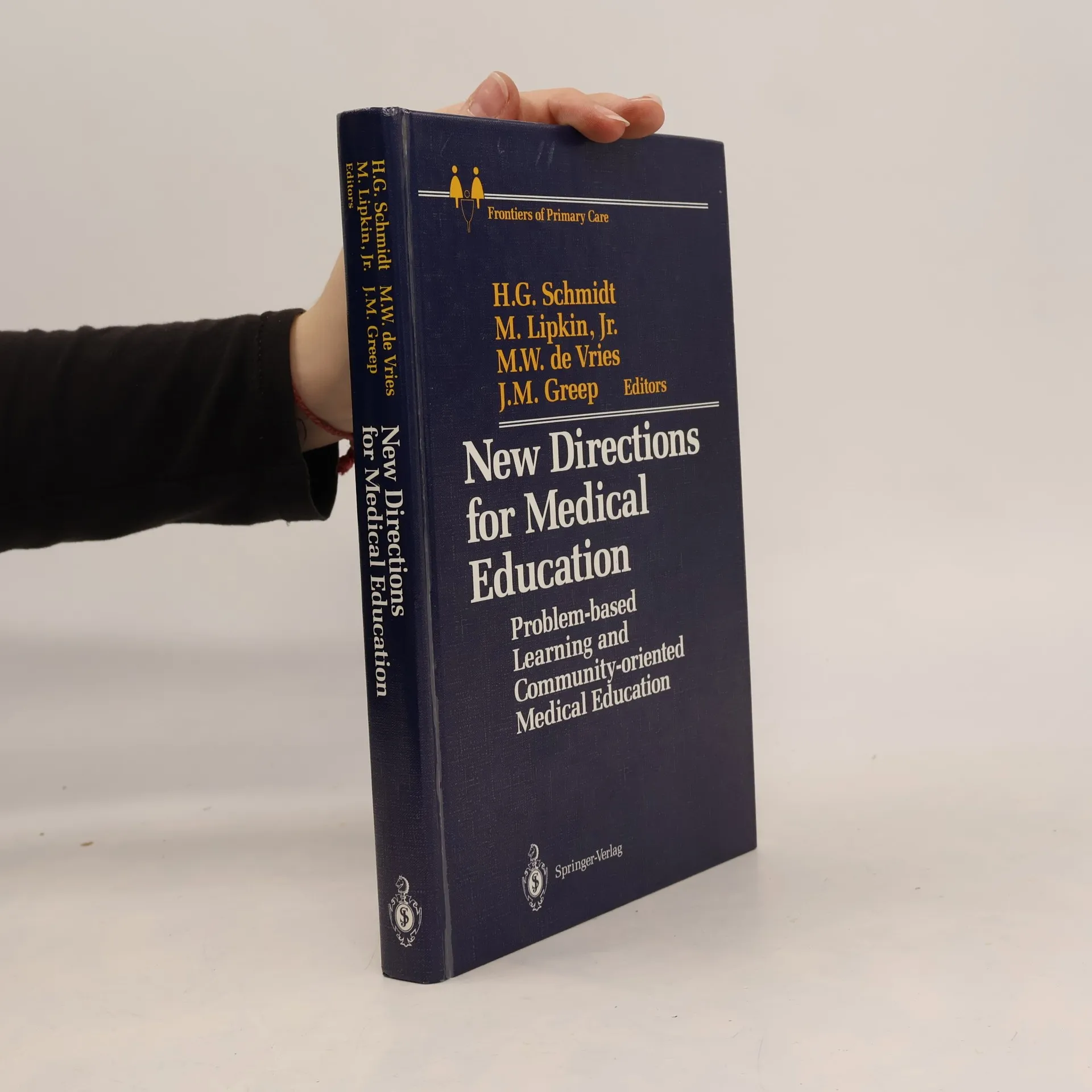
This work is a key introduction to the most major medical educational innovation of the last half-century: problem-based learning combined with community oriented education. The book includes history, conceptual bases, case examples and an introduction to key persons and institutions. It documents the experiences, accomplishments and problems of a number of medical schools forging new pathways in medical education. Education for Tomorrow's Medicine Today clearly explains the need for innovation in medical education. With respect to standardized evaluation, particularly interesting results show the equivalence of new methods to existing approaches.
Buchkauf
Frontiers of Primary Care: New Directions for Medical Education, Henk G. Schmidt, Nanny M. W. De Vries, Mack Jr. Lipkin, J.M. Greep
- Sprache

- Erscheinungsdatum
- 1989
- Einband
- (Hardcover),
- Buchzustand
- Beschädigt
- Preis
- € 73,99
Keiner hat bisher bewertet.
- Titel
- Frontiers of Primary Care: New Directions for Medical Education
- Untertitel
- Problem-Based Learning and Community-Oriented Medical Education
- Sprache
- Englisch
- Autor*innen
- Henk G. Schmidt, Nanny M. W. De Vries, Mack Jr. Lipkin, J.M. Greep
- Verlag
- Springer-Verlag
- Erscheinungsdatum
- 1989
- Einband
- Hardcover
- Seitenzahl
- 300
- ISBN10
- 0387963901
- ISBN13
- 9780387963907
- Reihe
- Schlagwörter
- Beschreibung
- This work is a key introduction to the most major medical educational innovation of the last half-century: problem-based learning combined with community oriented education. The book includes history, conceptual bases, case examples and an introduction to key persons and institutions. It documents the experiences, accomplishments and problems of a number of medical schools forging new pathways in medical education. Education for Tomorrow's Medicine Today clearly explains the need for innovation in medical education. With respect to standardized evaluation, particularly interesting results show the equivalence of new methods to existing approaches.