

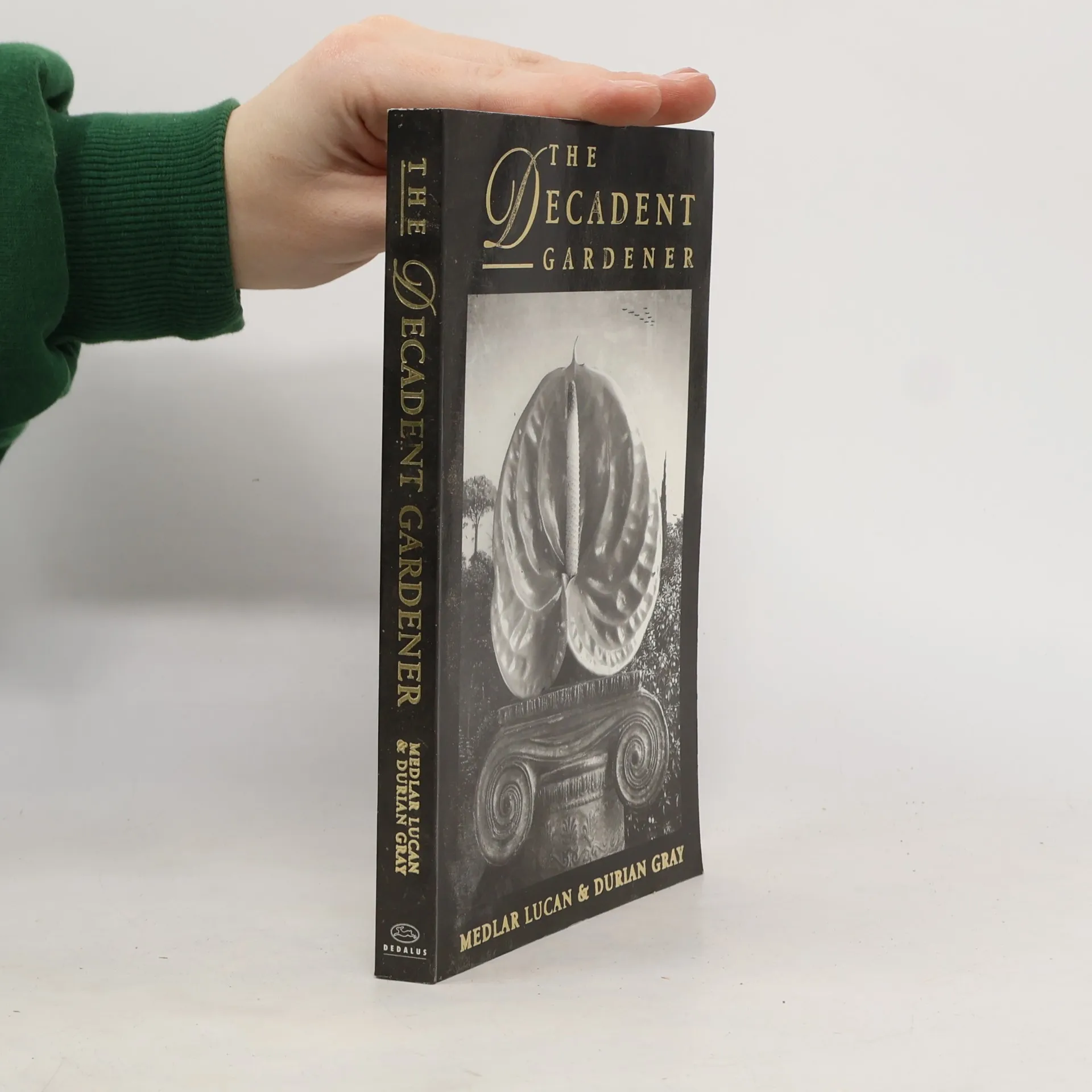


Dedalus Literary Concept Books: The Decadent Gardener
Autor*innen
Parameter
- 252 Seiten
- 9 Lesestunden
Mehr zum Buch
The Decadent Gardener by Medlar Lucan and Durian Gray presents a provocative gardening philosophy: the creation of fleeting beauty that ultimately succumbs to decay. They argue that gardening embodies "systematic violence in pursuit of beauty," positioning the gardener as a sadist. For Lucan and Gray, the garden intertwines themes of sex and death, serving as a space of "agony, self-doubt, and betrayal." They reference biblical narratives, suggesting that the first murder was committed by a gardener, and the original garden was a site of temptation and sin. The authors offer sharp insights, such as the notion that a flower is merely a sexual organ. The book outlines plans for thematic gardens conceived for a wealthy patroness, each symbolizing their vision of nature. The Cruel Garden features dense thickets of thorns, while the Fatal Garden showcases poisonous plants like black bryony and deadly nightshade. The Narcotic Garden includes mind-altering flora such as opium poppy and mandrake. The Priapic Garden is filled with species exhibiting phallic and vulvic shapes, and the Torture Garden embodies their most libertine concepts, inviting the reader's imagination. Ultimately, Lucan and Gray's gardens exist primarily in the mind, as their designs were never fully realized.
Buchkauf
Dedalus Literary Concept Books: The Decadent Gardener, Medlar Lucan, Alex Martin, Durian Gray
- Sprache

- Erscheinungsdatum
- 2000
- Einband
- (Paperback),
- Buchzustand
- Beschädigt
- Preis
- € 2,91
Keiner hat bisher bewertet.
- Titel
- Dedalus Literary Concept Books: The Decadent Gardener
- Sprache
- Englisch
- Autor*innen
- Medlar Lucan, Alex Martin, Durian Gray
- Verlag
- Dedalus
- Erscheinungsdatum
- 2000
- Einband
- Paperback
- Seitenzahl
- 252
- ISBN10
- 1873982828
- ISBN13
- 9781873982822
- Reihe
- Kategorien
- Schlagwörter
- Literarische Kritik, Ästhetik
- Beschreibung
- The Decadent Gardener by Medlar Lucan and Durian Gray presents a provocative gardening philosophy: the creation of fleeting beauty that ultimately succumbs to decay. They argue that gardening embodies "systematic violence in pursuit of beauty," positioning the gardener as a sadist. For Lucan and Gray, the garden intertwines themes of sex and death, serving as a space of "agony, self-doubt, and betrayal." They reference biblical narratives, suggesting that the first murder was committed by a gardener, and the original garden was a site of temptation and sin. The authors offer sharp insights, such as the notion that a flower is merely a sexual organ. The book outlines plans for thematic gardens conceived for a wealthy patroness, each symbolizing their vision of nature. The Cruel Garden features dense thickets of thorns, while the Fatal Garden showcases poisonous plants like black bryony and deadly nightshade. The Narcotic Garden includes mind-altering flora such as opium poppy and mandrake. The Priapic Garden is filled with species exhibiting phallic and vulvic shapes, and the Torture Garden embodies their most libertine concepts, inviting the reader's imagination. Ultimately, Lucan and Gray's gardens exist primarily in the mind, as their designs were never fully realized.