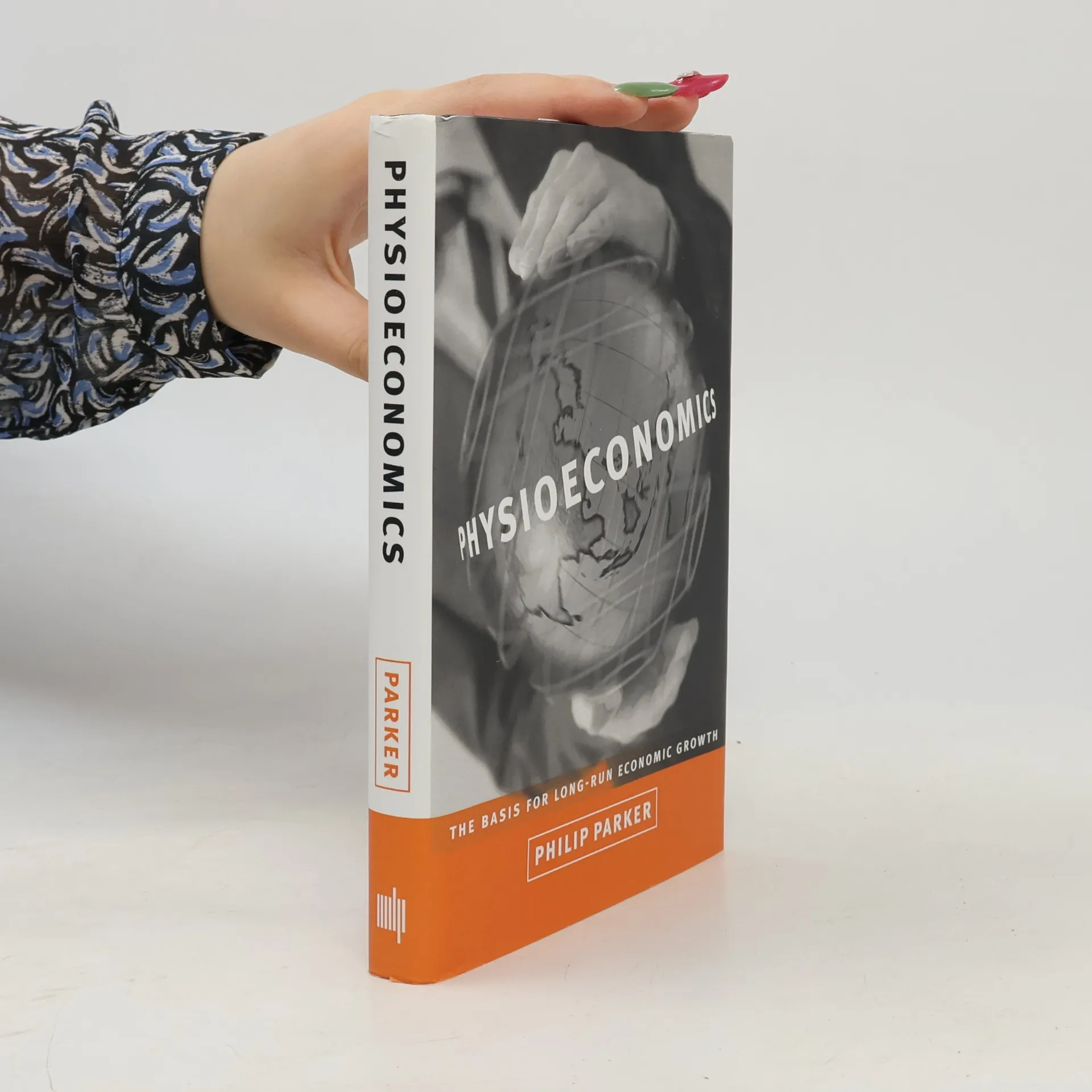
Parker explores how income, savings, investment, technology, entrepreneurship, and productivity are shaped by fundamental principles of physics and physiology. He posits that the interplay between these disciplines and macroeconomics could redefine our understanding of economic growth. Central to his argument is the equatorial paradox, where a country's latitude accounts for up to 70% of differences in per capita income. He introduces concepts from physics and physiology as foundational to homeostatic utility, emphasizing its role in economic growth. Rather than assessing a country's success by absolute income or consumption, he argues that growth is determined by proximity to a homeostatic steady state, a concept he refers to as physioeconomics. Countries nearer to this steady state tend to grow more slowly than those further away. Parker highlights the hypothalamus, which regulates motivation and homeostasis, as crucial in driving long-term economic growth through variations in its activity. By adopting a physioeconomic perspective, policymakers can devise more effective economic strategies and performance metrics. For instance, he warns that food aid in warmer regions can undermine local agriculture, which meets caloric needs more sustainably at a lower steady state.
Philip M. Parker Bücher
Philip M. Parker ist bekannt für seinen innovativen Ansatz in der literarischen Kreation, bei dem er automatisierte Methoden zur Produktion einer großen Menge an Publikationen einsetzt. Seine Arbeit konzentriert sich auf die Generierung von Texten, darunter Wörterbücher, Gedichte und Lehrmaterialien, unter Nutzung von Datenbanken und Internetrecherchen. Parkers Methodik beinhaltet die Erstellung von Vorlagen, die dann mit relevanten Informationen gefüllt werden, was ihm ermöglicht, Tausende von Titeln zu verfassen. Sein experimenteller Schreibstil stellt traditionelle Vorstellungen von Autorschaft in Frage und erschließt neue Bereiche des digitalen Publizierens.