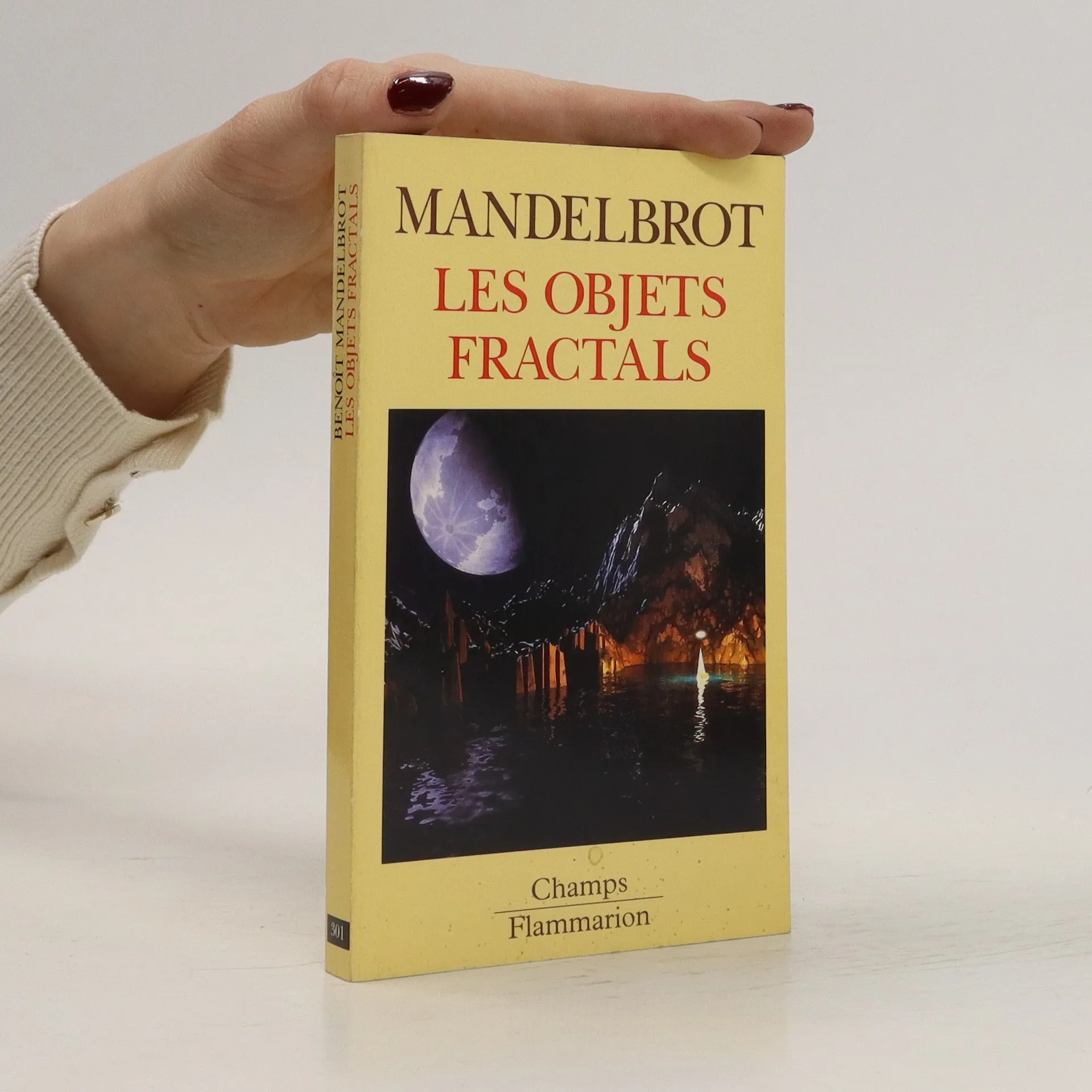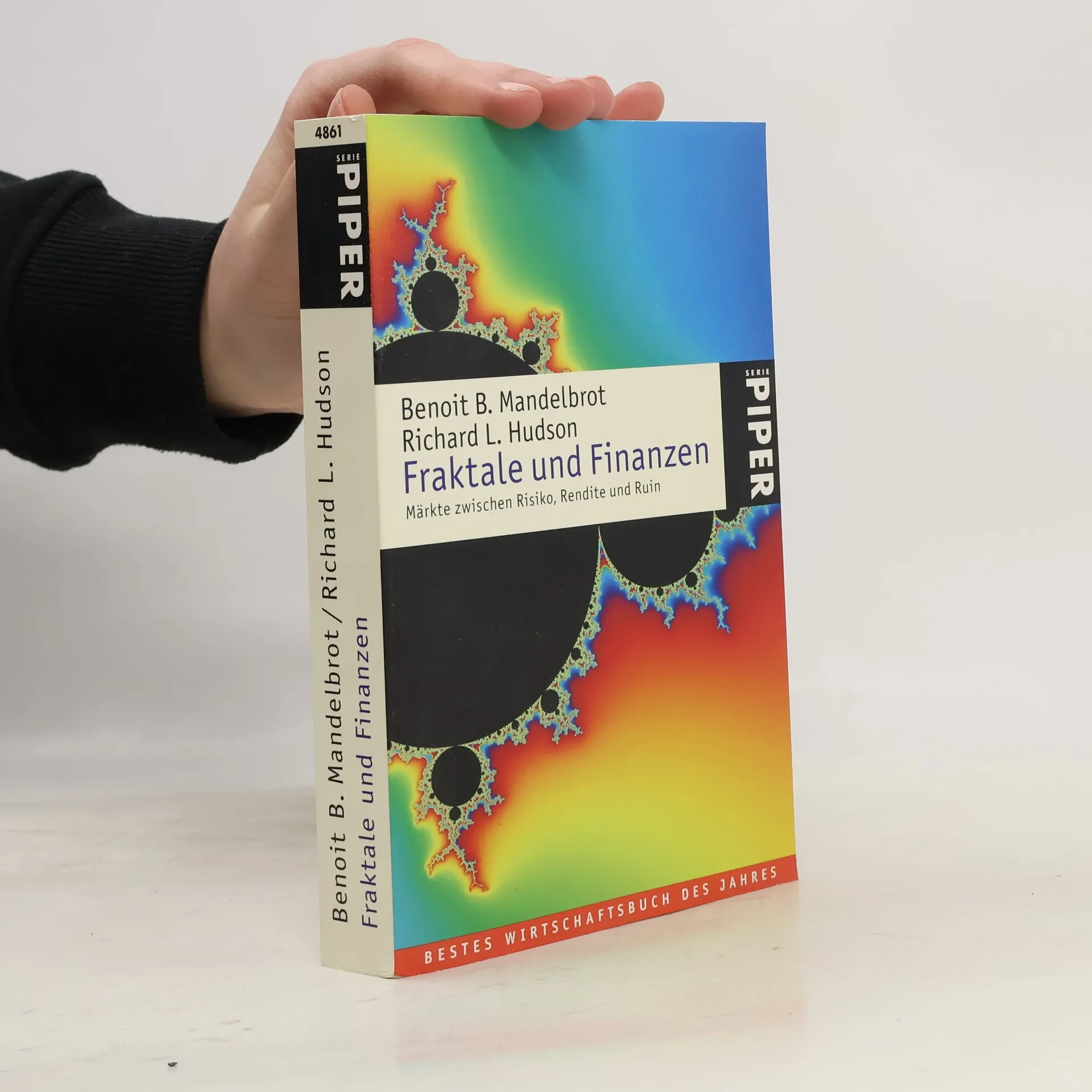
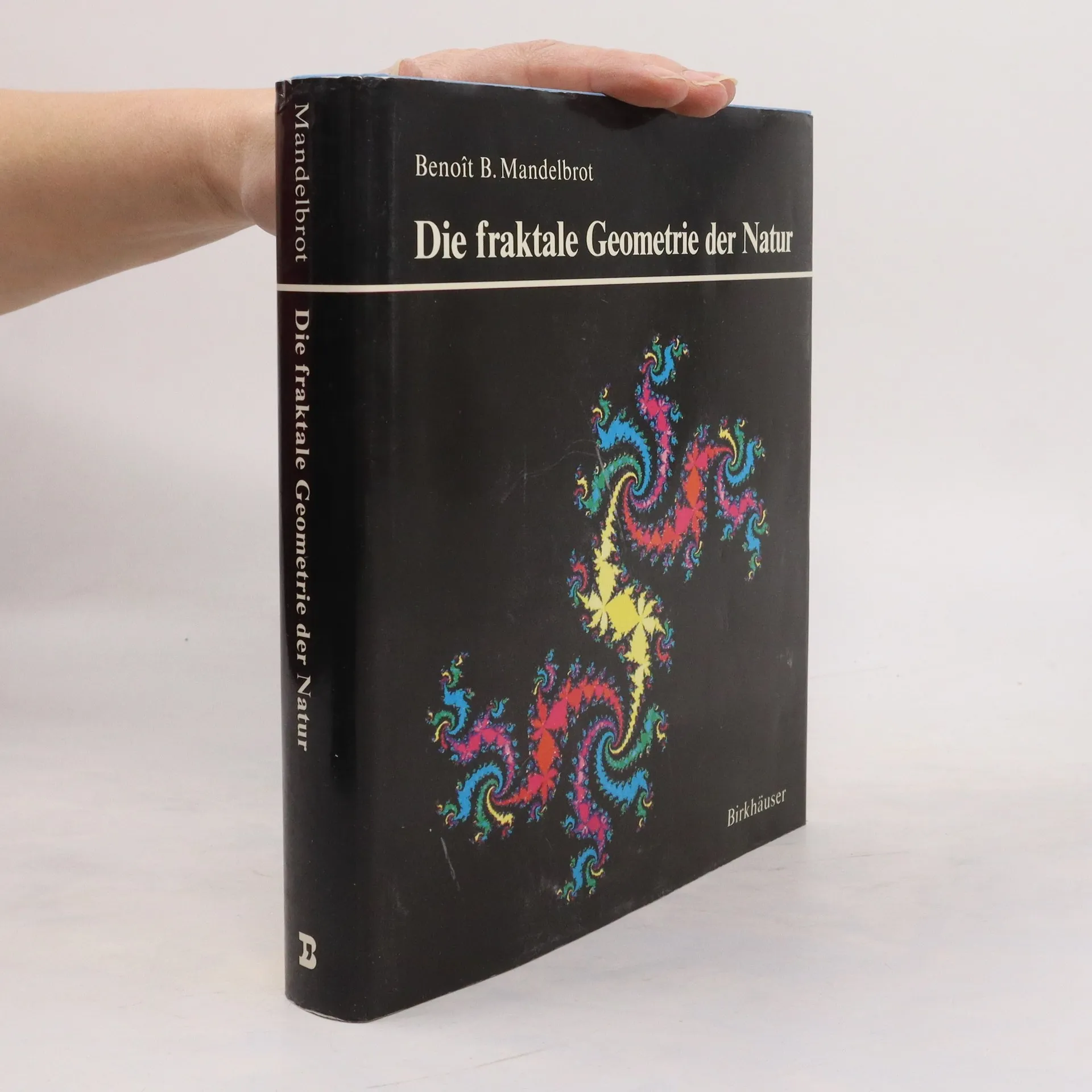
Benoît B. Mandelbrot gilt als Vater der fraktalen Geometrie. Seine Arbeit erforschte komplexe Systeme und untersuchte die unregelmäßigen und fragmentierten Formen, die in der Natur und der Mathematik vorkommen. Mandelbrots Ansatz deckte tiefgreifende mathematische Prinzipien auf, die Chaos und scheinbare Unregelmäßigkeiten zugrunde liegen, und beeinflusste eine Vielzahl von wissenschaftlichen Disziplinen.
"'Benoît B. Mandelbrot ist für die fraktale Geometrie, was Einstein für die Relativitätstheorie und Freud für die Psychoanalyse war', schrieb ein amerikanischer Journalist.""_ Mandelbrots Buch wurde zur Bibel der Fraktalforscher. 'Wer dieses Buch gelesen hat, sieht die Welt mit anderen Augen', meint der englische Mathematiker Michael Barnsley."Geo
Benoit B. Mandelbrot ist der Erfinder der fraktalen Geometrie; er hat sich ihrer bedient, um damit dem Rätsel der Unberechenbarkeit der Finanzmärkte auf den Grund zu gehen – erfolgreich, wie ihm die Fachwelt bestätigt. Mit dem Wirtschaftsjournalisten Richard L. Hudson hat er aufgeschrieben, warum man Geld in so beängstigendem Tempo gewinnen und ebenso schnell wieder verlieren kann. – Ausgezeichnet als 'Bestes Wirtschaftsbuch des Jahres' von 'Financial Times Deutschland'.
Für Benoît Mandelbrot ist Mathematik Poesie: Schönheit und Beschreibung der Welt. Als Junge kommt er, 1924 in Warschau geboren, nach Paris und wird von seinem Onkel in die Mathematik eingeführt. Chaotische Systeme prägen seine Zeit. Während des Krieges muss er sich vieles selbst beibringen. Seiner unkonventionellen Denkweise verdankt Mandelbrot die größten Erfolge, aber auch die Rolle des Außenseiters: Nicht an der Universität, sondern bei IBM in den USA fand er genügend Freiheit für seine visionären Ideen. Er begründete die 'fraktale Geometrie', die komplexe Gebilde berechnen kann, und entwickelte die ersten Computerprogramme, um sie grafisch darzustellen. Und sein weltberühmtes Apfelmännchen, die Mandelbrot-Menge, findet Ordnung im Ungenauen und überall Anwendung: Wie wachsen Zellen, Blumenkohl oder Schneeflocken? Oder: Wie verhalten sich Finanzmärkte?
The first book to discuss fractals solely from the point of view of computer graphics, this work includes an introduction to the basic axioms of fractals and their applications in the natural sciences, a survey of random fractals together with many pseudocodes for selected algorithms, an introduction into fantastic fractals such as the Mandelbrot set and the Julia sets, together with a detailed discussion of algorithms and fractal modeling of real world objects. 142 illustrations in 277 parts. 39 color plates.
Discontinuity, Concentration, Risk. Selecta Volume E
564 Seiten
20 Lesestunden
Set in the early 1960s at IBM's research facility, the narrative highlights the innovative environment fostered by brilliant minds, particularly Benoit Mandelbrot. His unconventional ideas challenged traditional mathematical concepts, emphasizing the significance of distributions with infinite second moments. This perspective paved the way for the development of fractals, suggesting that complex aspects of the physical world could be understood through models with fractional dimensions. The account reflects both personal interactions and groundbreaking intellectual exchanges among prominent researchers.
Podtitul: Rebelem ve vědě. Otec fraktální geometrie Benoit Mandelbrot (1924–2010) líčí ve svých pamětech zevrubně svou životní a vědeckou dráhu, která byla téměř stejně členitá a neurovnaná jako objekty, jejichž studiem se proslavil. V pestré mozaice vyprávění a příhod se přesouváme z varšavského ghetta k upjaté matematickéelitě poválečné Francie, od Caltechu a MIT k ženevskému psychologu Piagetovi, od IBM po Yale a Harvard – zde všude Mandelbrot pečlivě zaznamenal setkání s každým, kdo na něj v životě zapůsobil a ovlivnil jeho dráhu. Své zásluhy nijak neumenšuje; dobře si je vědom, že jeho objev je tak přelomový, že si zaslouží přívlastek „keplerovský“, protože po něm již není svět stejný jako před tím. Náhle jsme totiž získali nástroj k uchopení komplikovaných, kostrbatých a nepravidelných jevů, jaké se s oblibou nečekaně vynořují v přírodě i lidské společnosti.
Sous-titre : Forme, hasard et dimension
Quelle est la mesure du littoral breton ? Réfléchissez à cette question et vous cesserez de faire confiance aux dictionnaires. Quelle est la forme de cette montagne ou de ce nuage ? La simplicité de ces questions est trompeuse. Que peut-on dire sur la caractérisation des formes créées par le chaos ? L'auteur de ce livre a été le premier à trouver un moyen de soumettre ces questions à une étude scientifique, montrant qu'il existe une profonde et surprenante affinité entre elles.