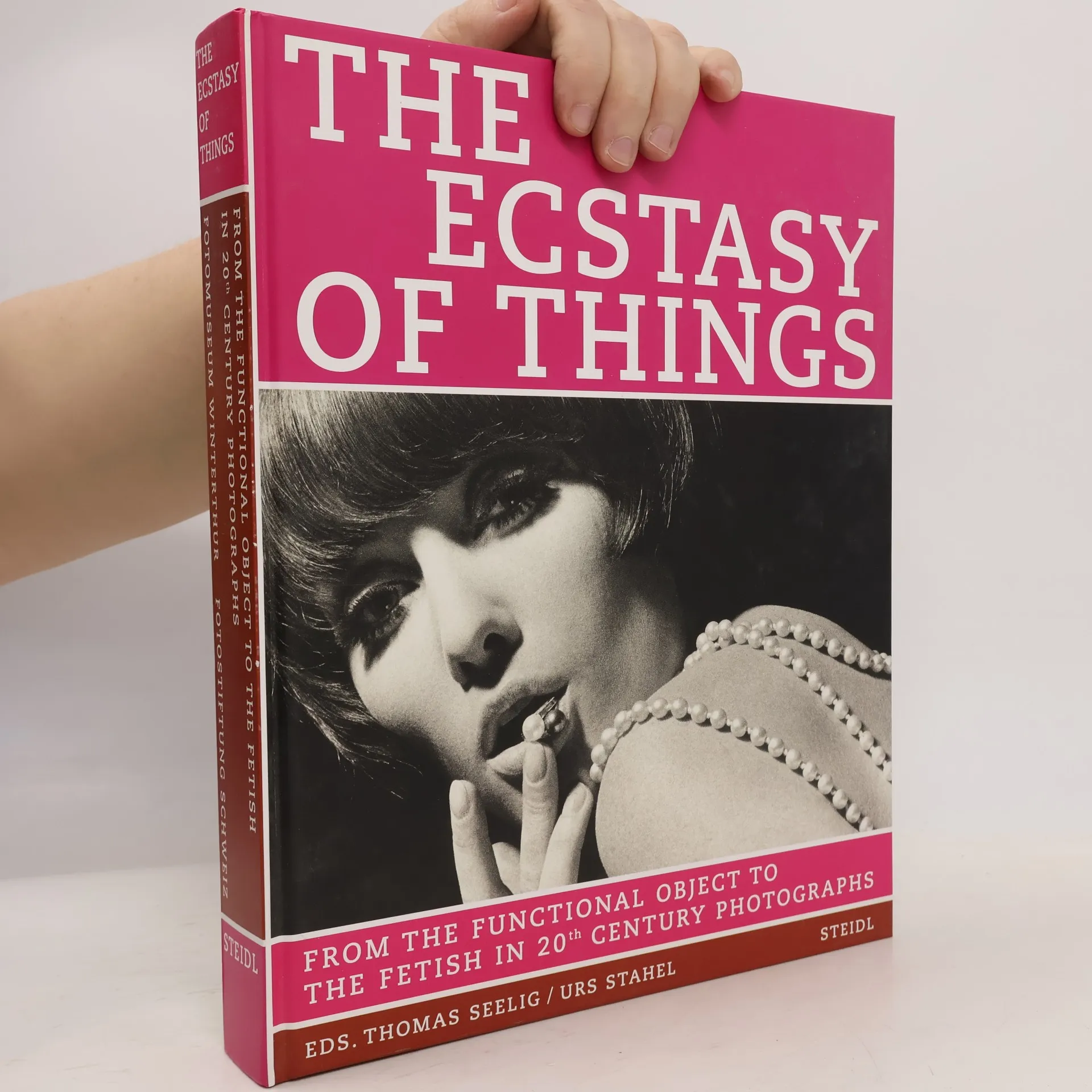
This title argues that society's priorities, its notions of value, are still informed by our relationship with physical objects, even though we have entered an age characterized by technological abstraction. The book examines how modern life is saturated and defined by things.
From Functional Object to Fetish in Twentieth Century Photography
400 Seiten
14 Lesestunden
The twentieth century was--among all else--a century of things. From the handmade object to the mass produced, these things that once served a purpose soon became harbingers of beauty, modernity and innovation. Beyond the material, these objects have stimulated fantasies that convey an image about a time and a place, so that now even an everyday telephone or radio that has long been discontinued can experience a rebirth as a cult object only to be purchased for lofty sums of money at an auction. The Ecstasy of Things illustrates how product photography reflects the world of things as captured in varying lights for designers, manufacturers and advertising agencies. Collected here are nearly 500 photographs--many of which were unearthed from company and agency archives worldwide on behalf of the Fotomuseum Winterthur and the Swiss Photography Foundation. This book most impressively demonstrates how the emotional and symbolic content of an object was represented through the changing tastes and aesthetics throughout the twentieth century. At the same time, the collection is a wealth of forms, a colorful compendium of design and a photographic history of the past century as illustrated through our possessions.
It is widely assumed that everyone is "interdisciplinary" nowadays, that everyone works at the intersections of conventional disciplines. But if being flexible, multiskilled and polymathic are the prerequisites of survival in today's world, why do educators and art marketeers tend to maintain conditions that advocate and encourage specialist outcomes? The aim of this new anthology in the Occasional Table series is to critically reflect upon the role of specialism in art and society. Why do some seek to transcend the parameters of specialization, and others maintain that deep levels of achievement can only be attained with highly focused methods and forms?Edited by David Blamey, Specialism includes texts by Matthew Cornford, Neil Cummings, Dan Fox, Anouchka Grose, Mingyuan Hu, Stephen Knott, Frances Loeffler, Nina Power, Rick Poynor, Alistair Rider, Andrew Robinson, Irit Rogoff and Ruth Sonderegger, Chris Watson, Jon Wozencroft and Ian Whittlesea.