
Bookbot

Terence Tao

    17. Juli 1975

    Terry Tao ist ein Mathematiker, dessen Forschung vielfältige Bereiche wie harmonische Analyse, partielle Differentialgleichungen und Zahlentheorie umfasst. Seine Arbeit befasst sich mit den komplexen Strukturen und Mustern innerhalb der Mathematik und versucht, grundlegende Prinzipien aufzudecken. Taos Beiträge haben unser Verständnis komplexer mathematischer Landschaften erheblich vorangetrieben. Sein Engagement für die Erforschung der theoretischen Grundlagen der Mathematik zeigt sich in seiner produktiven und wirkungsvollen Forschung.

    Analysis
    Analysis II
    Analysis I
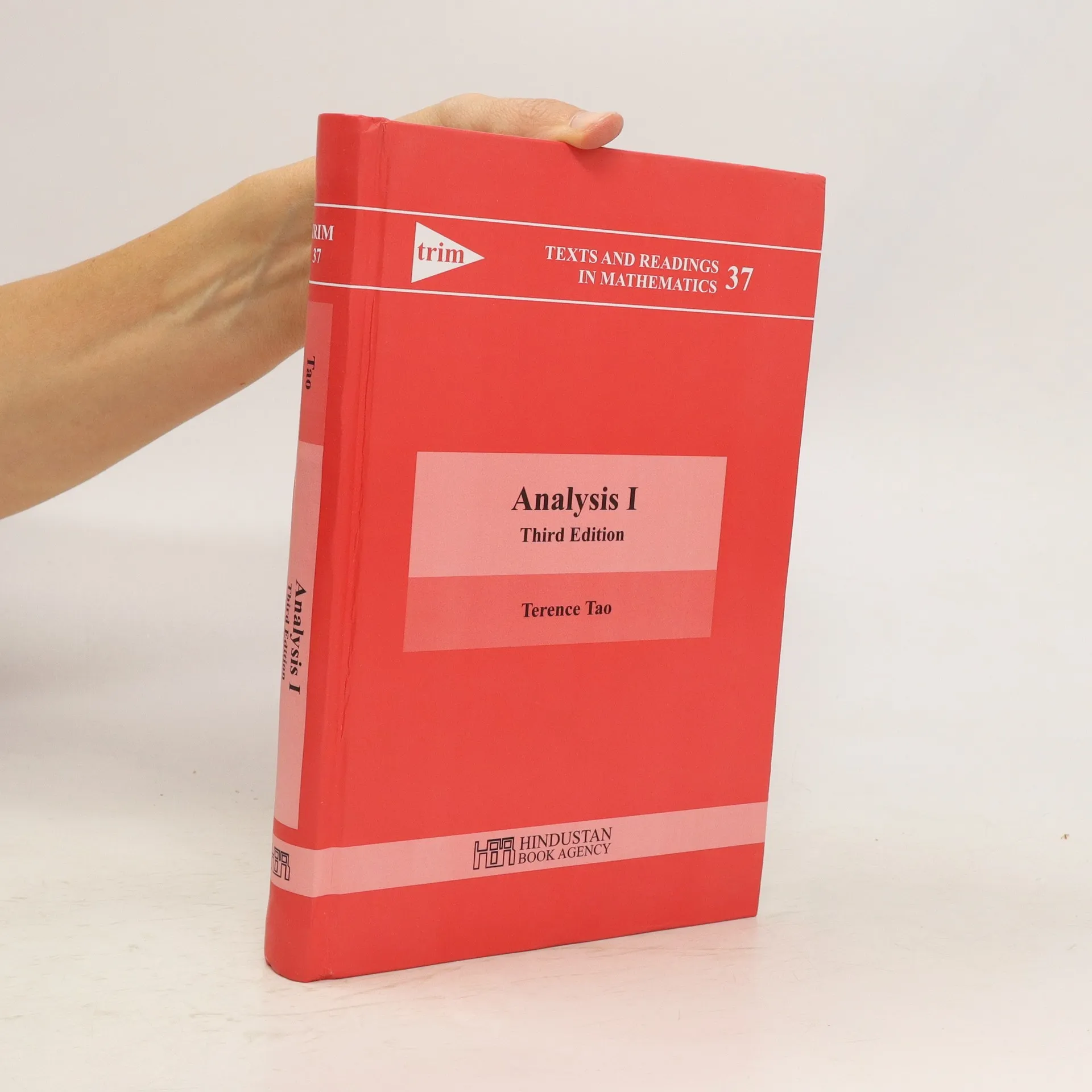
    • Analysis I

      • 347 Seiten
      • 13 Lesestunden

      This is part one of a two-volume book on real analysis and is intended for senior undergraduate students of mathematics who have already been exposed to calculus. The emphasis is on rigour and foundations of analysis. Beginning with the construction of the number systems and set theory, the book discusses the basics of analysis (limits, series, continuity, differentiation, Riemann integration), through to power series, several variable calculus and Fourier analysis, and then finally the Lebesgue integral. These are almost entirely set in the concrete setting of the real line and Euclidean spaces, although there is some material on abstract metric and topological spaces. The book also has appendices on mathematical logic and the decimal system. The entire text (omitting some less central topics) can be taught in two quarters of 25–30 lectures each. The course material is deeply intertwined with the exercises, as it is intended that the student actively learn the material (and practice thinking and writing rigorously) by proving several of the key results in the theory.

      Analysis I
      4,7
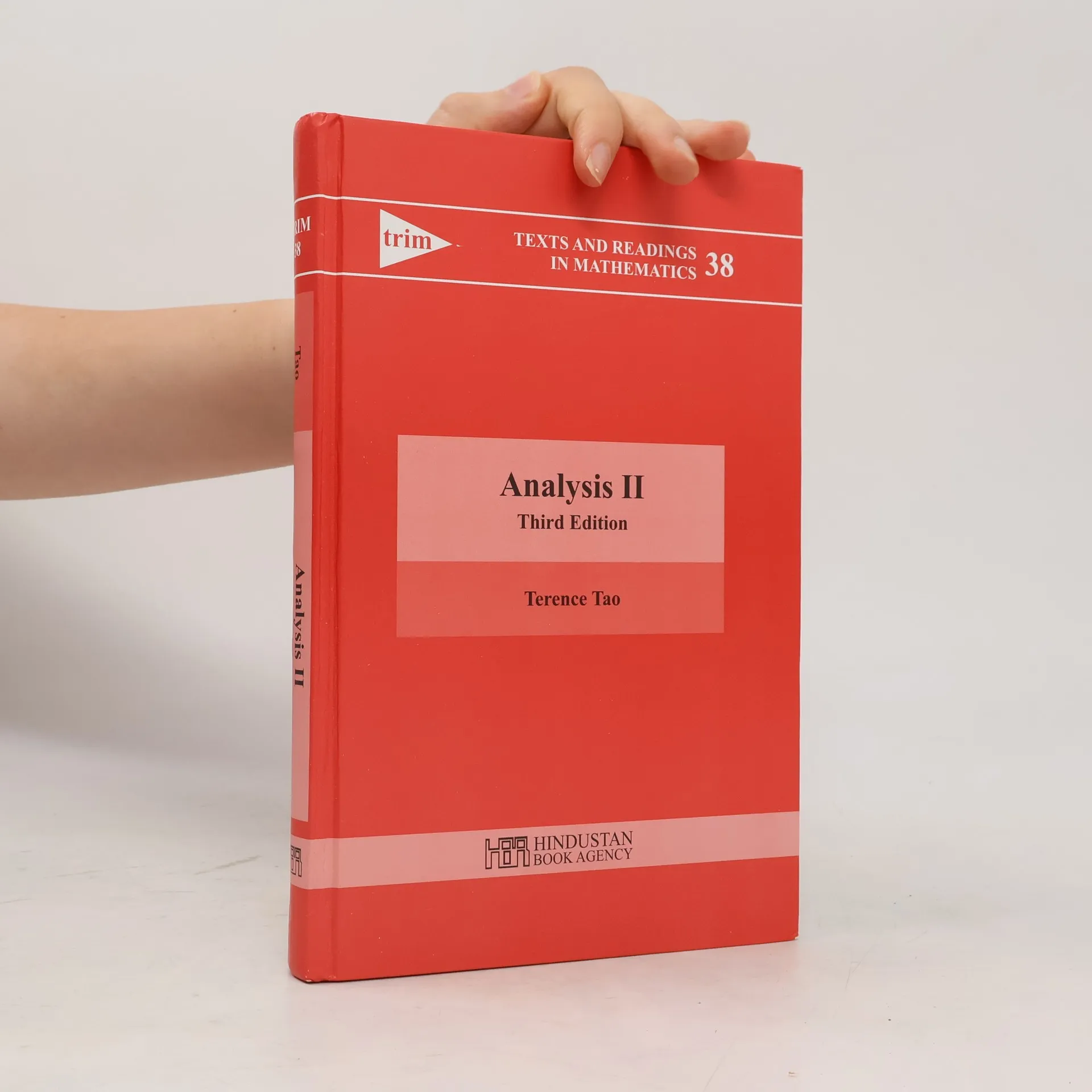
    • Analysis II

      • 218 Seiten
      • 8 Lesestunden

      This is part two of a two-volume book on real analysis and is intended for senior undergraduate students of mathematics who have already been exposed to calculus. The emphasis is on rigour and foundations of analysis. Beginning with the construction of the number systems and set theory, the book discusses the basics of analysis (limits, series, continuity, differentiation, Riemann integration), through to power series, several variable calculus and Fourier analysis, and then finally the Lebesgue integral. These are almost entirely set in the concrete setting of the real line and Euclidean spaces, although there is some material on abstract metric and topological spaces. The book also has appendices on mathematical logic and the decimal system. The entire text (omitting some less central topics) can be taught in two quarters of 25–30 lectures each. The course material is deeply intertwined with the exercises, as it is intended that the student actively learn the material (and practice thinking and writing rigorously) by proving several of the key results in the theory.

      Analysis II
      4,6
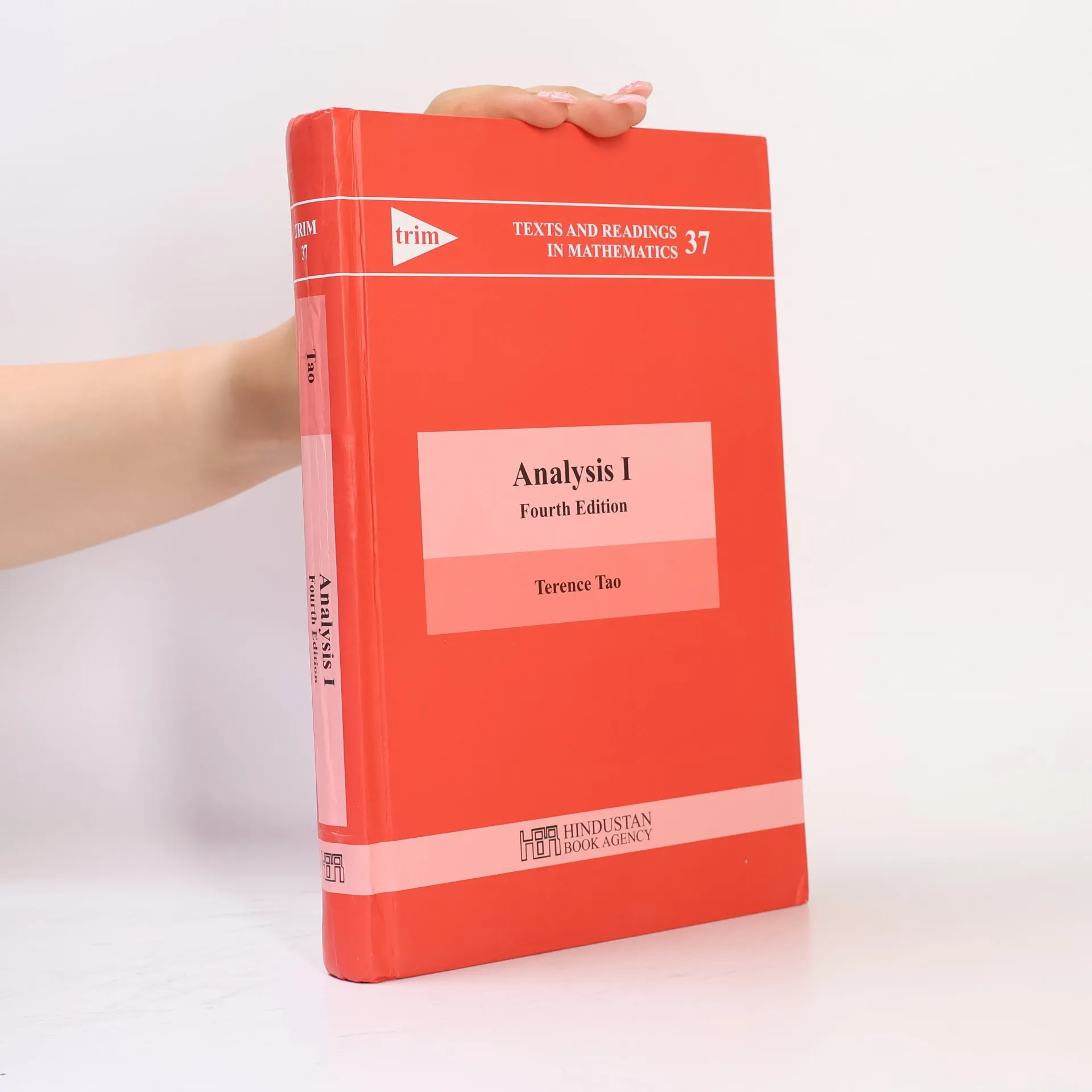
    • Analysis

      • 376 Seiten
      • 14 Lesestunden

      This is part one of a two-volume introduction to real analysis and is intended for honours undergraduates who have already been exposed to calculus. The emphasis is on rigour and on foundations. The material starts at the very beginning--the construction of the number systems and set theory--then goes on to the basics of analysis (limits, series, continuity, differentiation, Riemann integration), through to power series, several variable calculus and Fourier analysis, and finally to the Lebesgue integral. These are almost entirely set in the concrete setting of the real line and Euclidean spaces, although there is some material on abstract metric and topological spaces. There are also appendices on mathematical logic and the decimal system. The entire text (omitting some less central topics) can be taught in two quarters of twenty-five to thirty lectures each. The course material is deeply intertwined with the exercises, as it is intended that the student actively learn the material (and practice thinking and writing rigorously) by proving several of the key results in the theory. The fourth edition incorporates a large number of additional corrections reported since the release of the third edition, as well as some additional new exercises.

      Analysis
      5,0