

Bookbot

Herbert Simon

    15. Juni 1916 – 9. Februar 2001
    Models of My Life
    Human Problem Solving
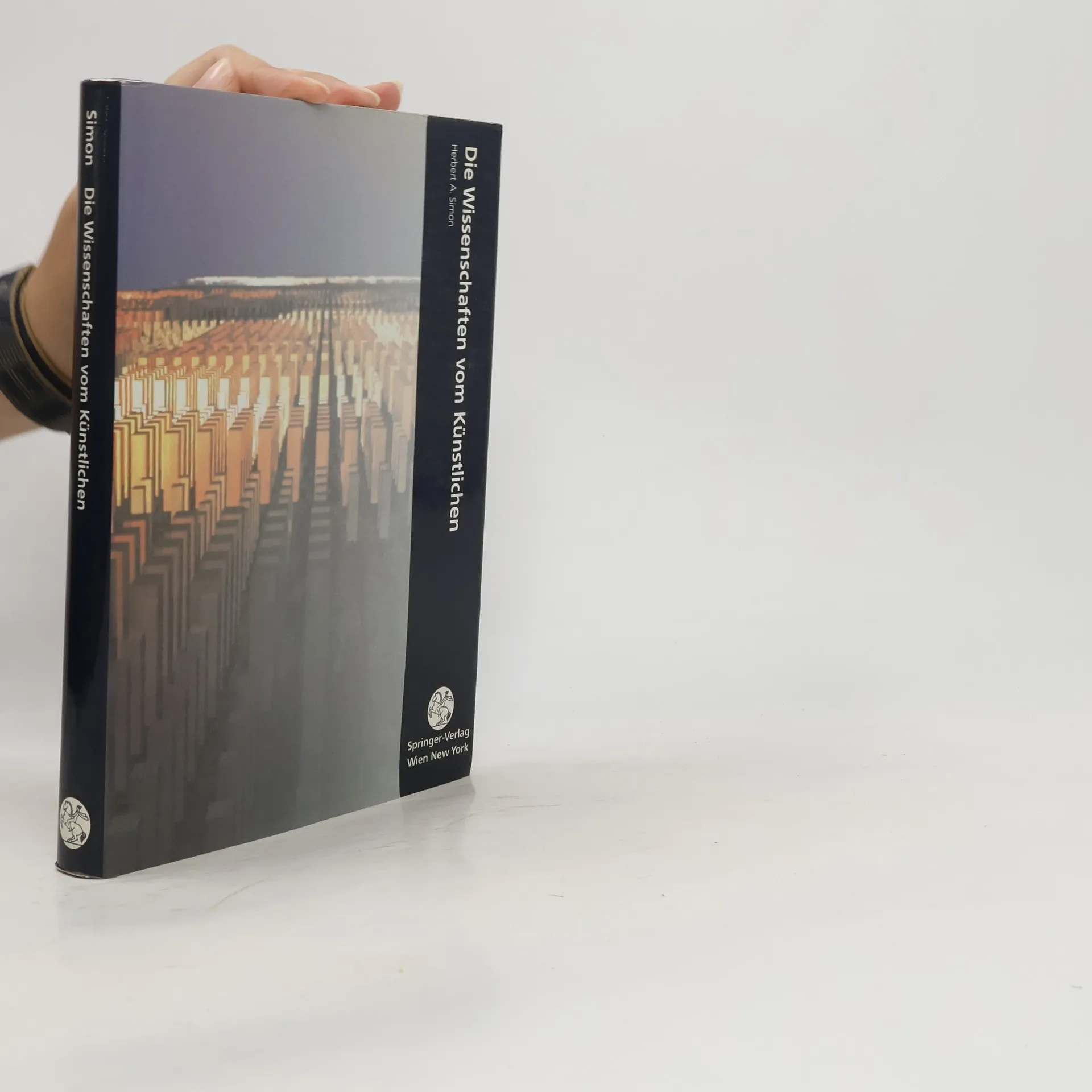
    Die Wissenschaften vom Künstlichen
    • Die Wissenschaften vom KA1/4nstlichen von Herbert A. Simon gilt seit dem Erscheinen der ersten Ausgabe im Jahr 1969 als "Klassiker" der Literatur zum Thema KA1/4nstliche Intelligenz. Simon hat zusammen mit den Computerwissenschaftlern Allen Newell, Marvin Minsky und John McCarthy Mitte der fA1/4nfziger Jahre das so bezeichnete - von Alan Turing antizipierte - Forschungsgebiet der Computerwissenschaft und der Psychologie ins Leben gerufen. Seine herausragende, allgemeinverstAndliche Darstellung von GrundA1/4berlegungen und philosophischen Aspekten der KA1/4nstlichen Intelligenz ist heute aktueller denn je, nicht nur wegen der stAndig zunehmenden Bedeutung der Forschung und Entwicklung auf diesem Gebiet, sondern auch aufgrund des verbreiteten Mangels an Grundkenntnissen fA1/4r eine kritische Auseinandersetzung mit der KA1/4nstlichen Intelligenz.

      Die Wissenschaften vom Künstlichen
      4,6
    • Human Problem Solving

      • 938 Seiten
      • 33 Lesestunden

      This monumental work by Herbert A. Simon and Allan Newell, two pioneers of artificial intelligence, develops and defends the authors' theory of human reasoning. It will be of historical interest to students of the physical symbol system hypothesis in psychology, artificial intelligence, or cognitive science.

      Human Problem Solving
      3,0
    • Models of My Life

      • 415 Seiten
      • 15 Lesestunden

      In this candid and witty autobiography, Nobel laureate Herbert A. Simon looks at his distinguished and varied career, continually asking himself whether (and how) what he learned as a scientist helps to explain other aspects of his life. A brilliant polymath in an age of increasing specialization, Simon is one of those rare scholars whose work defines fields of inquiry. Crossing disciplinary lines in half a dozen fields, Simon's story encompasses an explosion in the information sciences, the transformation of psychology by the information-processing paradigm, and the use of computer simulation for modeling the behavior of highly complex systems. Simon's theory of bounded rationality led to a Nobel Prize in economics, and his work on building machines that think—based on the notion that human intelligence is the rule-governed manipulation of symbols—laid conceptual foundations for the new cognitive science. Subsequently, contrasting metaphors of the maze (Simon's view) and of the mind (neural nets) have dominated the artificial intelligence debate. There is also a warm account of his successful marriage and of an unconsummated love affair, letters to his children, columns, a short story, and political and personal intrigue in academe.

      Models of My Life