
Bookbot

Luigi Spinelli

    Domus
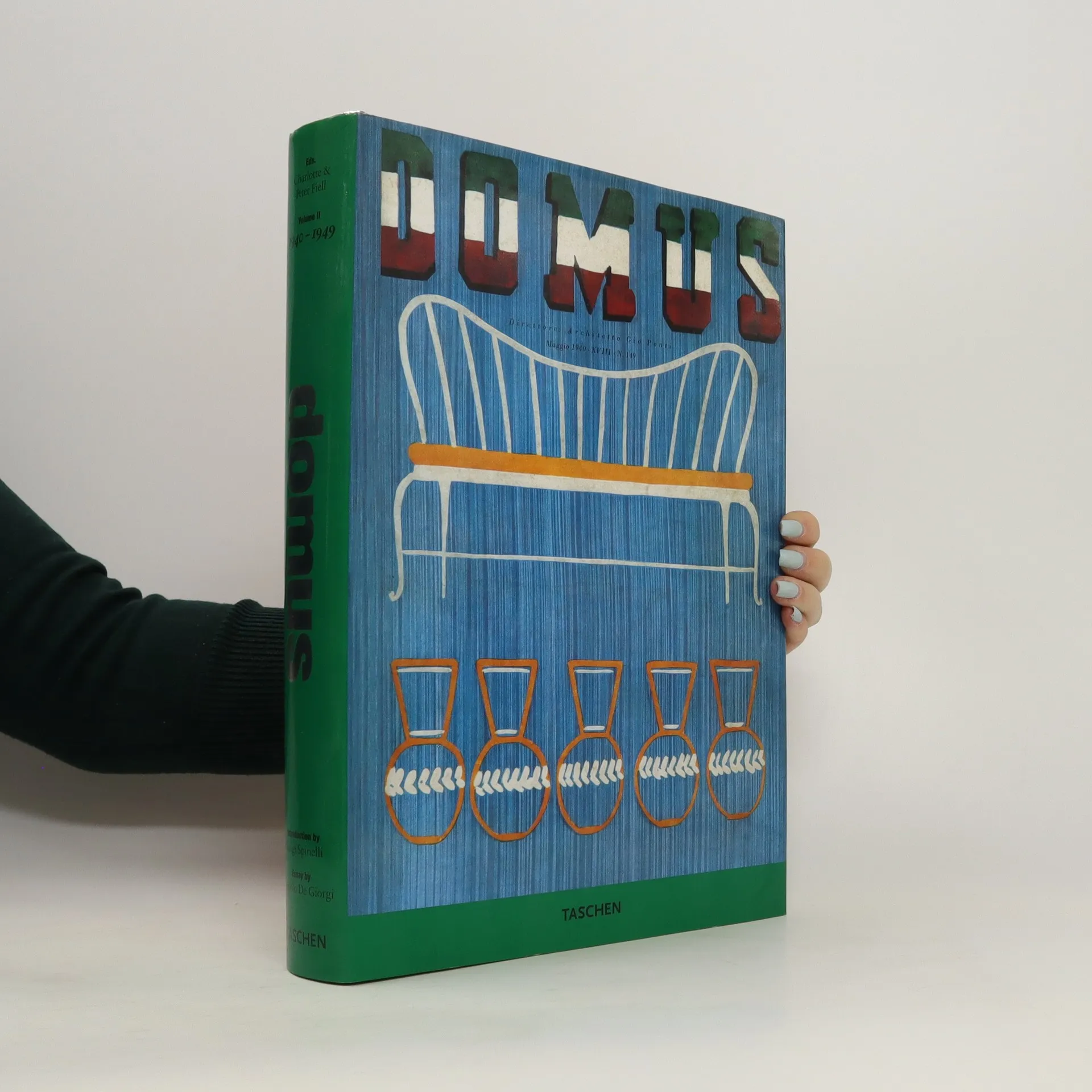
    Domus. Volume 2 (1940-1949)
    • Domus. Volume 2 (1940-1949)

      • 580 Seiten
      • 21 Lesestunden

      1940-1949: Destruction and Reconstruction. This volume covers the 1940s, when fascism came to a climax and World War II led to the extensive destruction of Europe. But the second half of this decade was also a time of reconstruction, democratization, and the related search for new social values. Unlike in Nazi Germany, in fascist Italy Modernism was able to advance in architecture and design - as proved impressively by the buildings and designs by Carlo Mollino, Gian Luigi Banfi, Franco Albini, and Giuseppe Terragni that are documented herein. After the war, Organic Design emerged alongside the International style. This edition reflects upon the economic, social, and cultural problems of the time, but also shows how the force of the avant-garde continued to thrive in Italy, Switzerland, Scandinavia and the USA. Reports and features on modern industrial design and furniture, as well as domestic and business interiors stand side by side with articles about novel prefabricated houses

      Domus. Volume 2 (1940-1949)
      4,0
    • Domus

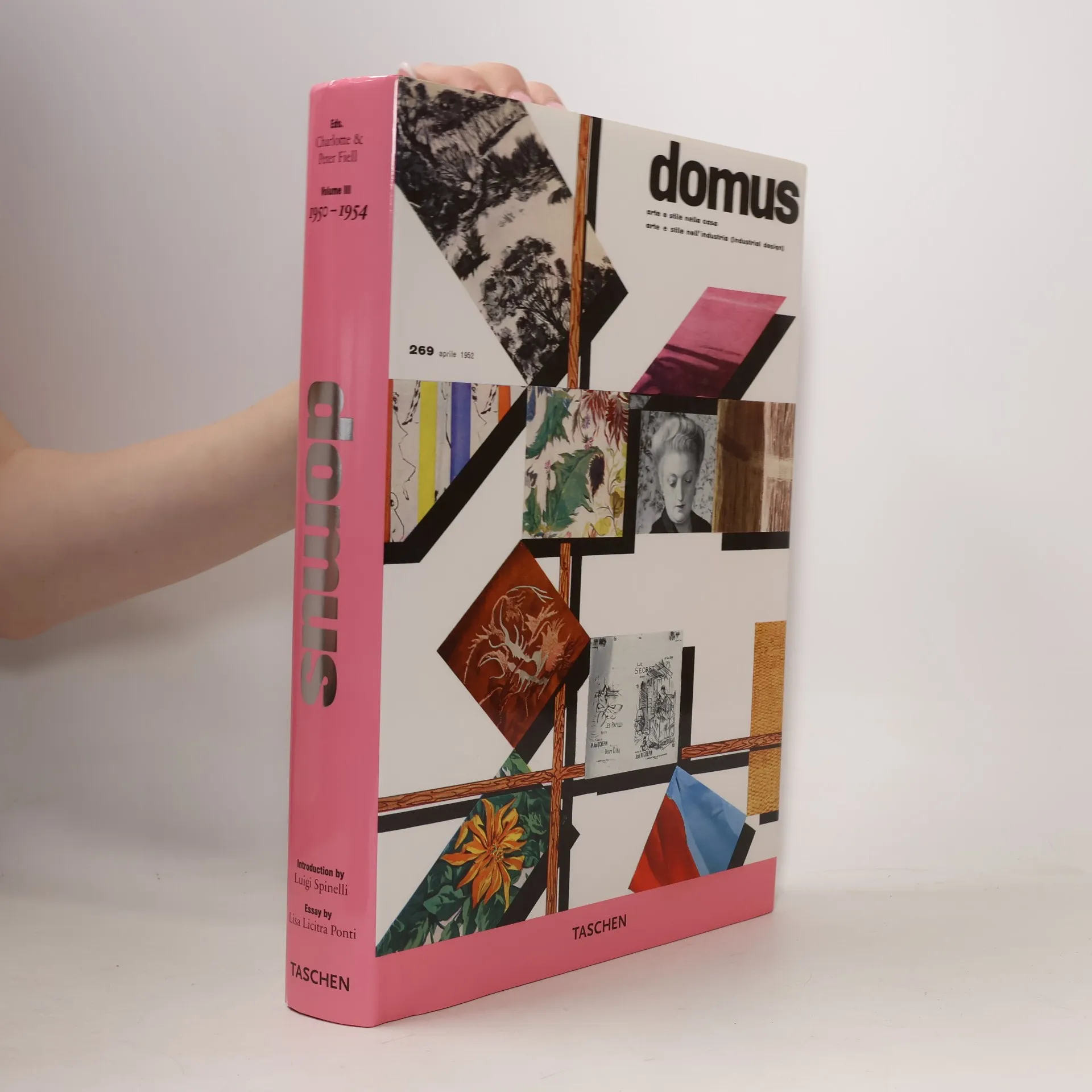
      1950-1954

      • 580 Seiten
      • 21 Lesestunden

      1950-1954: Architecture of the Avant-Garde. This volume covers the first half of the 1950s, a time characterized by great optimism. The consequences of World War II had largely been overcome, the most urgent needs of the population were satisfied, and economic prospects looked bright. Architecture and design looked for new forms of expression, for new materials and their applications - and the possibilities seemed limitless. Volume III shows contemporary trends of the time through detailed reports on the ninth Triennial in Milan and about designers like Tapio Wirkkala, Finn Juhl, Carlo de Carli, Carlo Mollino, Piero Fornasetti, Marco Zanuso, Harry Bertoia and George Nelson. Via features on Le Corbusier's famous Unité d'Habitation in Marseille, the groundbreaking Case Study Houses by Charles and Ray Eames, the efforts of Richard Neutra in California, the work of Oscar Niemeyer in Brazil, and the futuristic Olivetti Showroom by Studio BBPR in New York.

      Domus