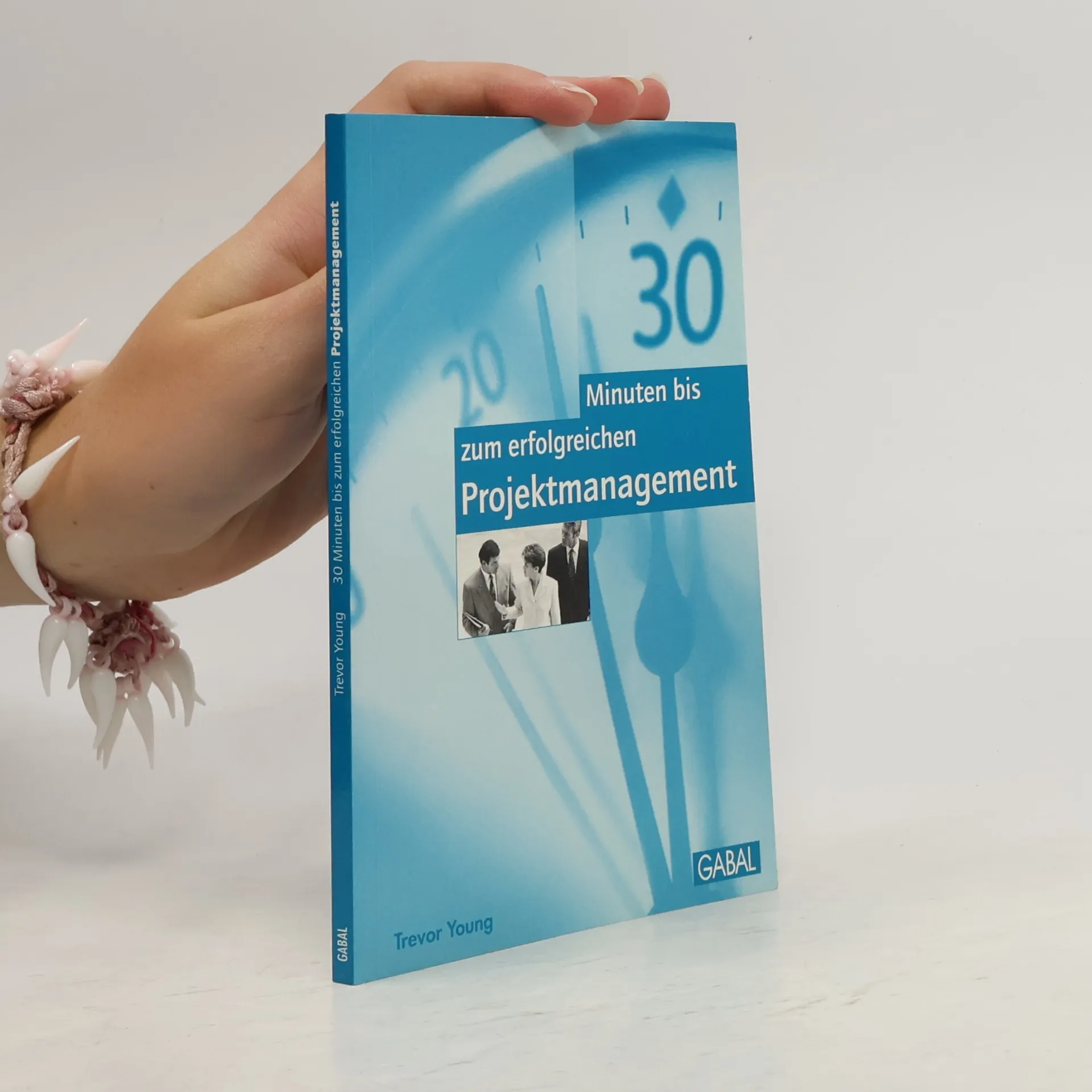
Covers the entire project management process, directing the skills of maintaining a balance between the demands of the customer, project, team and the organization. Enables any manager to significantly raise the probability of success with their projects.
Lively and ""easy to read"", the books in this dynamic new series are clear, concise action-oriented and up-to-date summaries of a particular management skill. Providing practical advice that any employee can apply immediately in their day-to-day work, each book in the series -- practical tips for improving personal skills-- checklist and diagrams-- short case studies. Project-based work is rapidly becoming the mainstay of many organizations but all too easily projects can go off the rails. Illustrated throughout with checklists, diagrams and templates for running effective projects, this step-by-step guide provides a dear plan to -- keep control of costs-- ensure that project timetables are set and adhered to, and-- make use of computer systems in tracking projects. Complete with a detailed glossary.
Project management skills are hugely desirable for managers at all levels of an organization. Most people today can benefit from the application of these skills to some areas of their daily operations. From large undertakings, such as the Channel Tunnel or North Sea oil rigs, to the unique but smaller projects that take place in every type of organization, special skills are required if project management is to produce the right results.
Wurde Ihnen die Verantwortung für ein Projekt übertragen?
Wissen Sie nicht genau, wie Sie die vielfältigen
Einzelaufgaben so koordinieren, dass Sie das gewünschte
Endergebnis zum festgesetzten Termin in der geforderten
Qualität erreichen?
Dieser praxisorientierte Ratgeber führt Sie in 30 Minuten von
der Ausgangssituation - Prokektdefinition - zum
ausgearbeiteten Projektplan, den Sie anschließend in die
Tat umsetzen können. Sechs logische Schritte, in die sich
jedes Projekt aufgliedern lässt, weisen systematisch den
Weg zum Erfolg.
Nach der Lektüre können Sie:
- einen Projektablaufplan ausarbeiten, der die vorhandenen
Kapazitäten optimal auslastet
- realistische Zeit-Kostenrahmen festsetzen und einhalten
- den Plan nach den Vorgaben Ihres Auftraggebers
optimieren und in die Tat umsetzen
This textbook focuses on essential economic principles for agricultural economists engaged in rural development. While the principles of micro-economics or price-theory are relevant globally, the book emphasizes their significance in the context of agricultural and food sectors in developing countries. It sets itself apart from other texts by using hypothetical and real-world examples primarily from these nations, unlike many that rely on industrialized country scenarios. The first half covers foundational concepts of production, supply, and demand, which are crucial for managing agricultural sectors and food markets. The second half integrates supply and demand into discussions of equilibrium and exchange, followed by trade and economic welfare theory. The concluding chapter illustrates how earlier material can be synthesized by agricultural economists to analyze and compare the impacts of various agricultural policies. This structured approach allows agricultural economics to offer a consistent framework for addressing policy challenges, thereby playing a vital role in promoting rural development.