

The book explores how the politics of memory impacts peace in societies transitioning from a violent past. It finds that three elements of memory politics – inclusivity, pluralism, and dignity – play a key role for a just peace. -- .
Susanne Buckley-Zistel Reihenfolge der Bücher (Chronologisch)


Raum in den Internationalen Beziehungen
Ein Überblick
essentials liefern aktuelles Wissen in konzentrierter Form. Die Essenz dessen, worauf es als „State-of-the-Art“ in der gegenwärtigen Fachdiskussion oder in der Praxis ankommt. essentials informieren schnell, unkompliziert und verständlich als Einführung in ein aktuelles Thema aus Ihrem Fachgebiet als Einstieg in ein für Sie noch unbekanntes Themenfeld als Einblick, um zum Thema mitreden zu können Die Bücher in elektronischer und gedruckter Form bringen das Expertenwissen von Springer-Fachautoren kompakt zur Darstellung. Sie sind besonders für die Nutzung als eBook auf Tablet-PCs, eBook-Readern und Smartphones geeignet. essentials: Wissensbausteine aus den Wirtschafts-, Sozial- und Geisteswissenschaften, aus Technik und Naturwissenschaften sowie aus Medizin, Psychologie und Gesundheitsberufen. Von renommierten Autoren aller Springer-Verlagsmarken.
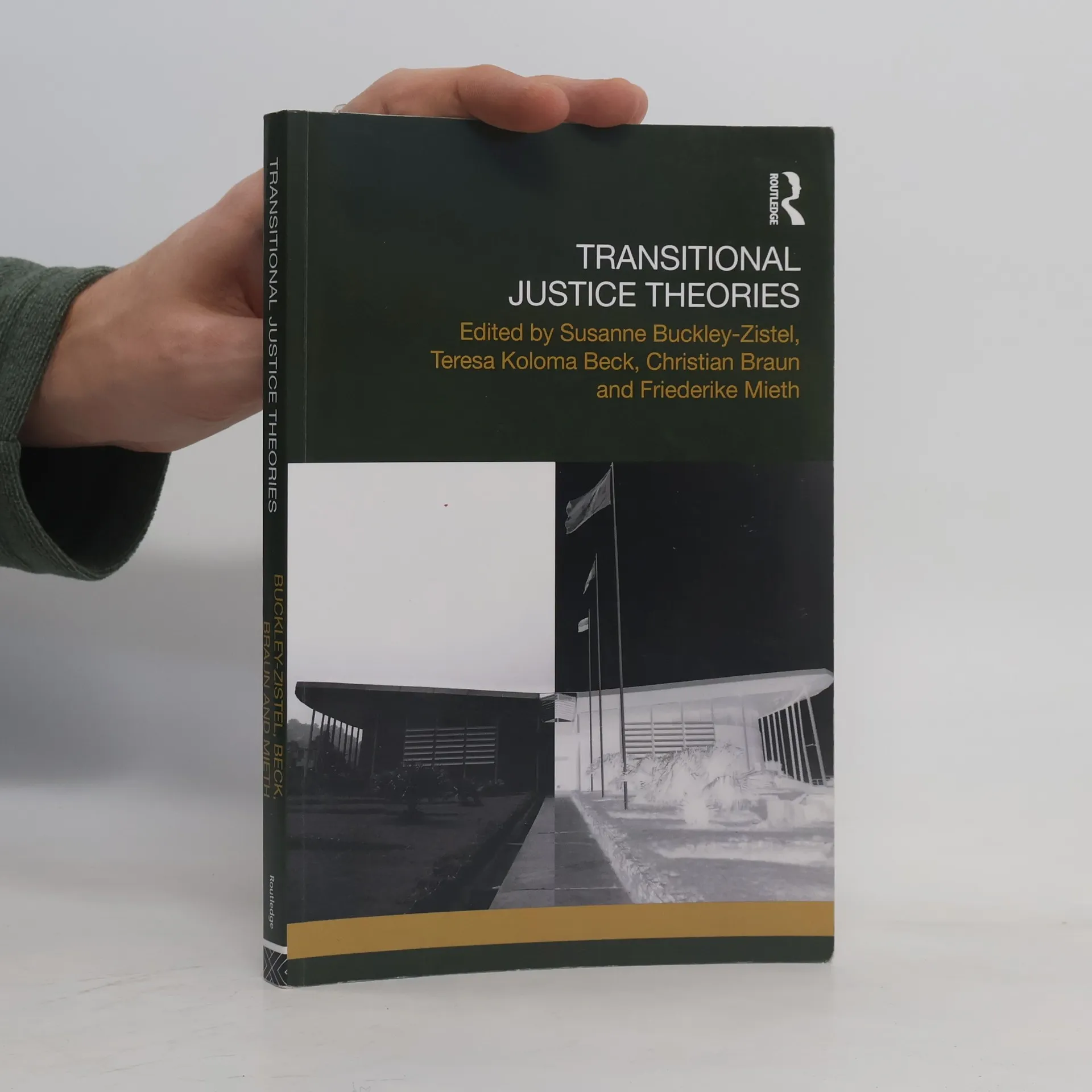
Transitional Justice Theories
- 240 Seiten
- 9 Lesestunden
Transitional Justice Theories is the first volume to approach the politically sensitive subject of post-conflict or post-authoritarian justice from a theoretical perspective. It combines contributions from distinguished scholars and practitioners as well as from emerging academics from different disciplines and provides an overview of conceptual approaches to the field. The volume seeks to refine our understanding of transitional justice by exploring often unarticulated assumptions that guide discourse and practice. To this end, it offers a wide selection of approaches from various theoretical traditions ranging from normative theory to critical theory. In their individual chapters, the authors explore the concept of transitional justice itself and its foundations, such as reconciliation, memory, and truth, as well as intersections, such as reparations, peace building, and norm compliance. This book will be of particular interest for scholars and students of law, peace and conflict studies, and human rights studies. Even though highly theoretical, the chapters provide an easy read for a wide audience including readers not familiar with theoretical investigations.