Bookbot

Raymond Clemens

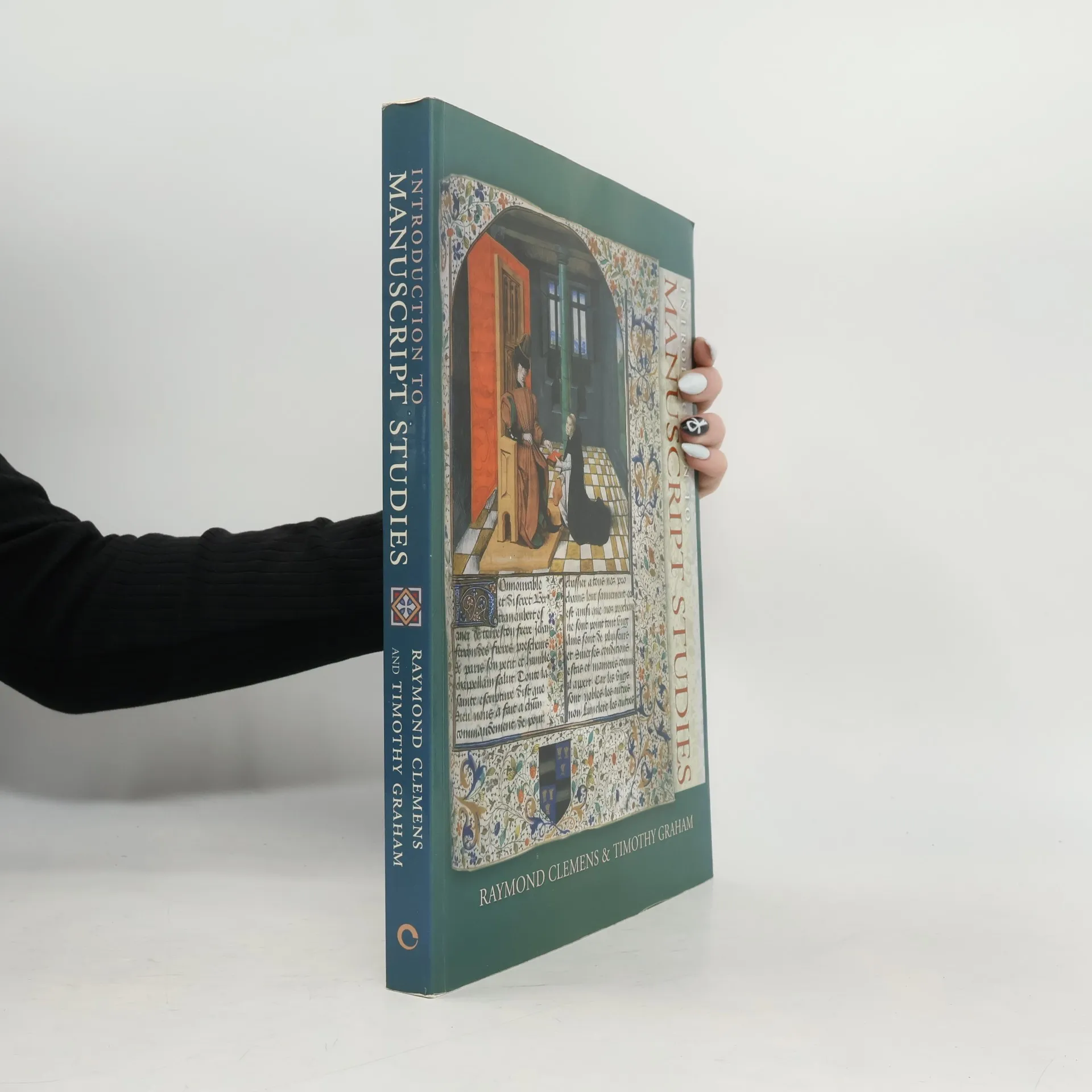
    Introduction to Manuscript Studies
    The Voynich Manuscript
    • The Voynich Manuscript

      • 304 Seiten
      • 11 Lesestunden

      "The fifteenth-century work commonly known as the Voynich Manuscript is often called the world's most mysterious book. Written in an unknown script by an unknown author, the manuscript has no clearer purpose now than when it was rediscovered in 1912 by rare books dealer Wilfrid Voynich. The manuscript appears and disappears throughout history, from the library of the Holy Roman Emperor Rudolf II to a secret sale of books in 1903 by the Society of Jesus in Rome. The book's language has eluded decipherment, and its elaborate illustrations remain as baffling as they are beautiful. For the first time, this facsimile, complete with reproductions of elaborate folding sections, allows readers to explore this enigma in all its stunning detail, from its one-of-a-kind 'Voynichese' text to its illustrations of otherworldly plants, unfamiliar constellations, and naked women swimming though fantastical tubes and green baths. The essays that accompany the manuscript explain what we have learned about this work--from alchemical, cryptographic, forensic, and historical perspectives--but they provide few definitive answers. Instead, as New York Times best-selling author Deborah Harkness says in her introduction, the book's essays 'invite the reader to join us at the heart of the mystery.'"-- Provided by publisher

      The Voynich Manuscript2016
      4,4
    • Introduction to Manuscript Studies

      • 320 Seiten
      • 12 Lesestunden

      This lavishly illustrated guide offers a comprehensive introduction to medieval manuscript studies, making it invaluable for students in history, art history, literature, and religious studies, as well as advanced scholars and general readers interested in pre-print book history. The book is divided into three sections: - **Part 1, Making the Medieval Manuscript**, explores the entire manuscript production process, covering the preparation of writing surfaces, copying text, rubrication, decoration, glossing, annotation, and binding. - **Part 2, Reading the Medieval Manuscript**, emphasizes the skills needed for manuscript study, including transcribing, editing, and reading damaged texts. It also discusses assessing manuscripts' origins and provides a survey of sixteen medieval scripts from the eighth to the fifteenth century. - **Part 3, Some Manuscript Genres**, analyzes common types of medieval manuscripts such as Bibles, liturgical books, Books of Hours, charters, maps, and scrolls. The book concludes with a glossary, a guide to medieval Latin dictionaries, and a well-organized bibliography. Each chapter is richly illustrated with color plates, primarily sourced from the Newberry Library and the Parker Library, enhancing understanding of the text.

      Introduction to Manuscript Studies2007