

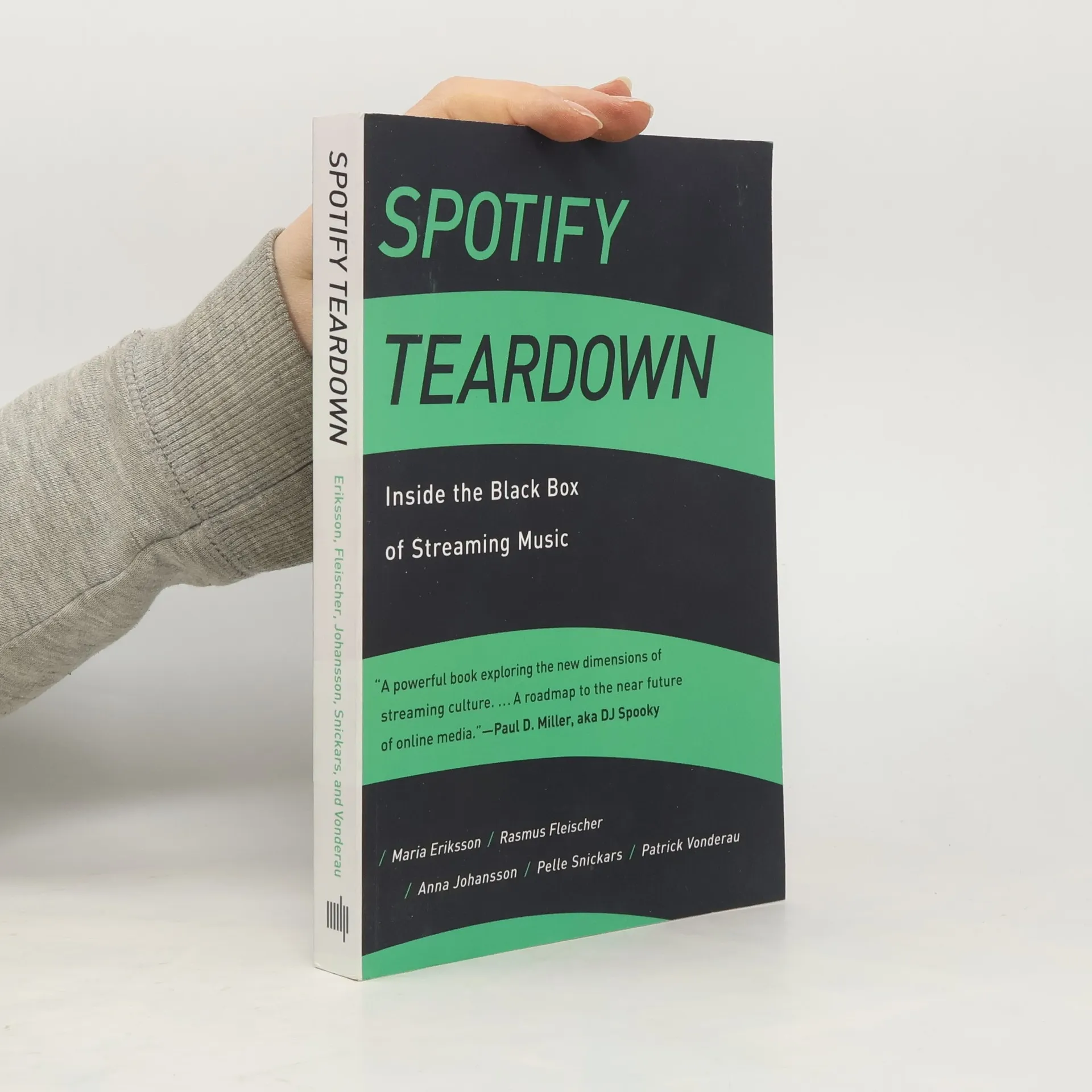
This innovative investigation explores the inner workings of Spotify, tracing how audio files transform into a streamed experience. While Spotify has disrupted the music industry, such disruption comes with costs. The book contests the notion that digital culture thrives solely on disruption. Utilizing the concept of “teardown” from reverse-engineering, a team of five researchers disassembles Spotify's product and its common perceptions. Initially hailed as a solution to illegal downloading, Spotify's roots lie in the Swedish file-sharing community, and it now resembles a media company in need of regulation. This raises critical questions about how cultural content, including songs, books, and films, is made available online. The authors combine interviews, participant observations, and analyses of Spotify's "front end" with covert investigations of its "back end." Their research involved creating a record label for study, intercepting network traffic, and web-scraping corporate materials. Their innovative methods led to a stern letter from Spotify, accusing them of violating terms of use, and threats to their research funding. Consequently, the book serves as an intervention into the ethics and legal frameworks governing corporate behavior.
Maria Eriksson Baaz Bücher
Diese Autorin erforscht die menschliche Erfahrung durch die Linse der Sozialanthropologie. Ihre Arbeit befasst sich mit den Komplexitäten menschlicher Kultur und Medien. Verwurzelt in akademischer Forschung, ermöglicht ihr Ansatz tiefe Einblicke in menschliches Verhalten und gesellschaftliche Strukturen.


“Ein Doku-Thriller, der unter die Haut geht.” (Cosmopolitan) Als Flüchtlingshelferin lernt Mia einen gut aussehenden Libanesen kennen und lieben. Doch die Beziehung ist bald von Einschränkungen und Gewalt geprägt, und Mia verlässt ihren Verlobten. Der Beginn eines Albtraums: Kein noch so geheimer Umzug schützt Mia auf Dauer vor ihrem Verfolger. Am Ende sieht sie nur noch einen Ausweg: Freunde, Familie und Heimatland zu verlassen. Die atemlose Geschichte einer jahrelangen Flucht, gemeinsam erzählt von Liza Marklund und Maria Eriksson, die diese Geschichte persönlich erlebt hat.
Mias Flucht
- 474 Seiten
- 17 Lesestunden
Gedemütigt, bedroht, gejagt: Der unermüdliche Kampf für ein Leben in Sicherheit Seit Jahren sind Mia, ihr Mann und ihre zwei Kinder auf der Flucht vor Mias ehemaligem libanesischem Verlobten. Nun endlich kehren sie nach Schweden zurück und hoffen, dort unter neuer Identität Fuß fassen zu können. Doch schon nach kurzer Zeit hat ihr Verfolger sie gefunden; bei einem Zusammentreffen verletzt er Mutter und Tochter schwer. Aber Mias Freiheitsdrang ist nicht zu bremsen …