

American architect Lebbeus Woods (1940–2012) remains a quiet hero not only among his colleagues, but also for architectural students intrigued by the ideas and fluent beauty of his powerful graphic verve, as well as of his writing. His projects from the mid-1980s until the end of his life have been widely published. However, this AD, in collaboration with the Estate of Lebbeus Woods, explores the earlier period beginning in the late 1960s when Woodswas honing his draughtsmanship and theoretical positions while experimenting with a variety of themes and different modes of expression.When he burst onto the international architectural scene with a solo exhibition and accompanying catalogue (Lebbeus Origins) at the Architectural Association, London, in 1985, some wondered how anyone could emerge so fully formed, from nowhere. Working against the logic of ‘nowhere’, this issue charts his early trajectory through the largely unpublished drawings and texts, linking them with what came after. Aiming to generate new scholarship, its roster of international interdisciplinary critics and commentators offer a new understanding of Woods’s work and of his formative years, also shining a light on how we might think about the ‘early work’ of any architect’s career. Joseph Becker, Aaron Betsky, Peter Cook, Mark Dorrian, Riet Eeckhout, Kevin Erickson, Joerg Gleiter, Sharon Irish, Eliyahu Keller, Lawrence Rinder, Ashley Simone, Ben Sweeting.
John Wiley & Sons Inc Bücher

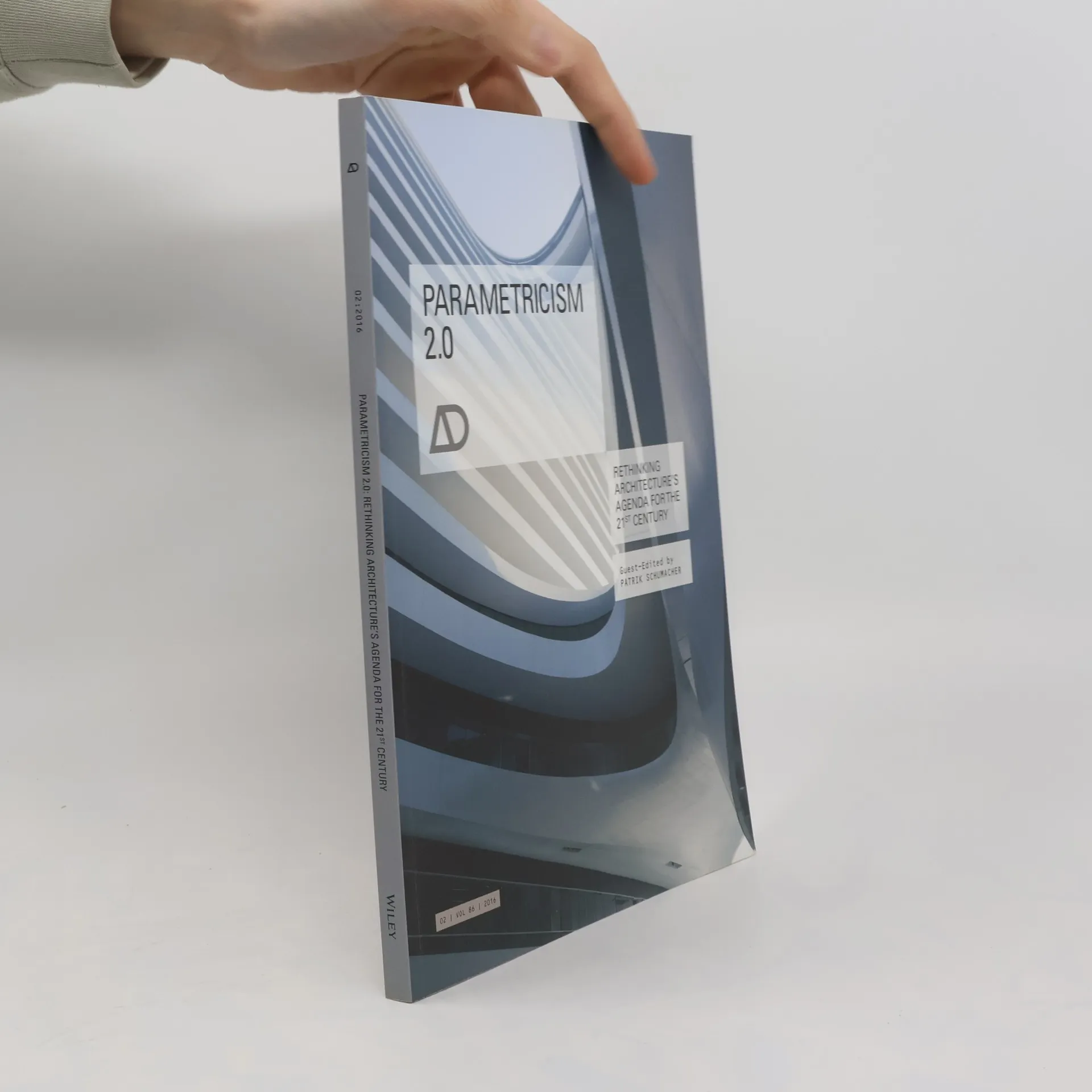
Parametricism 2.0
- 136 Seiten
- 5 Lesestunden
Parametricism is an avant-garde architecture and design movement that has been growing and maturing over the last 15 years, emerging as a remarkable global force. The tendency started in architecture but now encompasses all design disciplines, from urban design to fashion.
Andrea Mantegna
- 232 Seiten
- 9 Lesestunden
Andrea Mantegna: Making Art (History) presents the art of Mantegna as challenging the parameters of the history of art in the demands it makes upon historical interpretation, and explores the artist s potentially transformative impact on the study of the early Renaissance.
Bioshock and Philosophy
- 192 Seiten
- 7 Lesestunden
Considered a sign of the ‘coming of age’ of video games as an artistic medium, the award-winning BioShock franchise covers vast philosophical ground. BioShock and Philosophy: Irrational Game, Rational Book presents expert reflections by philosophers (and Bioshock connoisseurs) on this critically acclaimed and immersive fan-favorite. Reveals the philosophical questions raised through the artistic complexity, compelling characters and absorbing plots of this ground-breaking first-person shooter (FPS) Explores what BioShock teaches the gamer about gaming, and the aesthetics of video game storytelling Addresses a wide array of topics including Marxism, propaganda, human enhancement technologies, political decision-making, free will, morality, feminism, transworld individuality, and vending machines in the dystopian society of Rapture Considers visionary game developer Ken Levine’s depiction of Ayn Rand’s philosophy, as well as the theories of Aristotle, de Beauvoir, Dewey, Leibniz, Marx, Plato, and others from the Hall of Philosophical Heroes
The Big Lebowski and Philosophy
- 304 Seiten
- 11 Lesestunden
Celebrate the Dude with an abiding look at the philosophy behind The Big Lebowski Is the Dude a bowling-loving stoner or a philosophical genius living the good life? Naturally, it's the latter, and The Big Lebowski and Philosophy explains why.