


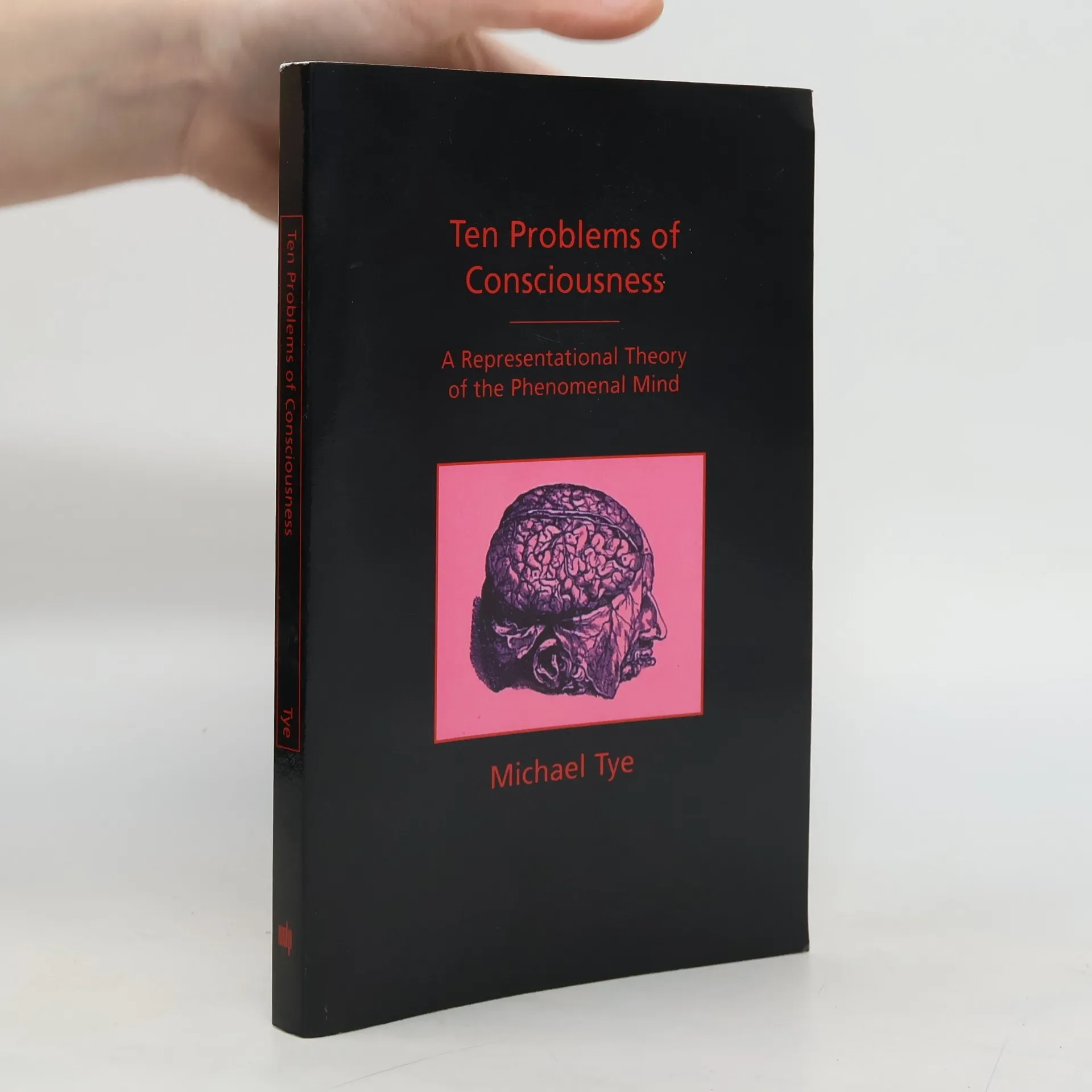
Ten Problems of Consciousness
A Representational Theory of the Phenomenal Mind
- 264 Seiten
- 10 Lesestunden
Can neurophysiology ever reveal to us what it is like to smell a skunk or to experience pain? In what does the feeling of happiness consist? How is it that changes in the white and gray matter composing our brains generate subjective sensations and feelings? These are several of the questions that Michael Tye addresses, while formulating a new and enlightening theory about the phenomenal "what it feels like" aspect of consciousness. The test of any such theory, according to Tye, lies in how well it handles ten critical problems of consciousness. Tye argues that all experiences and all feelings represent things, and that their phenomenal aspects are to be understood in terms of what they represent. He develops this representational approach to consciousness in detail with great ingenuity and originality. In the book's first part Tye lays out the domain, the ten problems and an associated paradox, along with all the theories currently available and the difficulties they face. In part two, he develops his intentionalist approach to consciousness. Special summaries are provided in boxes and the ten problems are illustrated with cartoons. A Bradford Book Representation and Mind series