

Bookbot

Christopher H Achen

    Cross-Level Inference
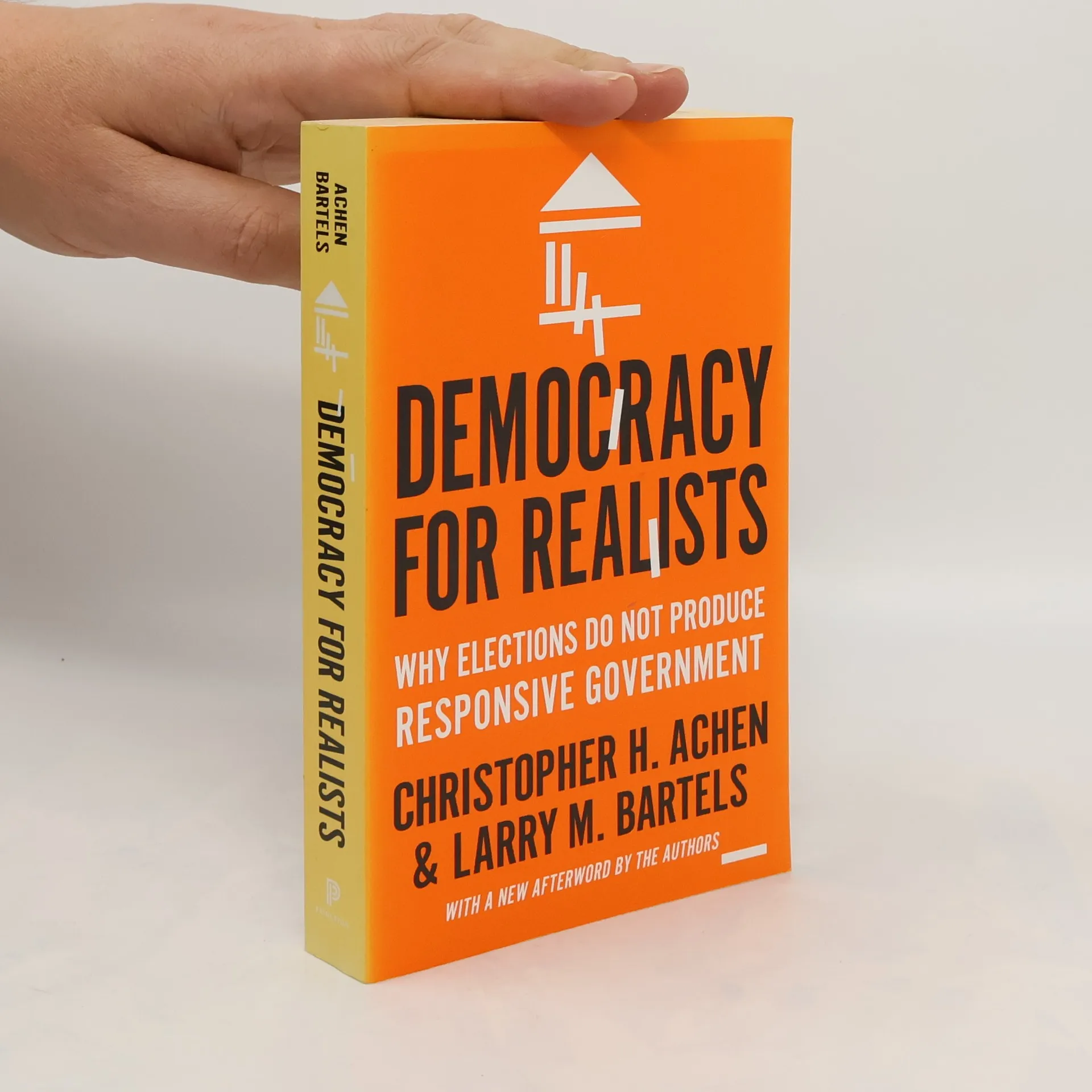
    Democracy for Realists
    The European Union Decides
    • The European Union Decides

      • 396 Seiten
      • 14 Lesestunden

      European legislation affects countless aspects of daily life in modern Europe but just how does the European Union make such significant legislative decisions? How important are the formal decision-making procedures in defining decision outcomes and how important is the bargaining that takes place among the actors involved? Using a combination of detailed evidence and theoretical rigour, this volume addresses these questions and others that are central to understanding how the EU works in practice. It focuses on the practice of day-to-day decision-making in Brussels and the interactions that take place among the Member States in the Council and among the Commission, the Council and the European Parliament. A unique data set of actual Commission proposals are examined against which the authors develop, apply and test a range of explanatory models of decision-making, exemplifying how to study decision-making in other political systems using advanced theoretical tools and appropriate research design.

      The European Union Decides
      4,0
    • Democracy for Realists

      • 408 Seiten
      • 15 Lesestunden

      For decades, political scientists have blasted away at electoral models based primarily on the idea of rational choice. In the most recent and sophisticated entry in the field, Democracy for Realists, Christopher Achen and Larry Bartels argue that even well-informed and politically engaged voters mostly choose candidates based on their social identities and partisan loyalties. Judging from the 2016 polls, that theory looks pretty good.--E.J. Dionne, Washington Post

      Democracy for Realists
      3,9
    • Cross-Level Inference

      • 258 Seiten
      • 10 Lesestunden

      In the last several years, new disputes have erupted over the use of group averages from census areas or voting districts to draw inferences about individual social behavior. Social scientists, policy analysts, and historians often have little choice about using this kind of data, but statistical analysis of them is fraught with pitfalls. The recent debates have led to a new menu of choices for the applied researcher. This volume explains why older methods like ecological regression so often fail, and it gives the most comprehensive treatment available of the promising new techniques for cross-level inference.Experts in statistical analysis of aggregate data, Christopher H. Achen and W. Philips Shively contend that cross-level inference makes unusually strong demands on substantive knowledge, so that no one method, such as Goodman's ecological regression, will fit all situations. Criticizing Goodman's model and some recent attempts to replace it, the authors argue for a range of alternate techniques, including estensions of cross-tabular, regression analysis, and unobservable variable estimators.

      Cross-Level Inference