Gratis Versand in ganz Österreich
Bookbot

Sue Roe

    1. Jänner 1956
    Sue Roe
    Impresionisté : soukromé životy
    Impresionisté. Jejich životní příběhy
    Cassatt
    In Montparnasse
    In Montmartre
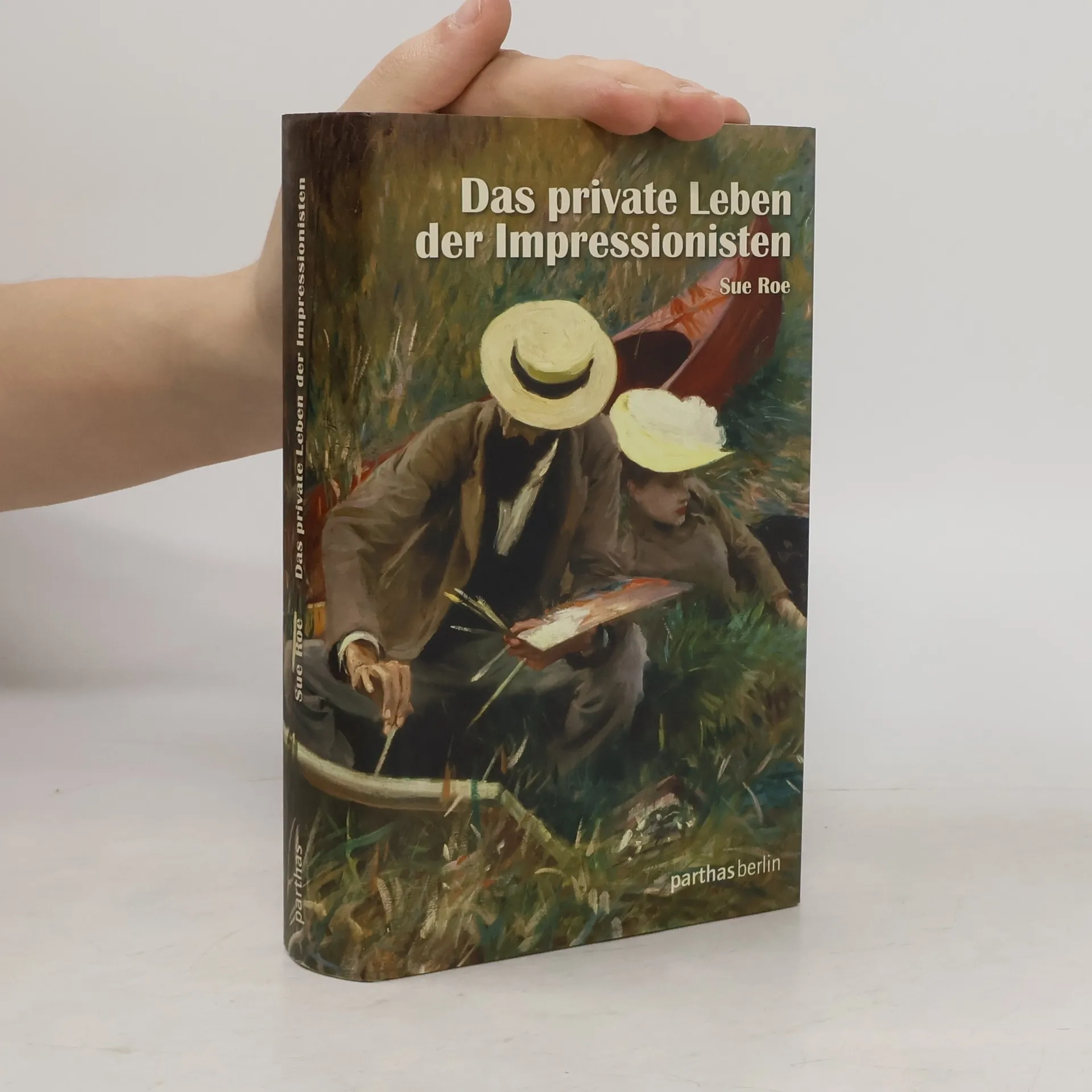
    Das private Leben der Impressionisten
    • 2019

      Cassatt

      • 120 Seiten
      • 5 Lesestunden

      Mary Cassatt's tender and profound paintings redefined portraiture and broke down barriers for women in art--both as artists and as subjects. This collection celebrates the artist's insightful portrayal of women and children in their everyday lives.ives.

      Cassatt
    • 2018

      In Montparnasse

      • 320 Seiten
      • 12 Lesestunden
      3,7(26)Abgeben

      "As she did for the Modernists In Montmartre, noted art historian and biographer Sue Roe now tells the story of the Surrealists in Montparnasse. In Montparnasse begins on the eve of the First World War and ends with the 1936 unveiling of Dalí's Lobster Telephone. As those extraordinary years unfolded, the Surrealists found ever more innovative ways of exploring the interior life, and asking new questions about how to define art. In Montparnasse recounts how this artistic revolution came to be amidst the salons and cafés of that vibrant neighborhood. Sue Roe is both an incisive art critic of these pieces and a beguiling biographer with a fingertip feel for this compelling world. Beginning with Duchamp, Roe then takes us through the rise of the Dada movement, the birth of Surrealist photography with Man Ray, the creation of key works by Ernst, Cocteau, and others, through the arrival of Dalí. On canvas and in their readymades and other works these artists juxtaposed objects never before seen together to make the viewer marvel at the ordinary--and at the workings of the subconscious. We see both how this art came to be and how the artists of Montparnasse lived. Roe puts us with Gertrude Stein in her box seat at the opening of The Rite of Spring; with Duchamp as he installs his famous urinal; at a Cocteau theatrical with Picasso and Coco Chanel; with Breton at a session with Freud; and with Man Ray as he romances Kiki de Montparnasse"-- Provided by publisher

      In Montparnasse
    • 2014

      In Montmartre

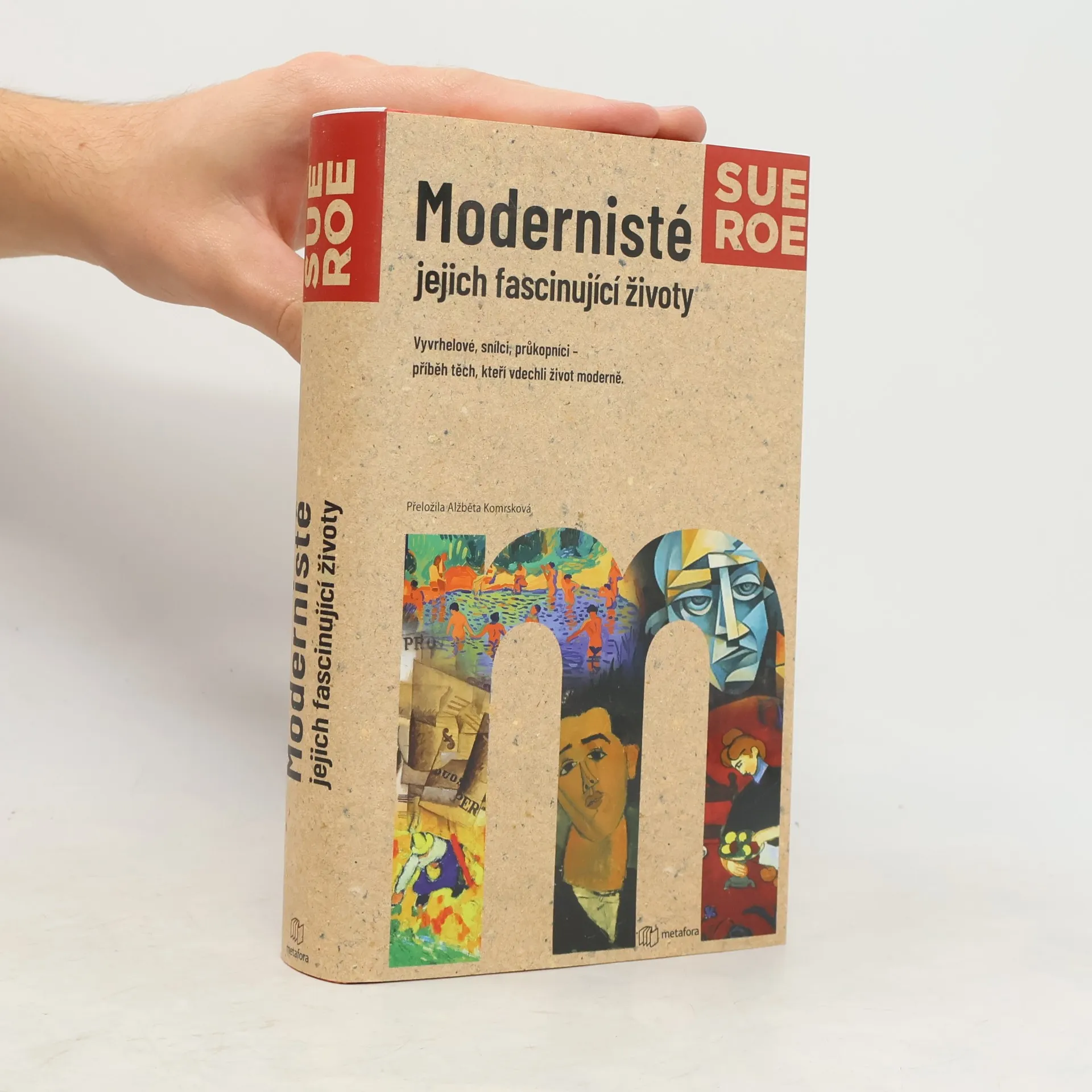
      Picasso, Matisse and the Birth of Modernist Art

      • 365 Seiten
      • 13 Lesestunden
      3,9(83)Abgeben

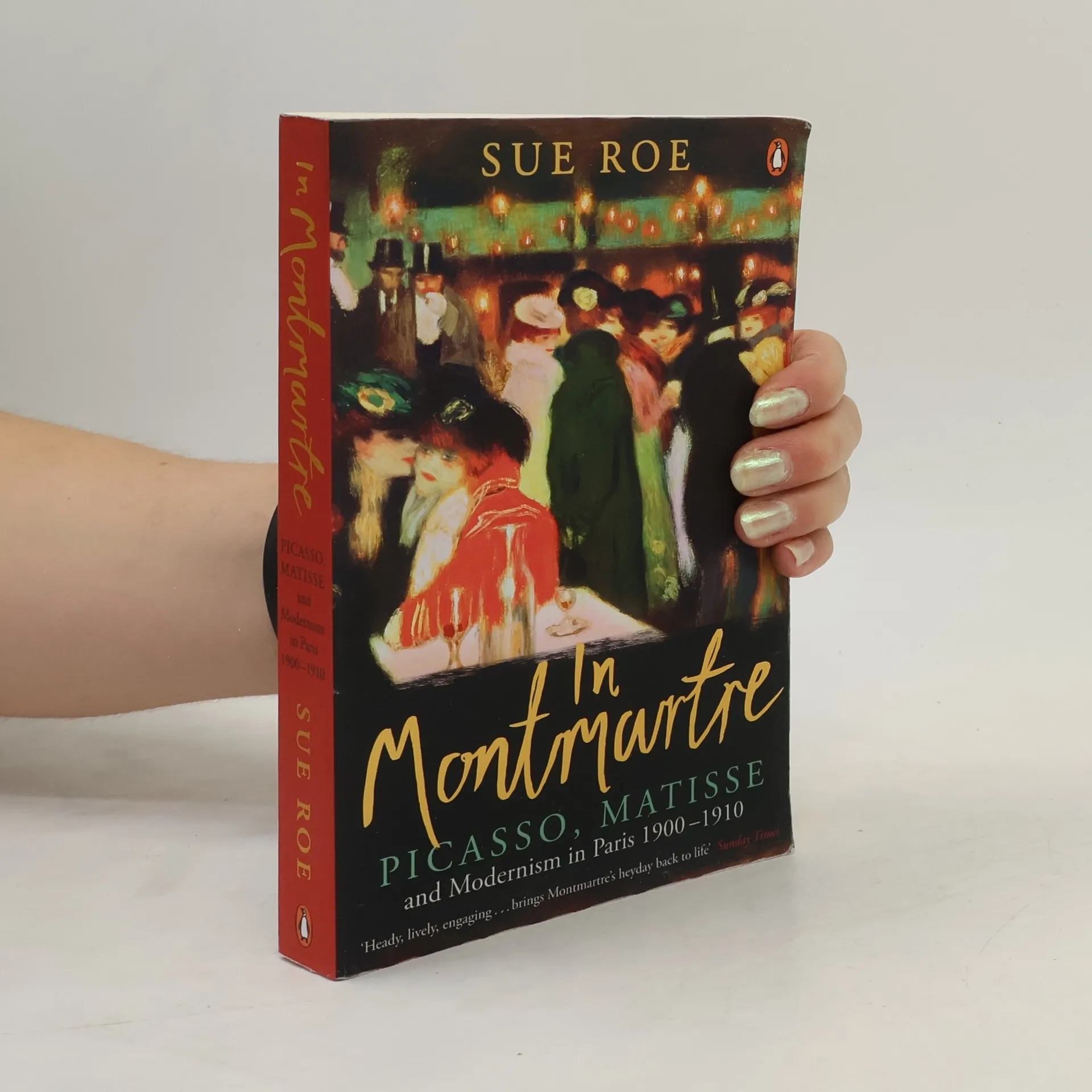
      A lively and deeply researched group biography of the figures who transformed the world of art in bohemian Paris in the first decade of the twentieth century In Montmartre is a colorful history of the birth of Modernist art as it arose from one of the most astonishing collections of artistic talent ever assembled. It begins in October 1900, as a teenage Pablo Picasso, eager for fame and fortune, first makes his way up the hillside of Paris’s famous windmill-topped district. Over the next decade, among the studios, salons, cafés, dance halls, and galleries of Montmartre, the young Spaniard joins the likes of Henri Matisse, André Derain, Maurice de Vlaminck, Georges Braque, Amedeo Modigliani, Constantin Brancusi, Gertrude Stein, and many more, in revolutionizing artistic expression. Sue Roe has blended exceptional scholarship with graceful prose to write this remarkable group portrait of the men and women who profoundly changed the arts of painting, sculpture, dance, music, literature, and fashion. She describes the origins of movements like Fauvism, Cubism, and Futurism, and reconstructs the stories behind immortal paintings by Picasso and Matisse. Relating the colorful lives and complicated relationships of this dramatic bohemian scene, Roe illuminates the excitement of the moment when these bold experiments in artistic representation and performance began to take shape. A thrilling account, In Montmartre captures an extraordinary group on the cusp of fame and immortality. Through their stories, Roe brings to life one of the key moments in the history of art. Praise for In Montmartre "Lively and engaging….[Readers] will find a fresh sense of how all these people—the geniuses and the hangers-on, the wealthy collectors and the unworldly painters—related to each other…..In [Roe’s] entertaining, ingeniously structured account Roe brings Montmatre’s hedyday back to life." — Sunday Times (London) "With evocative imagery Roe sketches out the intensely visual spectacle on which Montmatre’s artistic community was able to draw…. Roe is particularly good at communicating the extraordinary devotion of Matisse and Picasso to their work." — Financial Times

      In Montmartre
    • 2012

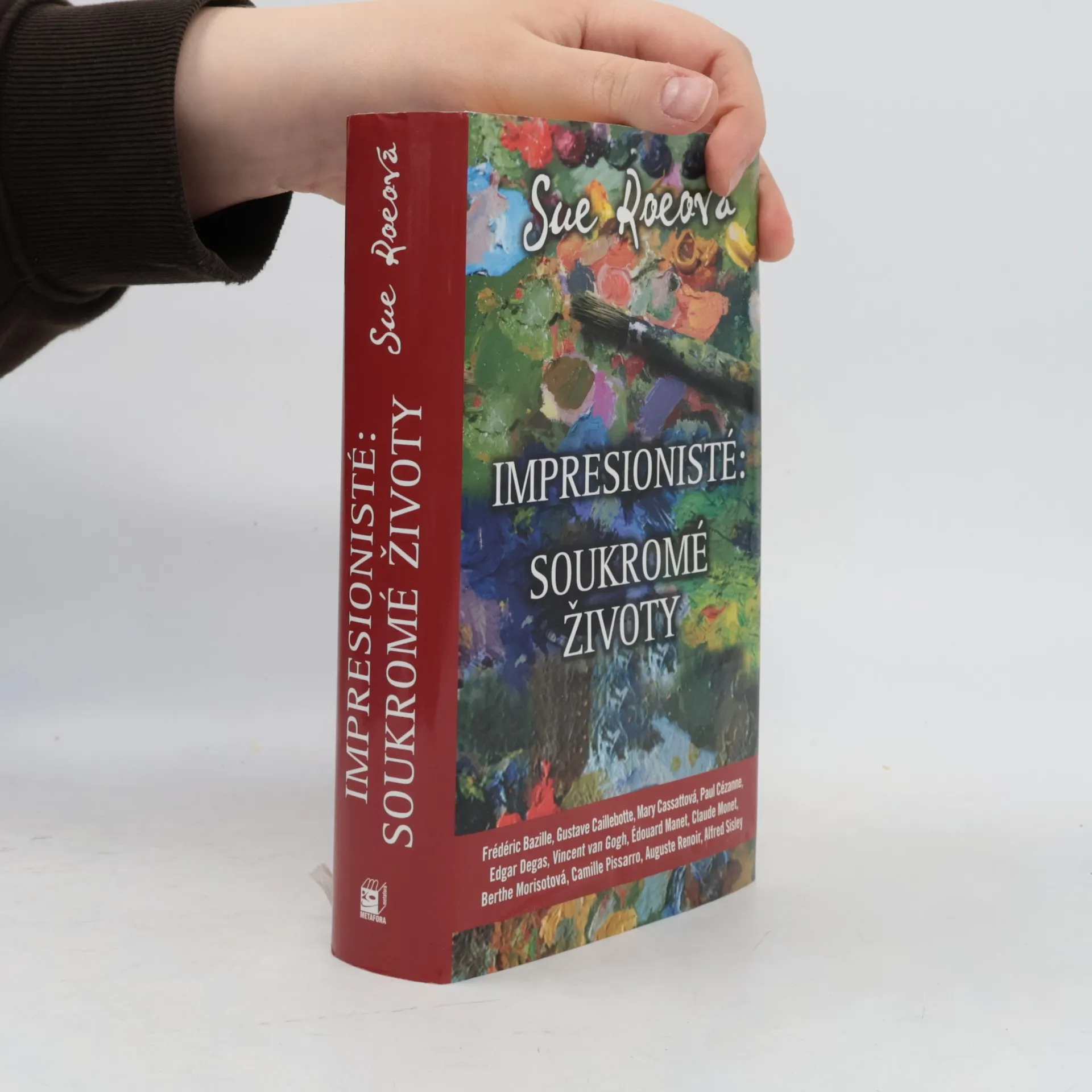
      Všichni víme, kdo byli Manet, Cézanne, Renoir nebo Degas, ale jen málokdo ví, jací to byli lidé, jak žili, koho milovali... Autorka téhle nanejvýš zajímavé knížky se toho úkolu ujala, a přestože jde o literaturu faktu, rovnýma nohama se ocitneme v Paříži 19. století. Na trůně dosud sedí císař Napoleon III. a první mladí malíři se ucházejí o přijetí do prestižních ateliérů. Barvitě a poutavě - právě jako na impresionistickém plátně - se před námi odvíjejí jejich spletité a často nelehké osudy. Tehdejší společnost nebyla na připravená na portréty pijáků, pradlen či dámiček polosvěta a své zklamání jim splácela opovržením. Nechme se tedy pozvat do Pařížské opery, kde Degas v šeru skicuje své baletky, do proslulé tančírny v Moulin de la Galette, kde v ryku hudby maluje mistr Renoir, k Édouardu Manetovi, který právě čelí zdrcující kritice za svou "nemravnou" Snídani v trávě...

      Impresionisté. Jejich životní příběhy
    • 2008

      Impresionisté : soukromé životy

      • 363 Seiten
      • 13 Lesestunden
      4,2(49)Abgeben

      Všichni víme, kdo byli Manet, Cézanne, Renoir nebo Degas, ale jen málokdo ví, jací to byli lidé, jak žili, koho milovali... Autorka téhle nanejvýš zajímavé knížky se toho úkolu ujala, a přestože jde o literaturu faktu, rovnýma nohama se ocitneme v Paříži 19. století. Na trůně dosud sedí císař Napoleon III. a první mladí malíři se ucházejí o přijetí do prestižních ateliérů. Barvitě a poutavě - právě jako na impresionistickém plátně - se před námi odvíjejí jejich spletité a často nelehké osudy. Tehdejší společnost nebyla na připravená na portréty pijáků, pradlen či dámiček polosvěta a své zklamání jim splácela opovržením. Nechme se tedy pozvat do Pařížské opery, kde Degas v šeru skicuje své baletky, do proslulé tančírny v Moulin de la Galette, kde v ryku hudby maluje mistr Renoir, k Édouardu Manetovi, který právě čelí zdrcující kritice za svou "nemravnou" Snídani v trávě...

      Impresionisté : soukromé životy
    • 2006

      Manet, Monet, Pissarro, Cézanne, Renoir, Degas, Sisley, Berthe Morisot und Mary Cassatt – von ihren Zeitgenossen als Irre gebrandmarkt – erfanden in der zweiten Hälfte des 19. Jahrhunderts die Malerei neu. Heute genießen die Künstler, deren Gemälde eine einzigartige Atmosphäre erzeugen, Weltruhm. Träge, lichtdurchflutete Landschaften, Arbeiter, die an ihrem freien Tag feiern und tanzen, Bars und beleuchtete Straßenzüge, der Strand von Trouville – wir alle kennen die Bilder, aber kennen wir auch das Leben der Impressionisten? In bewegenden Geschichten schildert Sue Roe, wie sich die wichtigsten Vertreter der Gruppe in Paris trafen, wie sie lebten und über 20 Jahre eng zusammenarbeiteten. Sie malten im Freien, trafen sich in Cafés, unterstützten sich und teilten emotionale wie finanzielle Schwierigkeiten. Sie trotzten den Regeln der Akademie, organisierten Ausstellungen, rebellierten gegen künstlerische Vorurteile, moralische Tyrannei und eine soziale Hierarchie. Ihre Eltern wandten sich von ihnen ab, die Lebensverhältnisse der Impressionisten waren unbeständig und prekär. Die Männer heirateten Dienstmädchen, Modelle oder Blumenverkäuferinnen. Obwohl sich ihre Gemälde heute für Millionen verkaufen, waren sie zu Lebzeiten kaum in der Lage, ihre Familien zu ernähren.

      Das private Leben der Impressionisten