

Born Emmanuel Radnitzky, the artist known as Man Ray (1890–1976) revealed multiple artistic identities over the course of his career—New York Dadaist, Parisian Surrealist, international portraitist, and fashion photographer––and produced important works as a photographer, painter, filmmaker, writer, and maker of objects. Alias Man Ray considers how the artist’s life and career were shaped by his turn-of-the-century American Jewish immigrant experience and his lifelong evasion of his past. As an exploration of the artist’s deliberate cultural ambiguity, which allowed him to become the first American artist to be accepted by the Paris avant garde, this book examines the dynamic connection between Man Ray’s working-class origins, his assimilation, the evolution of his art, and his willful construction of his own artistic persona, as evidenced in a series of subtle, encrypted self-references throughout the artist’s career. Beautifully illustrated, Alias Man Ray will stand as a definitive study of an incomparable figure in 20th-century art.
George Philip Baker Bücher
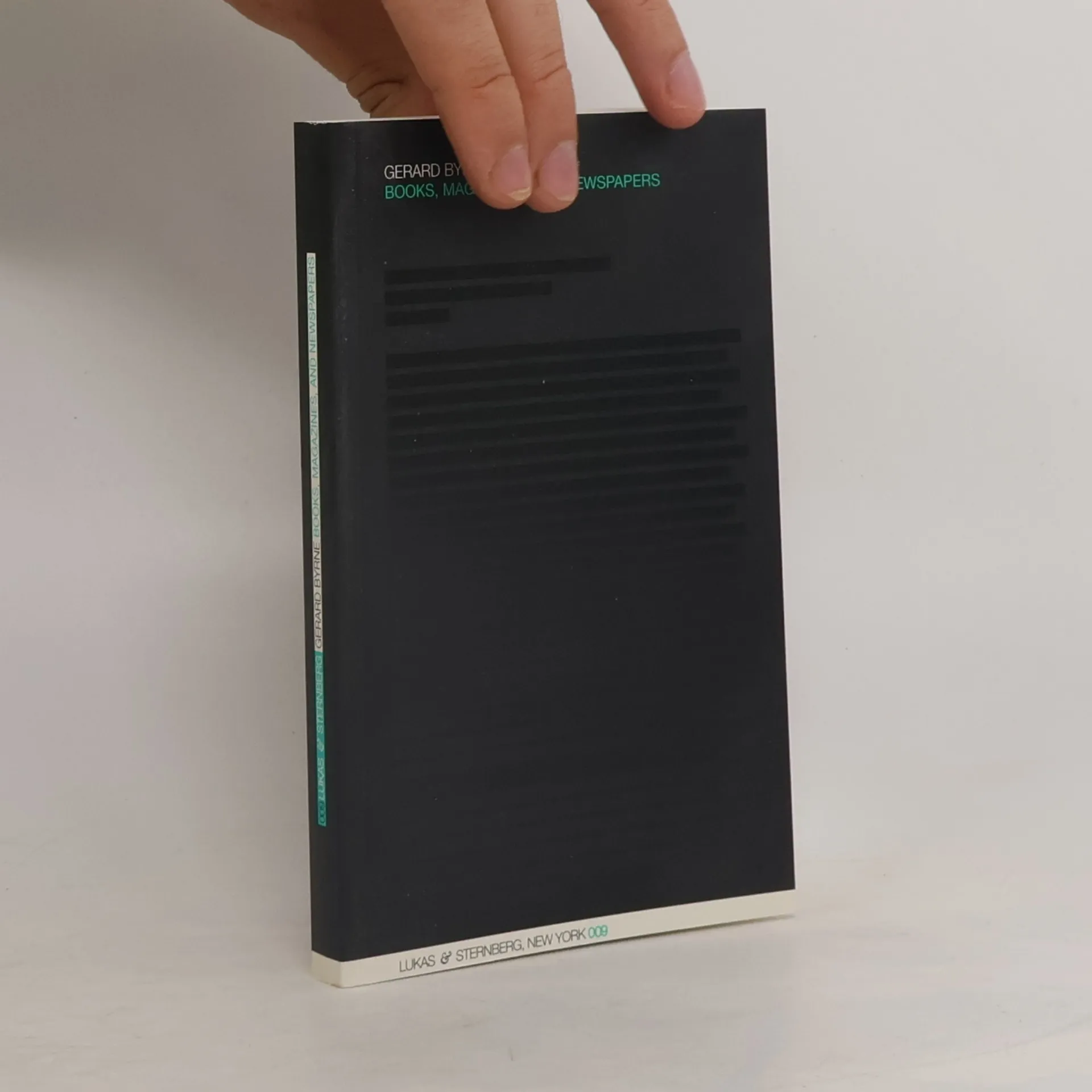

Irish artist Gerard Byrne (1969) focuses on the way photography and film have influenced visual culture in the twentieth century. Byrne's conceptually-based photos and videos explore the genealogies underlying each picture, the different frames which guide its perception, as well as the references in which a mediated image evolves. Demonstrating a wide-ranging engagement with quotation and citation, the work seizes upon mass-media forms that were never intended to serve as ''models,'' but now have become such. ----------- George Baker has written a theoretical essay where he links Byrne's work to theater and notes that the presence of avant-garde dramatist Bertolt Brecht has never been less discussed, but more widely explored, than in the last decade of artistic practice. The author traces ''a set of provisional conjectures about the 'underground connection' of ... contemporary art to the present forms of capitalist crisis. They are new forms on both sides--the crises and transformatio