
Probleme dürfen kompliziert sein - gute Lösungen hingegen nicht, sagen die Eliteprofessoren Donald Sull und Kathleen Eisenhardt. Sie sind überzeugt: Gerade in anspruchsvollen, vertrackten Situationen kommt man mit einfachen Regeln - "Simple Rules" - viel eher ans Ziel. Sull und Eisenhardt belegen ihre These mit einer Vielzahl an Beispielen aus Privatleben, Wissenschaft und Wirtschaft. Anekdoten und Tipps aus der Unternehmenswelt wechseln sich ab mit solchen zur Partnersuche oder zum Diäthalten. Es gelingt dem Autorenpaar bestens, wissenschaftliche Sachverhalte verständlich dazustellen und in einem praktischen Ratgeber zu bündeln. Was ganz nützlich gewesen wäre, ist eine übersichtliche Schritt-für-Schritt-Anleitung für die Erarbeitung eigener Simple Rules, aber ansonsten gibt es nichts auszusetzen. getAbstract empfiehlt das Buch insbesondere Unternehmensstrategen und Organisationsentwicklern. Aber profitieren kann davon jeder, der ab und zu vor einem Problem steht - also wirklich jeder
Kathleen M. Eisenhardt Reihenfolge der Bücher (Chronologisch)
Kathleen Eisenhardt erforscht, wie einfache Regeln Komplexität in Leben, Wirtschaft und Natur zähmen können. Ihre Arbeit untersucht, warum und wie Einfachheit komplexe Herausforderungen bewältigt, und zieht Erkenntnisse aus neuen Unternehmungen und Märkten bis hin zu Kunst und Natur. Eisenhardts Forschung wird oft durch Rätsel angeregt, die viele verwirren, und wird mit analytischer Strenge zusammen mit Studenten und Kollegen angegangen. Ihre Methode konzentriert sich darauf, zu verstehen, wie effektive Strategien für die Bewältigung anspruchsvoller Umgebungen entstehen.


Assemble and steer teams that get results. These ten essential Harvard Business Review articles will help you ramp up your team's performance, rally the troops and keep them accountable, fight constructively, and set goals everyone can agree on.
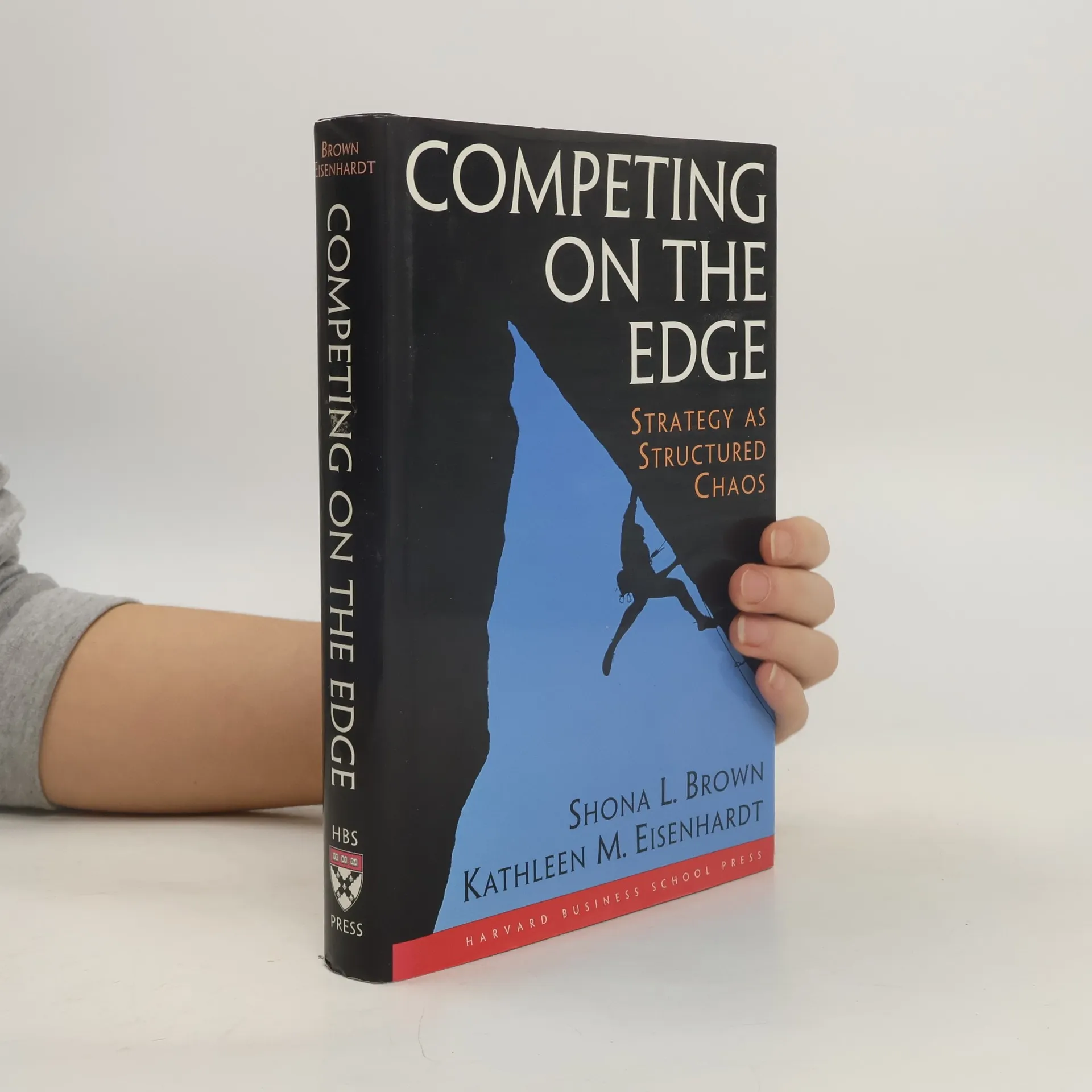
Unstable markets, fierce competition, and relentless change are the only certainties in today's chaotic business world. In their startling new book, authors Brown and Eisenhardt contend that to prosper in such volatile conditions, standard survival strategies must be tossed aside in favor of a revolutionary new paradigm—competing on the edge. To compete on the edge is to relentlessly reinvent, and it's the only way to navigate the treacherous waters of tumultuous markets. Competing on the edge is an unpredictable, sometimes even inefficient strategy, yet a singularly effective one in an era driven by change. It requires charting a course along the edge of chaos, where a delicate compromise is struck between anarchy and order, to the edge of time, where current business is the primary focus, but actions are shaped by past legacies and future opportunities. By adroitly maneuvering through chaos and time, managers can avoid constantly reacting to nonstop change and instead set a rhythmic pace that others must follow, thereby shaping the competitive landscape—and their own destiny. In the first book to translate leading edge concepts from complexity theory into management practice, each chapter focuses on a specific management dilemma and illustrates a solution. Linking where do you want to go? With how will you get there? Here's a bold and surprising strategy that works—when the name of the game is change.