"Web Security, Privacy & Commerce" cuts through the hype and the front page stories. It tells readers what the real risks are and explains how to minimize them. Whether a casual (but concerned) Web surfer or a system administrator responsible for the security of a critical Web server, this book will tells users what they need to know.
This guide explains the threats, system vulnerabilities, and countermeasures that can be adopted to protect a UNIX system, network and Internet connection. It covers both host and network security, and also contains information on Internet security, including new security tools and approaches.
Pretty Good Privacy, or "PGP", is an encryption program widely available on the Internet. The program runs on MS-DOS, UNIX, and the Mac. PGP: Pretty Good Privacy offers both a readable technical user's guide and a fascinating behind-the-scenes look at cryptography and privacy, explaining how to get PGP from publicly available sources and how to install it on various platforms.
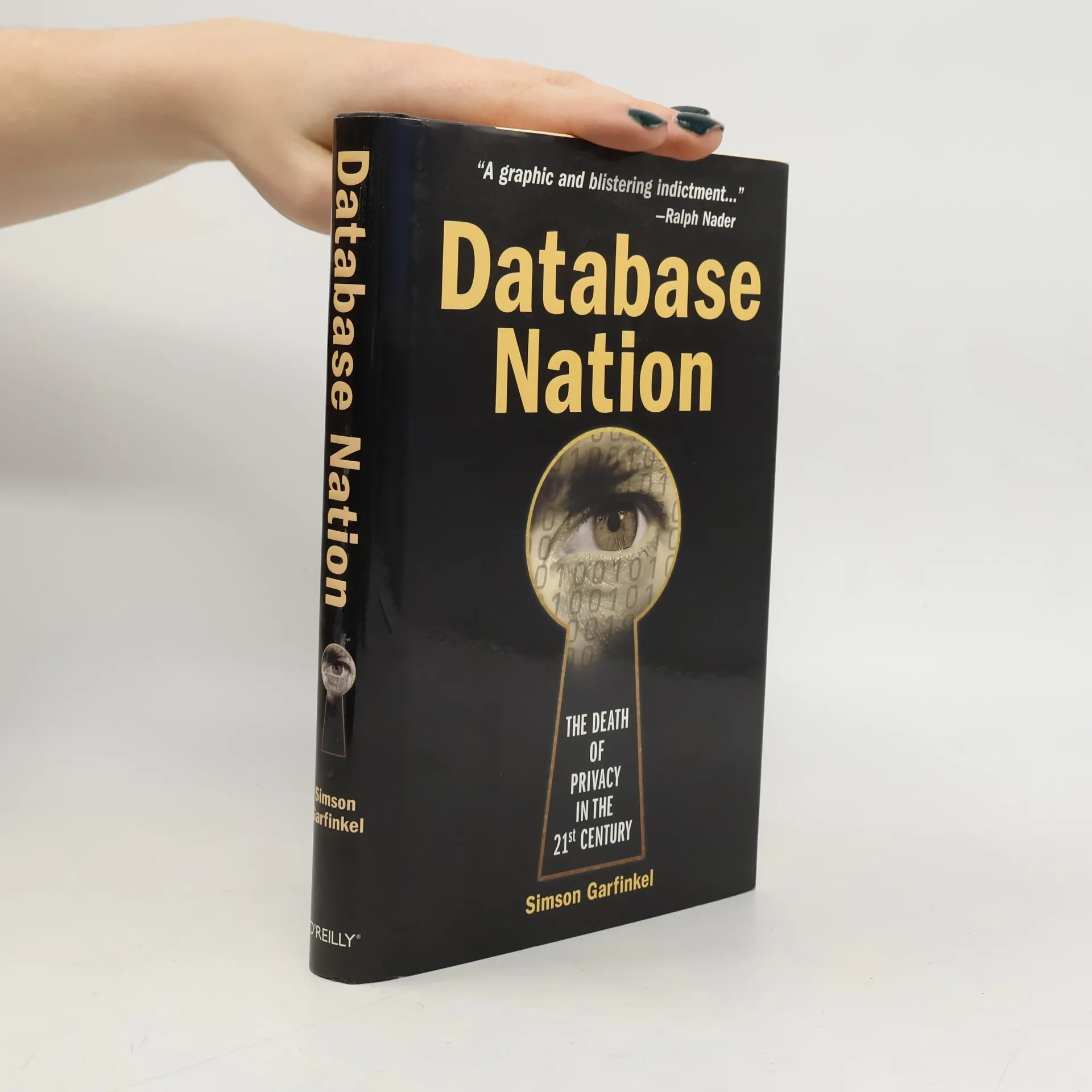
This journalistic summary of the current state of privacy rights and violations at the beginning of the 21st century is a call to arms, pleading the case for privacy in the same way as Rachel Carson's 1962 text "Silent Spring".
Applications developers will find step-by-step instruction for using Cocoa to build a series of graphics applications for Mac OS X in this tutorial featuring extended examples written in Objective-C. Following material on Cocoa, the Aqua interface, and Interface builder, the bulk of the book provides instructions for building a four-function calculator, a multiple-document, multiprocess application, and a multithreaded, mouse-tracking application. Familiarity with programming in general and with the ANSI C language is assumed. Annotation copyrighted by Book News, Inc., Portland, OR.
"Web surfing is a dangerous sport," observes one of the key papers in Web Security: A Matter of Trust, the Summer 1997 issue of the World Wide Web Journal. Indeed it is -- we are always at risk while downloading "cool" new applets, protecting secure information services, and even in trusting that a Web page comes from the stated author. The interviews, specifications, and articles in this issue reframe the debate as a matter of trust rather than cryptography.Of course, strong security technology is still the foundation (good fences make good neighbors!), but a broad recent survey concerning public Web site vulnerability shows that our fences are in poor shape. The remedy is more careful administration, deployment of new cryptographic protocols, and public key distribution infrastructure. To protect real-world applications such as health care, electronic commerce, and protected "lockboxes" for digital content, however, means understanding tough concepts: Who is authorized to look at this data? Why? And on whose authority? This leads us to questions of trust management, a new approach to automated security decision making.This issue covers W3C's Digital Signature Initiative (DSI), which breaks new ground in this area by binding machine-readable labels to public key signatures. Other topics include medical records privacy issues (Lincoln Stein), signature legality (C. Bradford Biddle), trust in Internet information systems (Rohit Khare), the PGP Web of Trust (Simson Garfinkel), REFEREE: a trust management system for Web applications (presented at WWW6 by Yang-Hua Chu), as well as articles on Java security, the "hacker threat," and much more.
When Practical Unix Security was first published more than a decade ago, it became an instant classic. Crammed with information about host security, it saved many a Unix system administrator from disaster. The second edition added much-needed Internet security coverage and doubled the size of the original volume. The third edition is a comprehensive update of this very popular book - a companion for the Unix/Linux system administrator who needs to secure his or her organization's system, networks, and web presence in an increasingly hostile world.Focusing on the four most popular Unix variants today--Solaris, Mac OS X, Linux, and FreeBSD--this book contains new information on PAM (Pluggable Authentication Modules), LDAP, SMB/Samba, anti-theft technologies, embedded systems, wireless and laptop issues, forensics, intrusion detection, chroot jails, telephone scanners and firewalls, virtual and cryptographic filesystems, WebNFS, kernel security levels, outsourcing, legal issues, new Internet protocols and cryptographic algorithms, and much more. Practical Unix & Internet Security consists of six Packed with 1000 pages of helpful text, scripts, checklists, tips, and warnings, this third edition remains the definitive reference for Unix administrators and anyone who cares about protecting their systems and data from today's threats.
Rozmach Internetu v posledních letech překonal očekávání, přičemž stále více firem jej využívá jako informační dálnici pro důležitá data. S tímto rozvojem se objevuje problém zabezpečení, na který reaguje populární freewarový produkt PGP (Pretty Good Privacy), šifrovací program schopný kódovat soubory a elektronickou poštu tak, že je téměř neprolomitelný.
Kniha renomovaného internetového experta Simsona Garfinkela slouží jako uživatelská příručka k PGP a zároveň nabízí fascinující pohled na kryptografii a ochranu dat na Internetu. Je určena nejen profesionálům v oblasti Internetu a intranetu, ale také studentům, nadšencům a podnikovým manažerům.
První část knihy seznamuje čtenáře se základy kryptografie a bezpečnosti. Druhá část se zaměřuje na historii PGP, včetně osobností a právních bitev, a diskutuje aktuální otázky ochrany soukromí versus vládní restrikce, které se dotýkají i našich zemí. Třetí část se věnuje praktickému použití PGP: jak chránit soubory a poštu, vytvářet klíče, elektronicky podepisovat zprávy a distribuovat klíče. Dodatky obsahují informace o instalaci PGP na různých platformách, glosář, bibliografii a referenční kartu příkazů a konfiguračních voleb.