

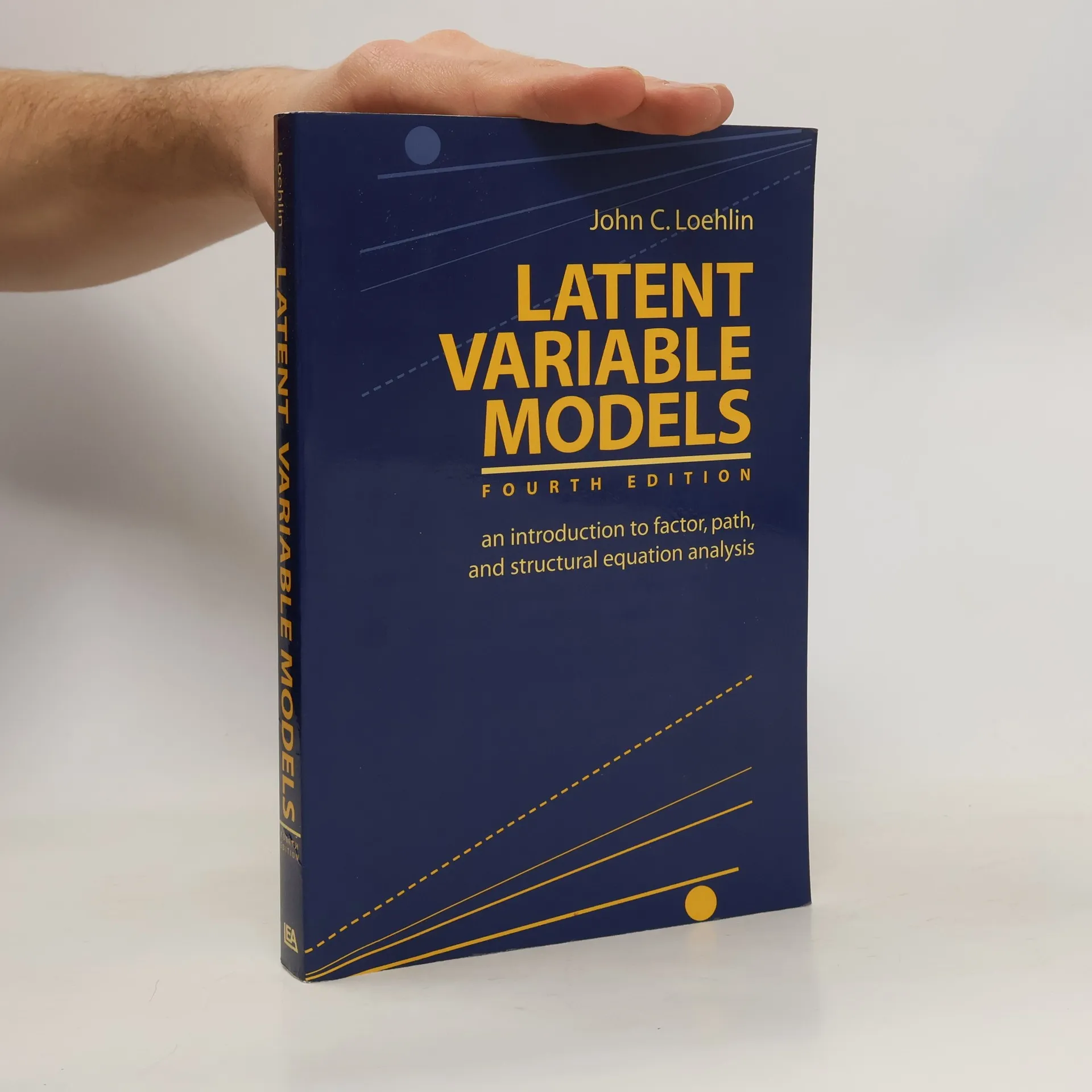
Latent Variable Models: An Introduction to Factor, Path, and Structural Equation Analysis
- 336 Seiten
- 12 Lesestunden
This book introduces multiple-latent variable models by utilizing path diagrams to explain the underlying relationships in the models. This approach helps less mathematically inclined students grasp the underlying relationships between path analysis, factor analysis, and structural equation modeling more easily. A few sections of the book make use of elementary matrix algebra. An appendix on the topic is provided for those who need a review. The author maintains an informal style so as to increase the book's accessibility. Notes at the end of each chapter provide some of the more technical details. The book is not tied to a particular computer program, but special attention is paid to LISREL, EQS, AMOS, and Mx.New in the fourth edition of Latent Variable * a data CD that features the correlation and covariance matrices used in the exercises;* new sections on missing data, non-normality, mediation, factorial invariance, and automating the construction of path diagrams; and* reorganization of chapters 3-7 to enhance the flow of the book and its flexibility for teaching.Intended for advanced students and researchers in the areas of social, educational, clinical, industrial, consumer, personality, and developmental psychology, sociology, political science, and marketing, some prior familiarity with correlation and regression is helpful.