

Wussten Sie, dass es auf dem Planeten Uranus Diamanten regnet? Wusstest du, dass Moskitos dich nicht nur stechen und dein Blut saugen, sondern auch auf dich urinieren, bevor sie wegfliegen? Wusstest du, dass Lego-Köpfe deshalb Löcher haben, damit ... luft hindurchströmen kann, falls ein Kind einen verschluckt? In diesen 1144 Fakten erfährst du mehr, als du von all deinen Lehrern in der High School zusammen gelernt hast. Es ist voller interessanter Informationen, die Sie in jedem Gespräch hervorholen können. Du wirst nie um Worte verlegen sein und hast immer den perfekten Eisbrecher. ★★Du wirst mehr über die Welt, in der du lebst, erfahren & einige der Themen sind: ★★ -Wissenschaft -Ökonomie -Anatomie des Menschen -Raumfahrt -Tierarten -Viele, viele mehr! Worauf wartest du noch? Wissen ist Macht! Komm herein und wir werden uns mit den interessanten und faszinierenden Fakten über die Welt um uns herum beschäftigen. Holen Sie sich das Buch und lassen Sie uns loslegen!
Scott Matthews Bücher
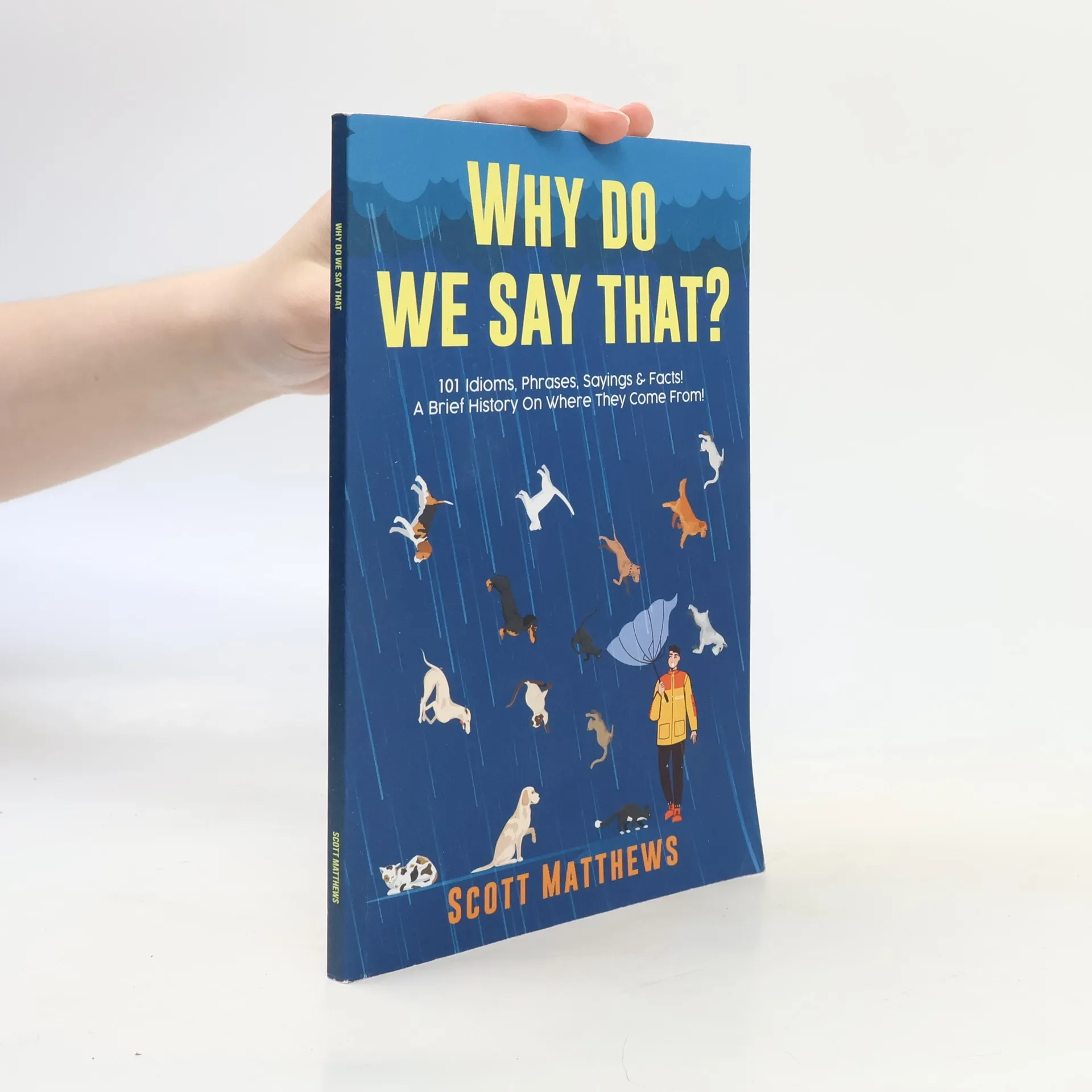

Why do you "call shotgun" when you want the front passenger seat? What does "letting the cat out of the bag" have to do with divulging secrets? Why do you ask people to "cut to the chase"? How come you hear all those juicy rumors "through the grapevine"? Like many people you've probably used idioms or phrases like these without giving them a second thought. But if you were to take a moment to step back and learn about them you'll be pleasantly surprised to discover the mesmerizing and sometimes outright bizarre origins to these fun sayings! In "Why do we say that," we have curated 101 of the most regularly used idioms, proverbs, turns of phrases, and colloquial terms that have the most fascinating backstories. For each phrase, we have explained how it was coined, how its use evolved through the ages, and how it gained its contemporary use. Inside you will discover: What the sanitary conditions of 17th century London have to do with it's "raining cats and dogs" today. Why taking things "with grain of salt" has to do with an ancient remedy for poison. What Southeast Asian warrior traditions have to do with the term "to run amuck." Why "to break a leg" became something worth aspiring to in the Elizabethan theatres. And many many more Click the BUY NOW button at the top of the page to unravel the mysteries behind popular English idioms.